

A Week of Strange Progress
Pig kidneys stored at -150°C for up to a year have been successfully rewarmed and transplanted back into living pigs – where they regained color and produced urine, the two clearest signs a kidney is functional again. Scientists describe this as a significant milestone in organ preservation, though whether the technique translates to human organs remains unestablished. The research opens a door that transplant medicine has been pushing against for decades: the ability to store viable organs for extended periods without destroying them.
Meanwhile, the US nuclear industry is moving fast to extract more capacity from existing infrastructure, a German teenager allegedly deployed a $5,000 robot to harass women on camera, and a suspect in an OpenAI espionage case turns out to have advised Saudi government agencies. These are not unrelated stories. Each one sits at the edge of technology running slightly faster than the systems built to govern it.
Nuclear Operators Race to Squeeze More From What Already Exists
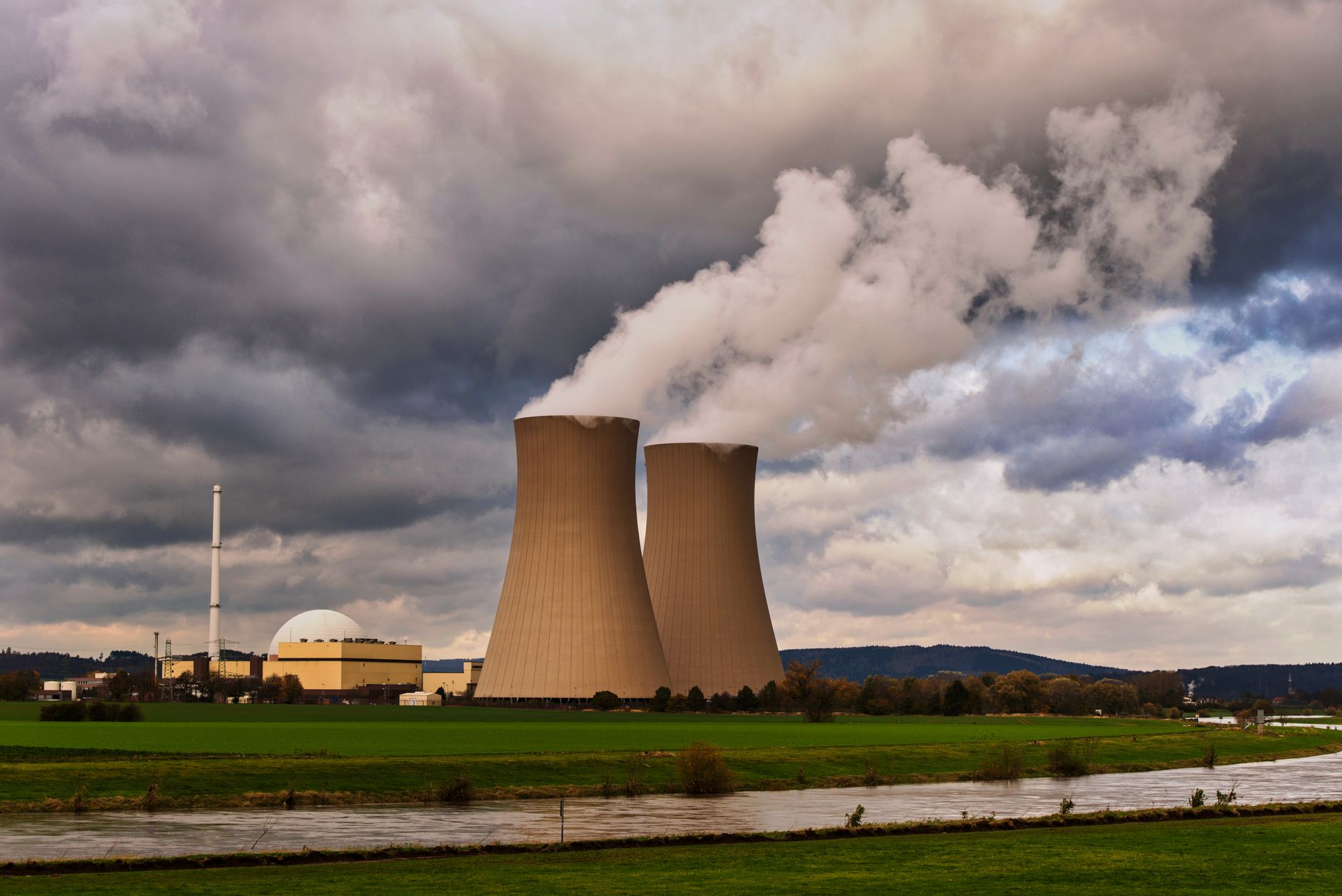
Constellation, the largest nuclear operator in the United States, announced plans to add nearly a gigawatt of new capacity spread across 11 existing reactors at six plants. The expansion doesn’t involve building new facilities – it involves pushing current reactors harder. On October 5, the Department of Energy awarded Vistra a $4.2 billion loan to upgrade three plants along similar lines. Together, these moves reflect a calculated bet that uprating existing reactors is faster and cheaper than new construction, especially as data centers drive electricity demand to levels not seen in a generation.
The appeal is straightforward: nuclear plants already have the land, the grid connections, the safety certifications, and the workforce. Extracting additional output from them sidesteps years of permitting and capital expenditure. The open question is how much additional power the existing fleet can actually deliver before physical limits on fuel, cooling, and reactor design set a ceiling on what’s achievable.
Clean power advocates argue that even marginal increases across dozens of plants could add up to meaningful capacity in the short term – capacity that renewables alone cannot deploy quickly enough to meet immediate demand. Critics point out that pushing reactors beyond their original design specifications introduces risk profiles that were never part of the original safety modeling. Whether the gains justify that calculus is still being worked out in real time.
BasiGo Brings Electric Buses to Sub-Saharan Africa
BasiGo, named to MIT Technology Review’s 10 Climate Tech Companies to Watch 2026, operates more than 150 electric buses in Kenya and Rwanda, with 1,200 customers on its reservation list. The company’s model is built around replacing the tens of thousands of diesel-powered buses currently on sub-Saharan African roads, and it handles leasing, maintenance, insurance, and charging infrastructure directly. Its pay-as-you-drive structure lowers the entry barrier for private bus operators who couldn’t otherwise absorb the upfront cost of electric vehicles. Now BasiGo is extending that model to trucks, targeting a second major source of road emissions in the region.
The Espionage Case With a Saudi Connection
The suspect in an alleged bugging operation targeting OpenAI was previously listed as a venture partner of a Saudi prince and had advised Saudi government agencies, according to reporting by the New York Times. The case has prompted broader concerns in Silicon Valley about AI-related espionage, with the Wall Street Journal reporting that the industry is now on alert. OpenAI’s chief research officer has previously addressed the company’s approach to security incidents, but the Saudi connection adds a geopolitical dimension that extends well beyond a single intrusion attempt.
Intelligence-linked investment activity in AI companies has been a quiet concern for years among US national security officials. What makes this case notable is that it involves alleged physical surveillance – not just data access or competitive intelligence through investment – which suggests adversarial interest in OpenAI’s internal operations at a level of detail that goes beyond what financial exposure alone would explain.
Starlink Speed Caps and a Robot Assault Case
Ukraine has reported that Starshield – the military-grade version of Starlink operated under Pentagon contract – imposed speed limits of 100 mph on connections, disrupting active drone missions. Elon Musk stated publicly that any speed restrictions on Starshield are set by the US government, not SpaceX. Ukraine suspects the limits were applied as political retaliation, though no official US explanation has been offered. NATO is separately considering repositioning anti-drone defenses to the Black Sea, a move that would be partly informed by how reliably satellite connectivity can be counted on in contested airspace.
In Germany, a teenager is under police investigation for allegedly using a Unitree R1 robot – a commercially available model priced at $5,000 – to harass women in incidents that were livestreamed for social media reach. The case is drawing attention not because robot-assisted harassment is widespread, but because it illustrates how quickly consumer robotics can be repurposed in ways manufacturers and regulators haven’t anticipated. The Unitree R1 is not a niche research platform. It’s a product available for purchase.
Tesla, for its part, finally unveiled the new Roadster into a market that has grown skeptical of electric hypercars. The company is counting on wealthy buyers to sustain interest in high-priced EVs even as broader EV adoption has slowed. Musk has called the Roadster Tesla’s last human-driven car – a framing that positions it as both a product and a closing statement on a category the company intends to abandon.

The pig kidney research requires one more piece before it means anything for patients: evidence that human kidneys survive the same -150°C storage and rewarming process without losing function. Animal results have failed to transfer to human medicine before. The team working on this knows that. The transplant community is watching, but not yet planning around it.