



A Smaller Tool for a Real Problem
ThermoWorks has released the RFX Meat Mini, a shorter version of its existing RFX Meat wireless probe, designed specifically for thinner cuts of meat that the original probe handles poorly.

What the Original RFX Meat Got Wrong for Small Cuts
The original RFX Meat probe was built for thick roasts, whole chickens, and large cuts where there’s enough mass to keep the probe fully inserted and properly positioned. Push it into a pork chop, a chicken breast, or a thin fish fillet, and the geometry breaks down – the probe sticks out awkwardly, the sensor may not land at the thermal center, and you’re getting a reading that reflects the edge of the food rather than its core.
This is a straightforward mechanical problem that no amount of wireless technology or app integration can fix on its own. If the probe is too long for the food, the measurement is compromised. ThermoWorks built the Mini specifically to address that mismatch, giving home cooks and grill enthusiasts a probe sized to the food rather than forcing them to adapt the food to the tool.
The company describes the RFX Meat Mini as delivering nearly identical performance to the full-sized version. That matters because a “mini” product in the kitchen gadget space often comes with quiet compromises – reduced accuracy, slower response, shorter battery life, or a stripped-down app experience. ThermoWorks is positioning this as a size adjustment, not a feature downgrade.
ThermoWorks has a reputation among serious home cooks and professionals for accuracy and build quality, particularly through products like the Thermapen instant-read thermometer, which has held near-cult status in grilling communities for years. The RFX line extends that reputation into the wireless leave-in probe category, where the competition – including devices from MEATER and Weber – is well-established and aggressive on price.
The RFX System and Where the Mini Fits
The RFX Meat Mini works within ThermoWorks’ existing RFX ecosystem. That system uses a wireless hub that receives signals from the probes and connects to a companion app, letting you monitor internal temperatures remotely without running wires through a grill lid or oven door. The Mini is designed to slot into that same setup without requiring new hardware – if you already own an RFX hub or other RFX probes, the Mini is a direct add-on.
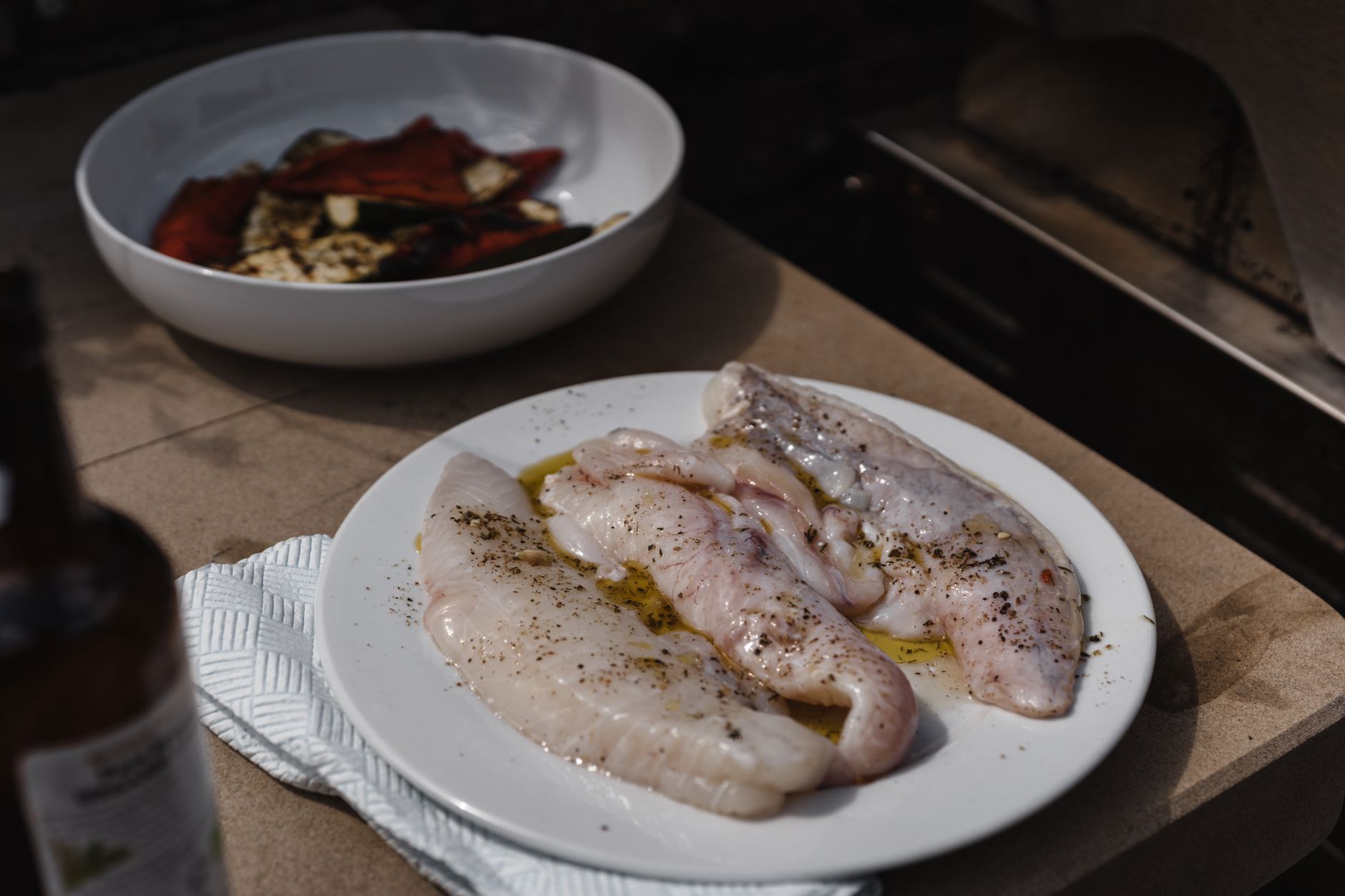
For anyone cooking proteins like salmon fillets, pork chops, duck breasts, lamb chops, or thin steaks, the Mini addresses a genuine gap. These are cuts where the difference between 125°F and 135°F is the difference between a good result and an overcooked one, and where probe placement accuracy is everything. A probe that’s too long to sit correctly inside a thin cut introduces exactly the kind of measurement error that defeats the purpose of using a wireless thermometer in the first place.
The RFX line uses radio frequency transmission rather than Bluetooth, which ThermoWorks argues gives it a stronger, more consistent signal through the metal walls of a grill or smoker. Bluetooth-based probes, including some from MEATER, have faced user complaints about signal drops when the grill lid is down and the probe is surrounded by metal. Whether RF provides a meaningful real-world advantage depends heavily on your specific setup, but it’s the technical choice ThermoWorks has built the entire RFX platform around.
Pricing for the RFX Meat Mini has not yet been detailed in early coverage, though the full-sized RFX Meat probe has been positioned at the premium end of the wireless probe market. ThermoWorks has generally held firm on pricing rather than competing on discount, relying on accuracy and build quality to justify the cost. Whether the Mini comes in below the original probe’s price or matches it remains a point worth watching before purchase.
The companion app is a central part of the RFX experience, handling temperature alerts, target-setting, and real-time graphing. ThermoWorks has consistently updated its app alongside hardware releases, and the Mini will depend on that same software infrastructure. A probe that performs well in hardware terms but pairs with a frustrating app is still a frustrating product – that has been the Achilles heel of more than one smart kitchen device from otherwise capable manufacturers.

Who Actually Needs This
The RFX Meat Mini is a narrow product solving a specific problem well. If your cooking regularly involves thin proteins – weeknight chicken breasts, pan-seared fish, butterflied leg of lamb – and you’ve already invested in the RFX ecosystem or are considering it, the Mini is the version that actually makes sense for that use case. Buying the full-sized probe and hoping for accurate readings in a half-inch-thick piece of salmon is not a reasonable workaround.
What ThermoWorks hasn’t yet answered publicly is the exact length differential between the Mini and the original, the specific minimum cut thickness the Mini is rated for, or whether it will be sold as a standalone unit, a bundle with the hub, or both. Those details will determine whether this is a smart first purchase for someone new to the RFX system or primarily an upgrade buy for existing owners who kept running into the size problem with their current probe.