


AI Steps Into the Lab
OpenAI has announced that its models generated a proof claiming the Exponential Time Hypothesis is false – a result that, if it holds up to scrutiny, would overturn a foundational assumption in theoretical computer science. Alongside that, the company released new results for problems in mathematics and physics, positioning its models not just as tools for writing or coding assistance, but as active contributors to scientific output.
The announcement is short on granular detail, but the claims themselves are anything but small. The Exponential Time Hypothesis has underpinned how researchers think about algorithmic complexity for decades. A disproof would have cascading implications across cryptography, optimization theory, and the broader study of what computers can efficiently solve.
What the Exponential Time Hypothesis Actually Is
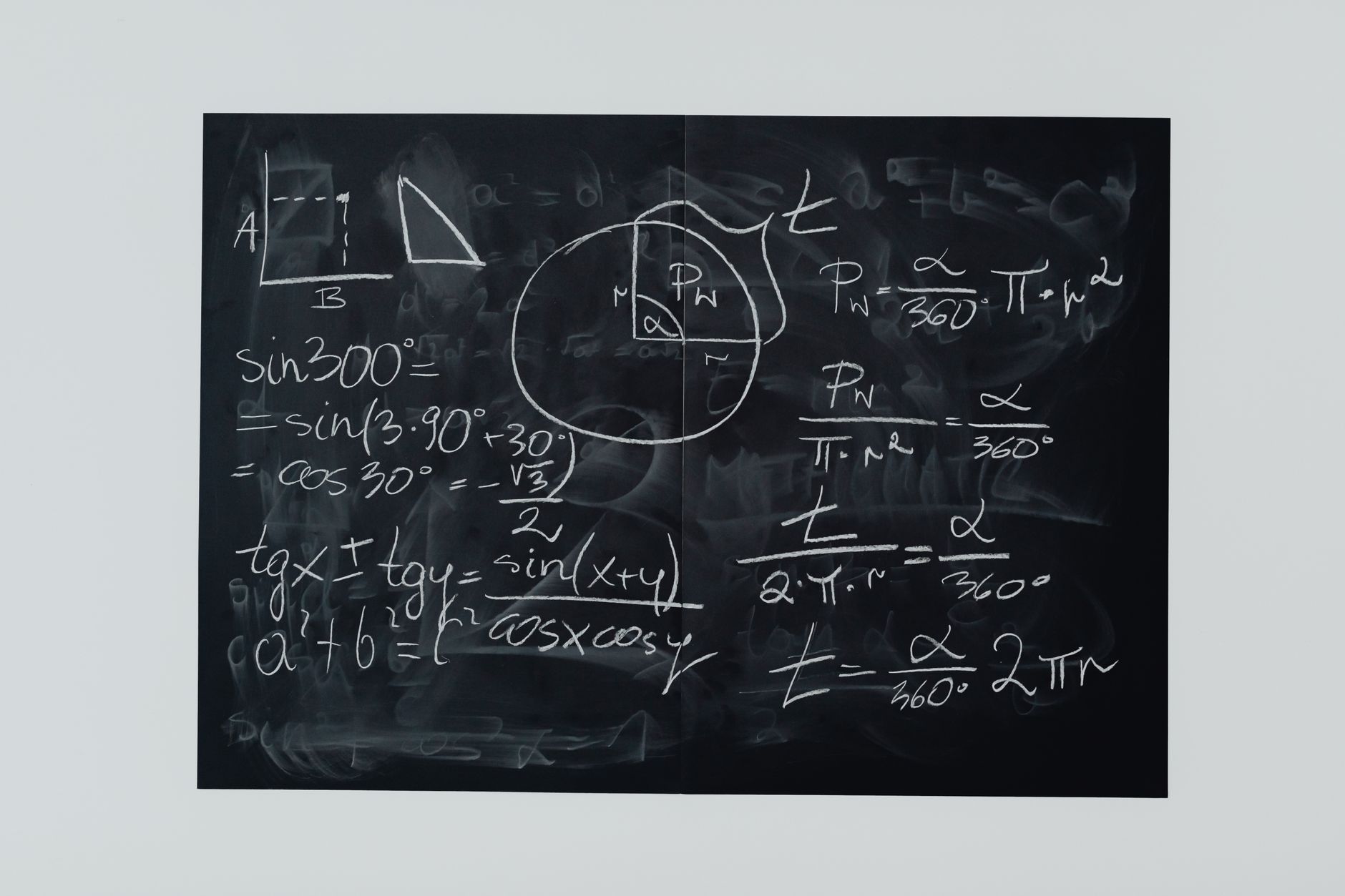
The Exponential Time Hypothesis, commonly abbreviated ETH, proposes that certain computational problems – specifically satisfiability problems – cannot be solved faster than exponential time. It is not just an abstract puzzle. ETH functions as a baseline assumption in complexity theory, used to establish lower bounds on algorithm performance across a wide range of hard problems.
If OpenAI’s model has correctly identified a proof that ETH is false, it would mean those lower bounds were wrong. Algorithms that were believed to be provably slow might have faster solutions than the field assumed. That said, mathematical proofs generated by AI systems carry a verification burden. The broader mathematics community will need to examine the proof step by step before any claim of this magnitude gets accepted as settled science.
The company did not, in its announcement, specify which models produced these results, how the proofs were constructed, or whether the outputs had already undergone external peer review. Those gaps matter enormously. A model can generate confident-sounding formal reasoning that contains subtle errors invisible without careful checking – something that has burned AI research claims before.
OpenAI releasing results for math and physics problems alongside the ETH claim suggests this is part of a broader push to demonstrate that its systems can operate at the frontier of scientific reasoning, not just assist with it. How those additional results hold up is equally worth watching – math and physics problems at this level rarely have easy verification paths.
Physics and Mathematics Results
Beyond the ETH proof, OpenAI announced new results for problems in mathematics and physics. The company has not yet elaborated on which specific problems or what the results entail.
What the announcement does signal is a deliberate positioning strategy. OpenAI is framing its models as capable of generating genuinely novel scientific findings, a claim that goes well beyond summarizing research papers or helping graduate students structure their arguments. Whether the underlying results survive peer review is the question sitting at the center of all of this – and that answer may take months or longer to emerge. Scientific communities in mathematics and theoretical physics move carefully, and a claim generated by an AI model is going to face considerably more scrutiny than one authored by a human researcher with an established track record.
Why This Matters Outside the Lab
If even a fraction of OpenAI’s announced results hold up, it would mark a meaningful shift in how AI fits into the scientific process. Up to now, the most credible case for AI in research has been acceleration – helping scientists work faster, find patterns in large datasets, or explore a wider solution space. Generating proofs that human researchers had not found is a different category of contribution entirely.
The ETH result specifically has practical stakes. Complexity theory is not purely academic. It touches cryptographic security, database query optimization, logistics and scheduling algorithms, and the foundational guarantees that software engineers rely on when choosing which approach to a hard problem is worth pursuing. A disproof of ETH, if verified, would not stay confined to journal pages.
There is also a reputational dimension worth noting. OpenAI has faced criticism over overstated capability claims in the past. Announcing a disproof of a major theoretical hypothesis without accompanying peer-reviewed verification puts the company in a position where independent mathematicians and computer scientists will either validate the work – which would be a substantial win – or find flaws, which would add to skepticism about how carefully the company vets its own models’ outputs before making public announcements.

The math community’s response to the ETH proof claim is already the more important story than the announcement itself. Whether a formal verification process is already underway – and who is conducting it – remains unclear from what OpenAI has made public so far.