


AI Pricing Wars, Police Tech Loopholes, and a Missing Map of Childhood
Three stories are pulling at the edges of how technology operates inside institutions – commercial, legal, and medical – and none of them resolve cleanly. OpenAI and Anthropic are slashing prices to fend off Chinese AI competitors. Flock Safety is tightening the rules around its license plate reader network after officers used it to stalk former partners. And a researcher named Deanne Taylor has spent nearly a decade pushing a major scientific project to stop ignoring children entirely.
Each of these stories touches the same underlying problem: systems built without adequate guardrails, then quietly expanded until someone notices the damage.
The AI pricing shift is the one with the most immediate commercial weight. Rising AI infrastructure bills are pushing enterprise customers toward cheaper models, and OpenAI and Anthropic are responding by cutting costs to keep them from defecting to Chinese alternatives. China’s Z.ai has explicitly positioned itself as a rival to both companies in the coding space, according to Bloomberg. Meanwhile, DeepSeek – often cited as a cost-efficiency story – is actually pushing up its own API prices rapidly, per Quartz. The market dynamic is more tangled than the “cheap Chinese AI” narrative suggests.

Flock’s Rule Changes Leave Officers Room to Work Around Them
Flock Safety, which operates a nationwide network of license plate readers used by police departments across the United States, announced changes to how officers access its database. The core change: officers must now enter a criminal case number before running a search. The company is also expanding automated auditing to flag suspicious query patterns. The backstory is grim – reports surfaced of officers using Flock’s system to locate and harass current or former romantic partners, which is precisely the kind of misuse that mass surveillance infrastructure makes easy.
The problem with the new safeguard is structural. Flock will not verify the case numbers that officers enter. That means any officer willing to type a plausible-looking string of digits can still access the database with no additional friction. The auditing expansion helps at the margins, but audits are retrospective – they catch patterns after the fact, not during the search. Whether a department acts on those audit flags depends entirely on internal oversight culture, which varies dramatically across the thousands of agencies using the platform.
James O’Donnell’s reporting for MIT Technology Review outlines exactly where the loopholes remain. The situation puts Flock in a familiar position for police-tech companies: making changes substantial enough to generate positive press coverage while preserving the functionality that makes the product valuable to law enforcement customers. The case number requirement creates a paper trail. It does not create an actual barrier.

CRISPR Cloning, Organ Sacks, and a Cellular Map That Forgot Kids
On the biotech side, scientists have developed a CRISPR-based technique to remove the Y chromosome from male mouse embryos, effectively converting them to female. The result: female clones of male mice. The researchers see conservation applications – in scenarios where only a handful of individuals of a species remain, the ability to clone across sex lines expands reproductive options significantly. Jessica Hamzelou’s reporting for MIT Technology Review traces where that technology could go next, including genetically modified livestock, pet cloning, and the more unsettling possibility of creating “brainless” human replicas used as organ sources. None of that is current practice, but the cloning infrastructure being developed for conservation and agriculture is the same infrastructure that would enable it.
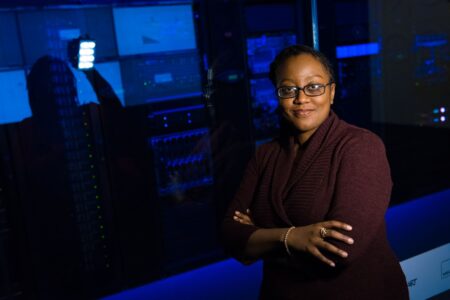
The pediatric cell atlas story is quieter but arguably just as consequential over time. In 2017, Deanne Taylor attended a presentation about the Human Cell Atlas – a project designed to catalog every cell in the human body – and realized it had made no plans to study children. “That’s when my little alarm went off,” she said. “Not again.” Taylor subsequently pushed the project to include pediatric subjects and began developing a database of healthy pediatric tissue samples. The scientific basis for the concern is solid: children’s cells express genes differently than adult cells, which can produce drastically different – sometimes fatal – responses to drugs that adults tolerate without issue.
Taylor’s database aims to give researchers a developmental baseline for healthy children, which would make it easier to identify where diseases that appear in adulthood actually begin. Many conditions that present at 40 or 50 likely have cellular origins much earlier. Without a map of normal pediatric cell behavior, researchers are essentially trying to identify anomalies without knowing what normal looks like. The project is still in progress, covered in the upcoming print issue of MIT Technology Review’s kids-focused magazine edition.
Apple’s situation in China adds another dimension to the week’s AI story. Reuters reported that Apple trained a China-specific AI model with support from Alibaba, which could make it the first foreign company with a Beijing-approved AI model. The degree of control that arrangement actually gives Apple over its own product – versus the degree it gives Beijing – is the question the Reuters framing doesn’t fully answer.

Drones, Humanoid Robots, and What a War Game Revealed
A separate story with significant implications for AI and defense: Ukrainian drones wiped out an American tank brigade during a US military exercise, according to the Wall Street Journal. The drill exposed specific vulnerabilities in US forces to drone attacks at a moment when the Trump administration has imposed 100% tariffs on many drone imports, per The Verge. US efforts to build affordable humanoid robots, meanwhile, run into a supply chain problem – the components needed to hit a competitive price point come primarily from China, according to the New York Times. The tension between decoupling from Chinese manufacturing and actually building the hardware the defense and tech sectors want is not abstract. It shows up in the cost structure of every prototype.
OpenAI’s security posture has come under scrutiny before, and the pricing cuts announced this week will likely accelerate model deployment timelines – which historically compress the window available for safety and access review. OpenAI and Anthropic are cutting prices because customers are leaving for cheaper alternatives. The customers leaving for cheaper alternatives are doing so because AI bills are rising. The rising bills exist because the models are being deployed at scale. That cycle doesn’t have an obvious off-ramp, and the companies racing to the bottom on price are the same ones asking regulators to trust their internal safety processes.
Deanne Taylor’s work started because a scientific project designed to map the entire human body had, without apparent deliberate choice, decided that children weren’t part of the body worth mapping.