



The Infrastructure Problem Nobody Planned For
AI inference has moved from pilot project to core operations faster than most enterprises built infrastructure to handle it. Healthcare systems are now processing millions of patient data points in real time to accelerate medical research. Intelligent assistants are resolving thousands of complex customer requests simultaneously. These are not theoretical applications – they are live deployments running on hardware that, in most cases, was never designed to support them.
Every delay, bottleneck, or wasted watt in that hardware directly affects both human outcomes and operating costs.
The problem is not compute. Modern GPUs and accelerators have scaled aggressively. The constraint has shifted upstream and downstream from the processor – into memory bandwidth, storage throughput, and the speed at which data moves between components. As Jim McGregor, founder and principal analyst at Tirias Research, puts it: “We tend to think of AI as a single workload, and it’s not. It’s thousands, it’s millions, it’s billions of different workloads.” That distinction matters because it changes what infrastructure must actually do.

Why Legacy Architecture Fails Under Inference Pressure
Traditional enterprise IT was built around a relatively stable set of assumptions – predictable batch jobs, scheduled queries, and workloads that ran on defined schedules with known peak windows. Inference and agentic AI violate every one of those assumptions. These workloads are continuous, geographically distributed, and acutely sensitive to response time. A system optimized for yesterday’s training runs will consistently underperform when asked to serve real-time AI at scale.
McGregor, speaking to the structural difference, notes that data centers must now support continuous, distributed, and increasingly real-time AI services – and that none of these constitute a single workload. “They all require different requirements from a system-level perspective,” he says. That is not an incremental design challenge. It is an architectural one. Squeezing modern inference systems into legacy infrastructure constrains what AI can actually deliver, from scientific discovery to autonomous digital agents, because the bottlenecks are baked into the foundation.
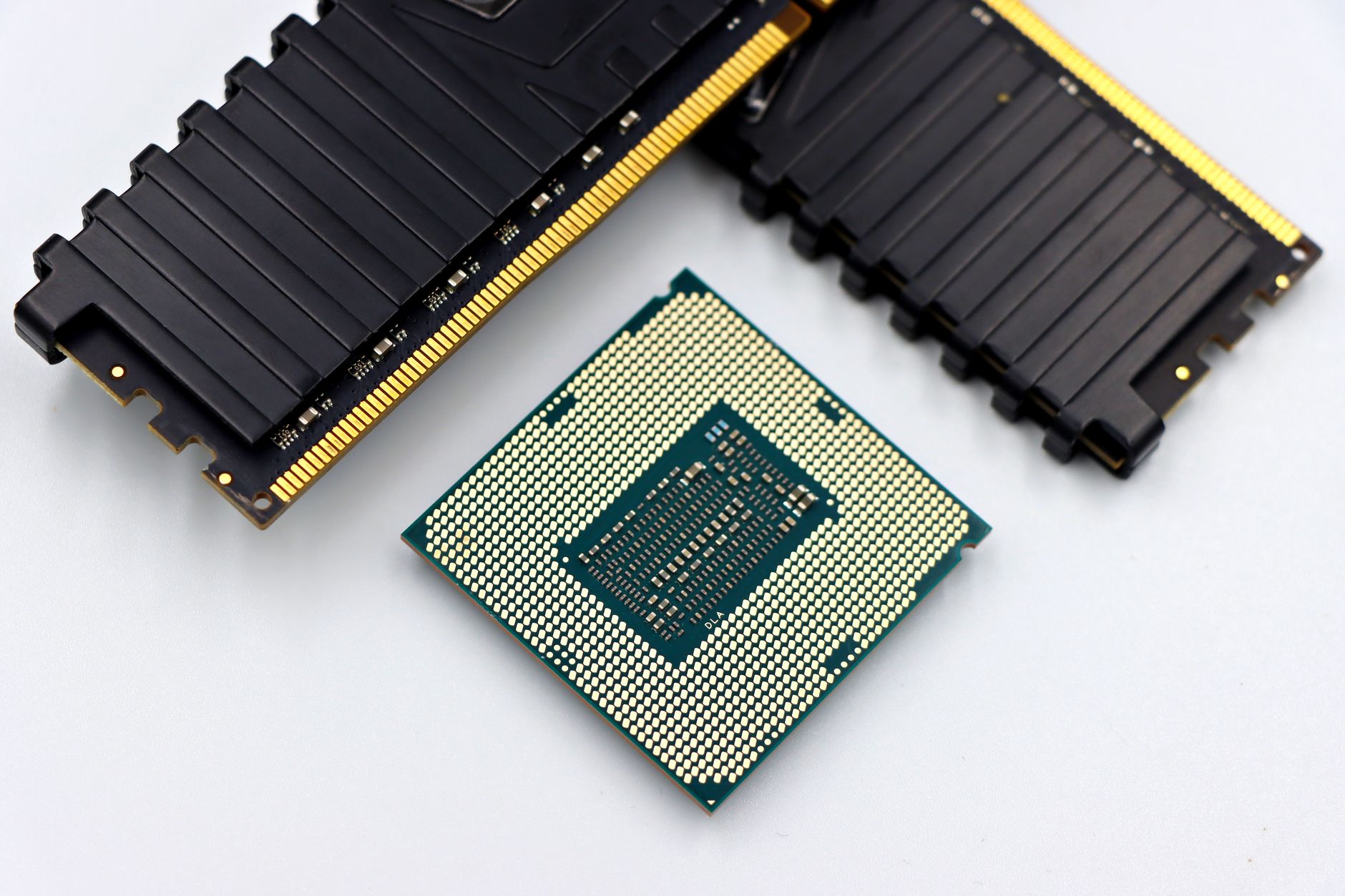
What changes in practice is where engineering attention goes. Memory and storage can no longer be treated as passive supporting hardware sitting behind the processor. They sit at the heart of the system. Enterprises need to architect a complete data pipeline – one that can rapidly ingest, clean, transform, store, move, and deliver data without interruption. Inference workloads place sustained, uneven pressure on infrastructure in ways that training-centric deployments never did, demanding continuous data retrieval and caching cycles that conventional enterprise applications simply did not require. Performance alone stops being the benchmark that governs decisions; efficiency, cost, and scalability enter the equation at the same level, particularly when organizations are trying to support multiple distinct AI services without overbuilding capacity for peak conditions.
Data Movement Is the Actual Bottleneck
As enterprises scale inference and agentic systems, the volume of data being queried in real time has elevated data movement to the most pressing infrastructure constraint in production AI environments. Techniques like retrieval-augmented generation – where a model continuously pulls from external databases to ground its outputs – require storage and memory systems to operate at a pace and consistency that traditional architectures were never calibrated to sustain. The database is not queried once; it is queried constantly, in parallel, across distributed infrastructure.
This shifts the competitive dynamic. Organizations that solve the data movement problem – reducing latency between storage and inference, eliminating the gaps where data waits – gain a material advantage over those still treating memory and storage as afterthoughts. As inference costs compress industry-wide, the differentiation moves into operational efficiency: how much useful work a system can do per watt, per dollar, per rack unit. The winners in enterprise AI deployment will not necessarily be those with the most compute. They will be those who remove memory and storage bottlenecks before those bottlenecks limit growth.
McGregor’s guidance to infrastructure teams is direct: “You have to optimize the entire network, and that includes memory and storage, around the types of workloads you plan on running. You have to really have a detailed understanding of what those workloads are going to be.” That understanding has to precede procurement decisions, not follow them. Any AI infrastructure strategy that starts with hardware selection before workload characterization will produce systems optimized for the wrong problem. Inference, agentic AI, and the emerging AI use cases behind both require organizations to treat the data center as an integrated system – not a collection of independently managed components that happen to share a building.
What Enterprises Need to Get Right Before They Scale
The architecture imperative comes down to three things that cannot be optimized in silos: performance per watt, memory and storage throughput, and workload-specific design. Enterprises that build AI infrastructure without a granular understanding of their specific inference workloads will overspend, underperform, and face costly redesigns as those workloads evolve. The organizations that will scale AI effectively are those treating infrastructure not as a cost center to be minimized but as an active variable in AI performance – one that determines latency, cost per inference, and ultimately the quality of AI-driven services reaching end users and edge devices.

The edge dimension adds further pressure. IoT and consumer devices are increasingly running inference locally, which means the architectural decisions made in the core data center now propagate outward. A misconfigured or underpowered memory subsystem in a central inference cluster creates latency that cascades through to edge endpoints. The boundary between centralized AI infrastructure and distributed intelligent devices is dissolving, and the systems connecting them – networking, memory, storage – have to be designed with that reality in mind from the start, not retrofitted after deployment reveals the gaps.
McGregor’s framing of AI as billions of distinct workloads rather than one monolithic task is the design challenge that most enterprise IT organizations have not yet fully confronted. The question is not whether their current infrastructure will eventually fail under inference pressure. It is how many production deployments will expose that failure first.