


A Rescue That Never Reached the Telescope
NASA has canceled its planned rescue mission for the Swift Space Telescope after the LINK probe – the robotic spacecraft designed to physically capture and reposition Swift – developed problems with its control system. The mission was abandoned before any attempt to reach the aging observatory could be made.
Swift has been operating in low Earth orbit for years, and without intervention, its orbit will naturally decay until atmospheric drag pulls it down. The LINK probe was specifically designed to prevent that outcome, using robotic arms to grab the telescope and push it into a higher, stable orbit. That plan is now off the table.
What LINK Was Built to Do
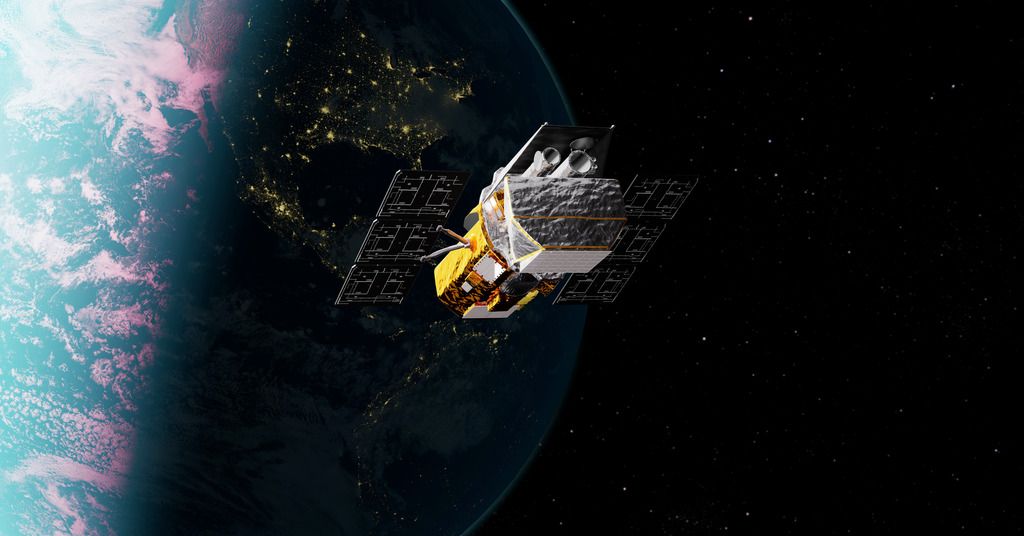
The LINK probe represented a specific approach to orbital life extension – a growing category of space technology that attempts to physically interact with existing satellites and telescopes rather than simply replacing them. Its robotic arms were meant to latch onto Swift and perform the maneuver without human hands ever touching the hardware. In theory, it was a cleaner solution than decommissioning a telescope that still had scientific value.
Control systems on spacecraft are not optional redundancies. They govern thrust, orientation, and every corrective maneuver the vehicle makes in the vacuum between launch and target. When the LINK probe’s control system failed, there was no fallback position from which to attempt the mission – the probe could not safely close the distance to Swift, let alone execute a precise robotic capture in orbit.
NASA has not detailed publicly which component of the control system failed or at what stage the problem was detected. What is clear is that the decision to cancel was final. There is no indication of a revised attempt using different hardware or a redesigned approach within any announced timeframe.
Swift’s Standing and What It Stands to Lose
Swift launched in 2004 and was designed to detect gamma-ray bursts – some of the most energetic explosions in the known universe – and immediately pivot its instruments to capture follow-up data in X-ray and ultraviolet wavelengths. That multi-wavelength reaction speed made it a distinct tool in NASA’s observatory fleet, capable of catching transient events that other telescopes would miss entirely while still repositioning.
At over two decades old, Swift has far outlived its original mission parameters, which is common for NASA observatories but also means its systems carry the wear of extended operation. The telescope has contributed to thousands of scientific publications, and its gamma-ray burst detection capability remains relevant even as newer instruments come online. Losing it to orbital decay without a rescue removes a real-time detection resource that is not directly replicated elsewhere in the current fleet.
Robotic Servicing and the Gap Between Concept and Execution
The cancellation of the LINK mission puts a spotlight on the difficulty of in-space robotic servicing operations. The concept is straightforward on paper: build a vehicle with mechanical arms, launch it, rendezvous with the target, grab it, adjust its orbit. The execution requires a control system that works precisely in an environment where communication delays, radiation exposure, and thermal extremes interact with hardware that has no repair crew standing by.
LINK’s failure does not invalidate the broader category of robotic servicing missions. Other programs, including commercial efforts from companies working with government contracts, continue to develop similar technologies. But each failure raises the bar for demonstrating that this approach is operationally reliable rather than theoretically sound.
The Pentagon’s push to field advanced directed-energy systems points to a wider pattern in which space and defense technologies are demanded to perform at operational reliability before they are fully proven in field conditions – the same pressure now bearing down on robotic servicing after the LINK outcome.
For Swift specifically, the window for any alternative intervention narrows as its orbit continues to degrade. Every month without a corrective maneuver represents altitude lost and options reduced. NASA has not announced a replacement mission or an alternative deorbit plan that would control where and when Swift eventually reenters the atmosphere.
No Clean Exit
The cancellation leaves Swift in an uncertain holding pattern – still operational, still collecting data, but on a trajectory it cannot alter without external help that is no longer coming. The scientific community that relies on its gamma-ray burst alerts has no official timeline for when the telescope will cease to function or when reentry becomes imminent.
What failed first – and whether that failure was detectable before LINK ever launched – is the question hanging over the entire mission.