



Wired’s 2026 travel adapter guide started with more than 20 models and ended with eight recommendations. The reviewer says the picks come from adapters and chargers used firsthand, not from spec sheets. The premise is plain: when you travel abroad, the right plugs decide whether your gadgets stay charged.
It sounds like a small problem until it isn’t. A phone at 4 percent, a hotel wall with the wrong holes, and a lobby shop charging triple. The guide is meant to head off that scene, and it comes at a time when the average traveler carries a phone, a laptop, earbuds, and often a watch or tablet.

A World of Mismatched Sockets
There is no global standard for wall outlets. The United States and Japan use two flat parallel pins, often with a third grounding pin in the US. Much of continental Europe uses two round pins. The United Kingdom uses a chunky three-pin plug with a built-in fuse, and Australia and New Zealand use angled flat pins. Each region settled on its own design long before anyone carried a pocketful of USB devices.
That fragmentation is why a single “universal” adapter is such an appealing product, and why quality varies so much. A flimsy one can sag out of a socket under the weight of a laptop charger. A well-built one grips firmly, covers the regions you actually visit, and doesn’t turn into a puzzle of sliding parts at midnight.
What Separates a Good Adapter From a Drawer Filler
The first thing to understand is that a plug adapter changes only the shape of the connection. It does not change the electricity. The US grid delivers roughly 120 volts, while most of Europe and the UK run around 230. Many modern chargers for phones, laptops, and cameras are built for a wide input range, typically printed on the label as 100-240V. For those, a simple adapter is enough.
Single-voltage appliances are a different story. Some hair dryers, straighteners, and shavers are built for one voltage only, and plugging them into the wrong supply through a basic adapter can ruin them. Check the small print on the device before packing it, and leave behind anything that isn’t rated for the destination’s voltage.
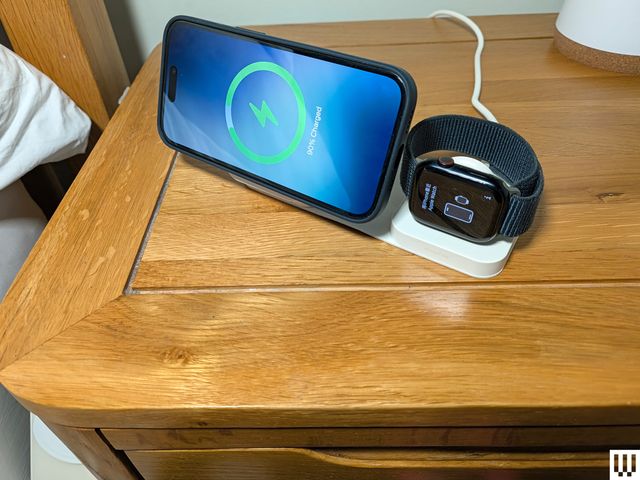
Beyond that, the useful differences are practical. Does the adapter have USB-C ports as well as USB-A, so you can skip carrying a separate brick? Does it handle fast charging for a laptop, or only trickle-charge a phone? Is the body compact enough to fit in recessed sockets, and does it block neighboring outlets on a crowded power strip? These are the details a long testing run exposes and a product page hides.
Build quality matters in a less glamorous way. Adapters that feel solid in the hand tend to keep making contact in worn hotel sockets. Sliding-pin designs are convenient, but each moving part is another place for wear, so a slider that feels loose out of the box rarely improves with age. Testing 20-plus models is the sort of exercise that surfaces those weaknesses.
Chargers Are Half the Equation
Wired’s guide covers travel adapters and chargers together, and the pairing makes sense. An adapter gets the prongs into the wall, but the charger decides how fast the battery fills and how many devices you can feed at once. A compact multi-port charger paired with a single adapter often replaces a tangle of single-purpose bricks.
That consolidation is the real appeal for frequent travelers. Fewer chargers mean fewer things to forget in a hotel room, and a single wall slot can serve a phone, a laptop, and earbuds. The tradeoff is that one adapter failing, or one outlet being unavailable, takes everything down at once, which is why some travelers still pack a backup.
Packing Smart Before You Fly
Start with the destinations, not the product. List the countries on the itinerary, note their plug shapes, and confirm whether one adapter covers all of them. Layovers count too. A traveler who flies through London on the way to Dubai may need to charge in an airport lounge with sockets that differ from the final stop.

Then inventory the devices. Look at every charger’s input rating, count the USB-C and USB-A ports you need, and decide whether any item is single-voltage. A laptop that demands more wattage than the adapter’s ports can deliver will charge slowly or not at all, so match the output to the heaviest device you bring.
The full list of eight picks, along with the reviewer’s notes on what held up across 20-plus models, is in the Wired guide itself. Which one earns a permanent spot in your carry-on: the compact single-region plug you’ll use on every trip, or the bulkier all-in-one that covers the places you haven’t booked yet?