


Washington Steps Into AI Release Decisions
The Trump administration has asked OpenAI to restrict the rollout of its next model, requiring the company to vet early users through government approval before any wider launch. The model in question is GPT-5.6, and according to Bloomberg, OpenAI has agreed that each of the initial partners gaining access will be government-approved. This marks the first time a U.S. firm has been directed to limit an AI model’s release before it reaches the public.
The intervention signals a sharper posture from Washington toward frontier AI releases – not just in rhetoric but in operational control over who gets access and when. OpenAI is not alone in its friction with federal authorities. Anthropic is also still in an active dispute with Washington, according to MIT Technology Review’s own reporting on the broader industry standoff.

Price Hikes, Chip Shortages, and “RAMaggedon”
While federal regulators tighten their grip on AI model releases, a separate consequence of the AI infrastructure buildout is hitting consumer wallets directly. Apple and Xbox have both raised prices, with some MacBooks, iPads, and Xbox consoles climbing by more than 20%, citing AI-driven chip costs as the cause. Apple’s shares fell after the announcement, according to NBC.
The price pressure traces back to surging demand from AI data centers, which has pushed up memory and storage costs across the supply chain. The shortage has been dubbed “RAMaggedon” by The Verge – a name that sounds absurd until you see the price tags. The Wall Street Journal reported that AI infrastructure appetite is the direct driver behind tightening supply, squeezing consumer hardware manufacturers who depend on the same components.
This isn’t a temporary blip. Data centers are now consuming memory at a scale that competes directly with the consumer electronics market, and manufacturers are prioritizing where the margins are higher. For buyers planning a laptop or console purchase in the second half of 2026, the math has changed – not because of tariffs or shipping disruptions, but because the chips that train and run large language models now compete for the same fabrication capacity as the chip in your next MacBook.
Beyond pricing, data centers are facing a different kind of pressure in the courts. Environmental litigation targeting these facilities has moved to the front of the legal calendar, with lawsuits focused on energy sourcing, water consumption, and air pollution, according to The Guardian. The scale of power draw required to run AI infrastructure is no longer an abstract policy concern – it is now a live litigation issue in multiple jurisdictions.

OpenAI’s IPO Pushed to Next Year
OpenAI had been widely expected to pursue a public offering, but the company is now likely to delay its IPO until next year. The New York Times reported that choppy global markets and SpaceX’s recent stock slump spooked the company into pulling back its timeline. For an organization that restructured itself to become a for-profit entity and raised capital at a valuation in the hundreds of billions, the delay reflects genuine sensitivity to market conditions – not just caution.
The timing matters because OpenAI is simultaneously navigating government restrictions on its model releases, competitive pressure from Anthropic and others, and an infrastructure cost environment that is making everything more expensive. An IPO was supposed to be the moment when its financial architecture stabilized. That moment is now deferred.
Grok’s Traffic, China’s Humanoids, and a Black Hole’s Fingerprints
Elsewhere in AI, xAI’s Grok chatbot is generating attention for what its users actually want from it. According to The Information, explicit content – what the report calls “smut” – accounts for well over half of Grok’s total traffic. That is not a rounding error or an edge-case behavior. It is the dominant use case for the chatbot by a wide margin, raising pointed questions about how AI companies define product success and what guardrails, if any, are being applied.
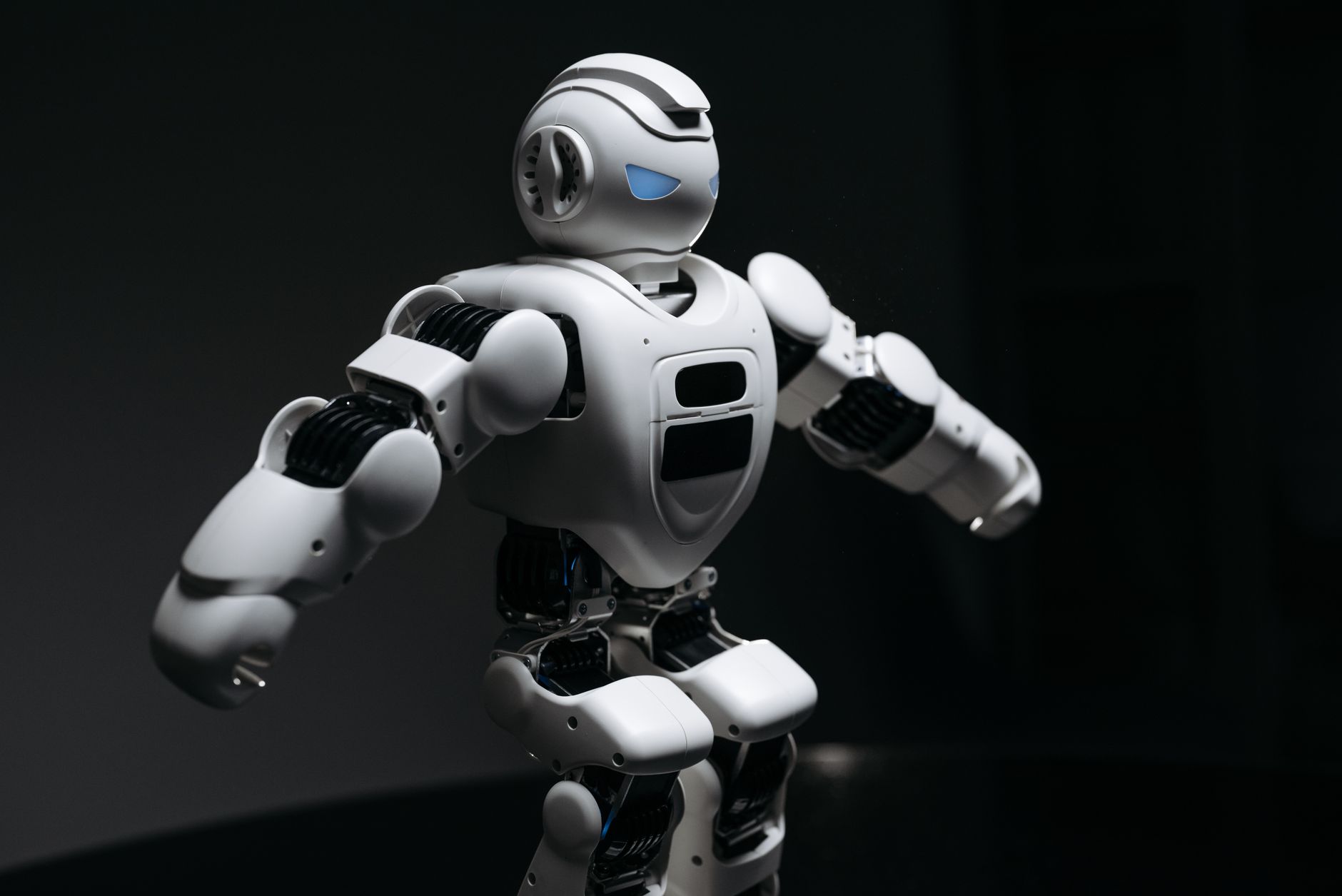
China, meanwhile, is making a different kind of bet on AI-adjacent technology. The country is accelerating investment in humanoid robots to address its demographic decline and narrow a growing labor gap, according to the Financial Times. Gig workers are already being employed to train these humanoids at home, as MIT Technology Review has reported. The scale of the ambition is significant – robots filling labor shortfalls that demographic policy has failed to prevent.
On the scientific side, researchers have detected what they describe as the “fingerprints” of a black hole’s event horizon by studying ripples in space-time, according to AFP. Separately, scientists have identified a master gene responsible for triggering human development – the switch that sets cells on the path to forming a human body, according to New Scientist. And in a conservation effort with a sharp technological edge, Colossal and the U.S. government are building an endangered species “biovault” designed to cryptopreserve more than 2,300 plant and animal samples, reported Wired, amid widening threats to existing species protections.
The U.S. has also banned Swedish EV maker Polestar from selling its vehicles domestically under anti-China rules – Polestar is majority-owned by China’s Geely, and its connected-vehicle technology is linked to Chinese systems, according to CNN and Reuters. The ban is a concrete example of how national security logic is being applied beyond semiconductors and AI models to the vehicles Americans drive. Polestar’s situation is unlikely to be the last case of this kind, given how deeply Chinese ownership runs through global automotive supply chains. Whether Washington draws the line at the ownership structure or at the data-sharing architecture of the vehicles themselves will define how far these restrictions ultimately reach.