


A Graduate Student’s Experiment Points Toward AI-Authored Life
In 2025, Samuel King, a bioengineering PhD candidate at Stanford University and the Arc Institute, fed a generative AI model the problem of designing microscopic viruses from scratch – and the model produced genetic blueprints that actually worked.
What King Actually Built – and What He Didn’t
The distinction King makes about his own work is worth holding onto: this is not AI-generated life. The AI did not spontaneously produce a living organism. What it did was propose genetic blueprints – structural instructions – for microscopic viruses. The gap between proposing a blueprint and creating life is still wide, but King’s work narrows it in a way that was not possible before generative AI models reached their current capability level.
King’s research drew enough attention to earn him a place on MIT Technology Review’s Innovators Under 35 list, a recognition that tracks researchers whose work is considered early-stage but directionally significant. The designation is notable not just as an honor but as a signal of where the scientific community sees momentum building. Bioengineering fed by generative AI is being watched carefully.
On October 16, 2026, MIT Technology Review senior AI reporter James O’Donnell sat down with King for a recorded roundtable session. The conversation covered the mechanics of King’s virus design process, what it means to be named an Innovators Under 35, and how AI is reshaping the way researchers see and model biological systems at a fundamental level. The session was made available both as audio and video.
The viruses King designed are microscopic, and critically, the AI-designed versions are already functional in one specific application: killing bacteria. That detail shifts the conversation from theoretical to applied. These are not blueprints sitting in a lab notebook waiting for validation – they have been tested against bacterial targets, which makes the work immediately relevant to fields like antimicrobial research, where new approaches are badly needed as antibiotic resistance continues to accelerate.
Generative AI as a Biology Design Tool
Generative AI models have spent most of their public life producing text, images, and code. King’s work is part of a smaller but rapidly growing body of research applying the same underlying architecture to molecular and genetic design. The model King used was not told what a virus should look like – it was tasked with proposing structures that satisfy specific biological constraints, and it returned genetic blueprints that were coherent enough to synthesize and test.
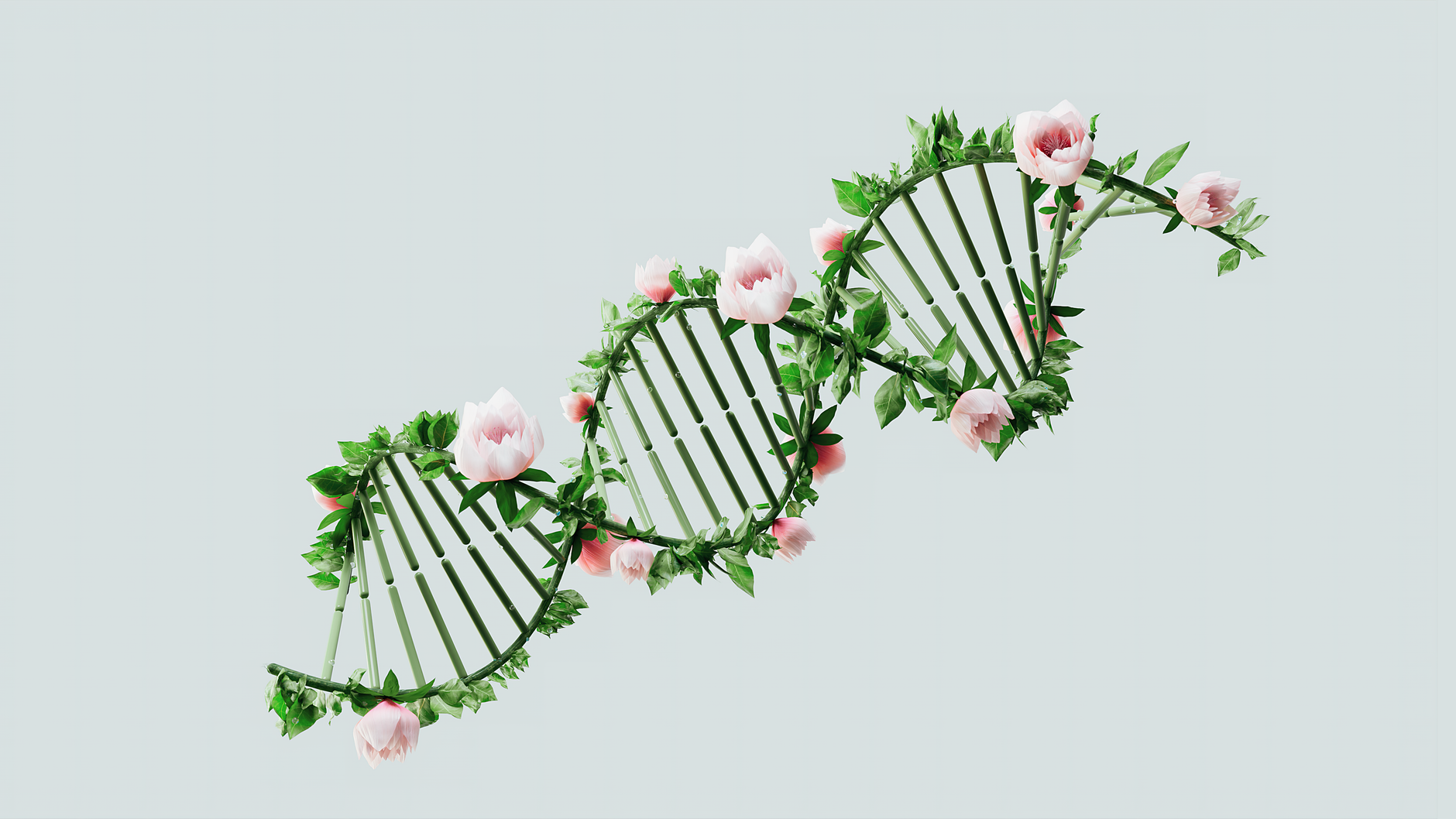
This approach treats biology as a design space rather than a catalog of known parts. Traditional genetic engineering starts with existing sequences – copying, editing, rearranging what nature has already produced. What King’s method introduces is the possibility of an AI proposing sequences that have no direct natural precedent, generated by pattern-recognition across the vast landscape of known biological data. Whether those novel sequences behave predictably once synthesized is one of the central questions his research is trying to answer.
The fact that the AI-designed viruses are already killing bacteria suggests some degree of functional predictability – at least in this narrow application. But functional success in one context does not mean the design process is fully understood or controllable. The AI produces blueprints; humans still decide which ones to synthesize, test, and act on. That human checkpoint remains significant, particularly as the question of what comes after virus design starts to take shape.
King’s framing in the O’Donnell interview touches on “new ways of seeing biology” – language that points to something larger than a single experiment. Generative AI may be less useful as a replacement for biological knowledge and more useful as a lens that finds structural patterns across datasets too large for human researchers to process directly. In that sense, King’s virus blueprints are as much a demonstration of what the tool can perceive as they are a demonstration of what it can build. The broader question of what happens when AI-generated outputs operate in domains with real-world consequences – biological or otherwise – is one the research community is only beginning to formalize.
Stanford and the Arc Institute represent a specific kind of institutional environment for this work – research-focused, with enough computational infrastructure to run generative models against complex biological datasets, and enough scientific credibility to have results taken seriously by peer reviewers and industry observers. King’s position as a PhD candidate means this work is not yet a finished product but a research program still being defined, with future directions that King himself described as moving closer to the question of whether AI can design new life forms altogether.
The Distance Between Blueprint and Life
King has been careful to position his results accurately. The AI designed viruses – not life in the broader sense of self-replicating, adapting organisms. But viruses occupy a contested space in biology: they are not considered fully alive by most definitions, yet they replicate, evolve, and interact with living systems in ways that matter enormously. Designing them from genetic blueprints using AI is not the same as creating life, but it is also not categorically separate from that problem.
The roundtable session with O’Donnell, recorded and released in October 2026, captures King at an early inflection point – after a result that validated the approach, before the implications are fully mapped. What the AI produced worked. The bacteria died. The question King left on the table, the one he said could be next, is whether the same method scales to designing something more complex than a virus – something that doesn’t just carry a genetic blueprint but acts on it independently.