



The Week’s AI and Tech Stories, Ranked by What Actually Matters
Two data points cut through this week’s noise: SpaceX is now worth more than Amazon, and ChatGPT’s share of the AI market has dropped below 50% for the first time – signs that both the space economy and the AI landscape are entering a more competitive, less predictable phase.

SpaceX, Cursor, and the Anatomy of a $2.659 Trillion Valuation
SpaceX hit a market valuation of $2.659 trillion, surpassing Amazon and briefly eclipsing Microsoft after a post-IPO stock surge. It now ranks as the world’s fifth most valuable company – a position that, until recently, was occupied exclusively by tech giants built on software and advertising, not rockets and satellites.
The company is not stopping at launch infrastructure. SpaceX is acquiring AI coding startup Cursor for $60 billion, a deal that signals Elon Musk’s intent to fold developer tooling into a broader technology empire. Cursor, which competes in the fast-growing AI code assistant market, would bring SpaceX directly into a sector currently dominated by GitHub Copilot and emerging challengers.
Whether that acquisition makes engineering sense or is primarily about controlling a high-value asset before competitors do is a fair question. Cursor had become one of the most actively used AI coding tools among professional developers, and at $60 billion, SpaceX is paying a price that reflects scarcity as much as current revenue.
The valuation milestone arrives as the broader AI investment cycle continues to inflate asset prices across the sector – though SpaceX’s core business, unlike many AI-native companies, generates real operational cash flows from launch contracts, Starlink subscriptions, and government partnerships.
ChatGPT Below 50%, Huawei’s Chip Workaround, and the Export Control Tangle
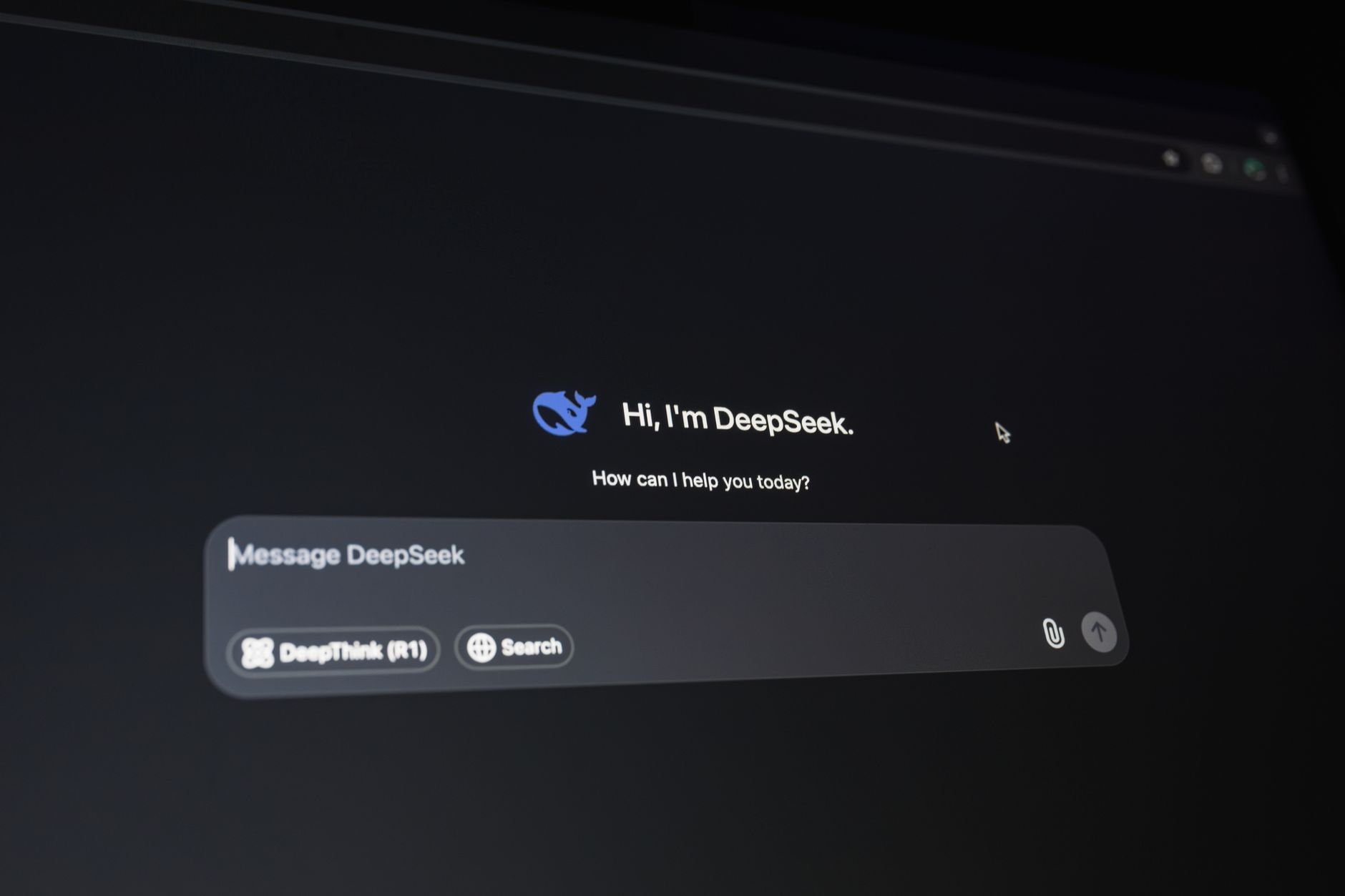
ChatGPT’s market share has slipped below 50% for the first time, driven by gains from Gemini and Claude. The shift doesn’t mean OpenAI is collapsing – at 50% of a rapidly growing market, absolute usage likely continues to climb – but it marks the end of OpenAI’s period of near-total dominance in consumer AI. Anthropic’s Claude, in particular, has gained significant ground among professional and developer users, contributing to the redistribution.
On the geopolitical side, G7 leaders are pushing for access to top US AI models, specifically seeking relief from restrictions on systems like Fable 5. The pressure follows the Mythos shutdown, which triggered a global scramble for sovereign AI alternatives – a dynamic that has governments and enterprises alike reconsidering how much of their AI infrastructure they want routed through American providers operating under unpredictable export regimes.
The Trump administration’s AI export strategy has run into direct conflict with its own export controls. The administration now effectively operates a licensing regime for frontier AI, and its internal contradictions – pushing AI dominance abroad while restricting the models that would achieve it – risk undermining both goals simultaneously. Philip Luck, who studies global supply chains at the Center for Strategic and International Studies, described the Entity List as “like whack-a-mole and you’ve got to keep whacking the moles” – a characterization that captures the enforcement gap between policy intention and on-the-ground reality.
Huawei has demonstrated exactly that gap. The company has overcome restrictions on advanced chipmaking equipment, staging a comeback that exposes the practical limits of US chip controls. The AI boom has simultaneously ignited chip companies across Asia, with firms in South Korea, Taiwan, Japan, and China all accelerating production capacity to meet demand that American export restrictions alone cannot redirect. How a top Chinese AI model navigated US sanctions – by rerouting supply chains and localizing previously imported components – illustrates that the controls slow development without reliably stopping it.
Meanwhile, an unusual cultural current is running through Silicon Valley: fear of superintelligent AI is pushing investors toward gene-editing startups focused on cognitive enhancement. The pitch, reported by Mother Jones, is that smarter human babies could eventually counter AI systems that exceed human intelligence. The ethics of that pursuit are genuinely unresolved – the question of who defines “smarter,” who has access, and what regulatory frameworks apply to germline editing remains, as MIT Technology Review put it, “an ethical mess.”
A Brain Implant Power User, Quantum “Eternity,” and a Solar Cooling Reality Check
Away from market valuations and trade policy, a brain-computer interface has enabled an ALS patient who cannot speak to work full-time – the system translates his brain activity into speech, and he has become what researchers are calling the first “power user” of a BCI. Solar geoengineering research, separately, is moving past computer models into the engineering reality of actually cooling the planet: researchers working on aircraft, materials, and atmospheric delivery systems are finding that even early deployment would require significant new infrastructure, extended timelines, and levels of investment that have not yet materialized. The gap between a simulation that works and a system that can be built and operated at scale is proving to be the central problem.

On the hardware end, Commodore – the brand resurrected from the ashes of 1980s home computing – has released a device called the Callback, a digital detox phone that combines deliberate feature limitations with enough modern functionality to be usable. And quantum physics researchers report that experiments now suggest a quantum state that lasts indefinitely may be achievable – what some are calling quantum “eternity.” If that holds up under replication, the implications for quantum computing stability, which has long struggled with decoherence, would be significant. The experiments are early, and the distance between laboratory results and deployable hardware in quantum computing has historically been longer than initial announcements suggest.