



A $50 Million Bet on Superhumanity
On May 24, in a $50 million arena constructed in a casino parking lot in Las Vegas, the inaugural Enhanced Games took place – the first organized sporting competition where participants were actively encouraged to use performance-enhancing drugs. The event was backed by millions of dollars in prize money for any athlete who broke world records, and it was framed by its founders as a direct challenge to what they called outdated norms in competitive sport.
The substance list reads like a pharmacology catalog: testosterone, methenolone, nandrolone, human growth hormone, EPO, meldonium, modafinil, mixed amphetamine salts, clomiphene, anastrozole, levothyroxine, and liothyronine – patches, capsules, creams, and pills circulating through the bloodstreams of a few dozen swimmers, sprinters, and weightlifters. Critics called it dangerous and embarrassing. The founders called it the future.

What Actually Happened on the Track and in the Pool
The open-air venue was compact and brightly designed – a six-lane, 100-meter track along one side, a four-lane Olympic-length swimming pool along the other, a weightlifting platform at the front, and the golden facade of the Trump Hotel visible in the background. The production had the surface texture of an NFL broadcast: loud music, big-screen crowd work, and a “flex cam” that invited the heavily muscled to display their biceps between events. Advertisements for Enhanced’s own product line ran throughout – injectable peptides marketed for cellular energy and skin elasticity, daily supplement powders with names like “Stronger” and “Longer.”
The weightlifters opened the day under a blazing sun, and by 4 p.m. only one had attempted a world-record lift. Two others had pulled out with injuries. The swimming and sprinting events told a more pointed story: athletes competing without drugs outperformed their enhanced opponents in multiple disciplines. Hunter Armstrong, a 25-year-old American swimmer and triple Olympic medalist, won the backstroke by more than a second. In the men’s 100-meter sprint, American Fred Kerley – also non-enhanced – won by a wide margin.
Kerley was not diplomatic about it. “Man, they gotta do better than that,” he said in his post-race interview, referring to the doped competitors. “They need to train a little harder, get on that shit a little bit more.” Australian swimmer James Magnussen, the first athlete to sign with Enhanced and one of its most prominent faces, did not break any world records. He finished last in both of his events.
The Protocol and Its Limits
Enhanced’s official drug protocol is restricted to FDA-approved substances, and the organization states that individual athletes retain final say over what they take, if anything. That distinction blurred somewhat in practice. At the entrance to the VIP suites, Lukas Lakutsin – a 6-foot-10, 354-pound Russian bodybuilder – initially said he used no performance-enhancing drugs, then immediately clarified: except testosterone replacement therapy. He did not consider that to count. “I’m almost 34 years old,” he said. “I need to do this to stay strong.”
Inside, the crowd reflected the event’s cultural coordinates more than its athletic ones. Bodybuilders compared before-and-after photos and discussed their supplementation stacks. Venture capitalists and finance professionals exchanged LinkedIn details at the bar. Jeremy Sigal, an influencer and author wearing a USA tank top over heavily tattooed, muscled arms, announced that he was “proudly natural” in both health and personal life, and mentioned his exceptional credit score as evidence of general discipline. He has written 12 books on marketing and leadership. His most recent, looked up afterward, is titled Simp to Pimp: 10 Steps to Fix Why She’s Not Banging You, and lists AI as a coauthor.

Where AI and Biohacking Converge
The Enhanced Games exist at a specific intersection: Silicon Valley biohacker culture, libertarian self-optimization ideology, and the longevity-tech economy. The founders have positioned the event not just as a sports competition but as a kind of proof-of-concept for human enhancement broadly – the argument being that allowing athletes to take drugs in competition advances the collective understanding of what the human body can do, and by extension, what aging bodies might be able to sustain longer.
That framing puts the Enhanced Games in the same rhetorical neighborhood as AI-driven health tools, wearable biosensors, and the broader quantified-self movement – technologies and practices that treat the human body as a system to be optimized, monitored, and upgraded. The difference is that most of those tools operate with a veneer of clinical legitimacy. What Las Vegas offered was the same ideology without the veneer, staged in a casino parking lot with flex cams and injectable peptide ads.
The financial architecture also reflects a particular moment. Prize money structured around world-record performance – essentially paying for biological output – mirrors the incentive logic of AI benchmarking, where capability improvements are rewarded regardless of how they’re achieved. Whether that analogy holds up under scrutiny is another question, but the people writing checks at the Enhanced Games bar seemed comfortable with the parallel. The VC presence was not incidental to the event; it was part of what the event was advertising about itself.
Enhanced’s founders say they are building toward a world where people live better and longer. What they built in May was a one-day event where clean athletes beat doped ones, two weightlifters got injured before attempting records, and the most memorable quote came from a sprinter mocking the competition’s entire premise. The arena seated a few thousand people in Las Vegas. The golden hotel in the background had nothing to do with the event and appeared in nearly every wide shot anyway.
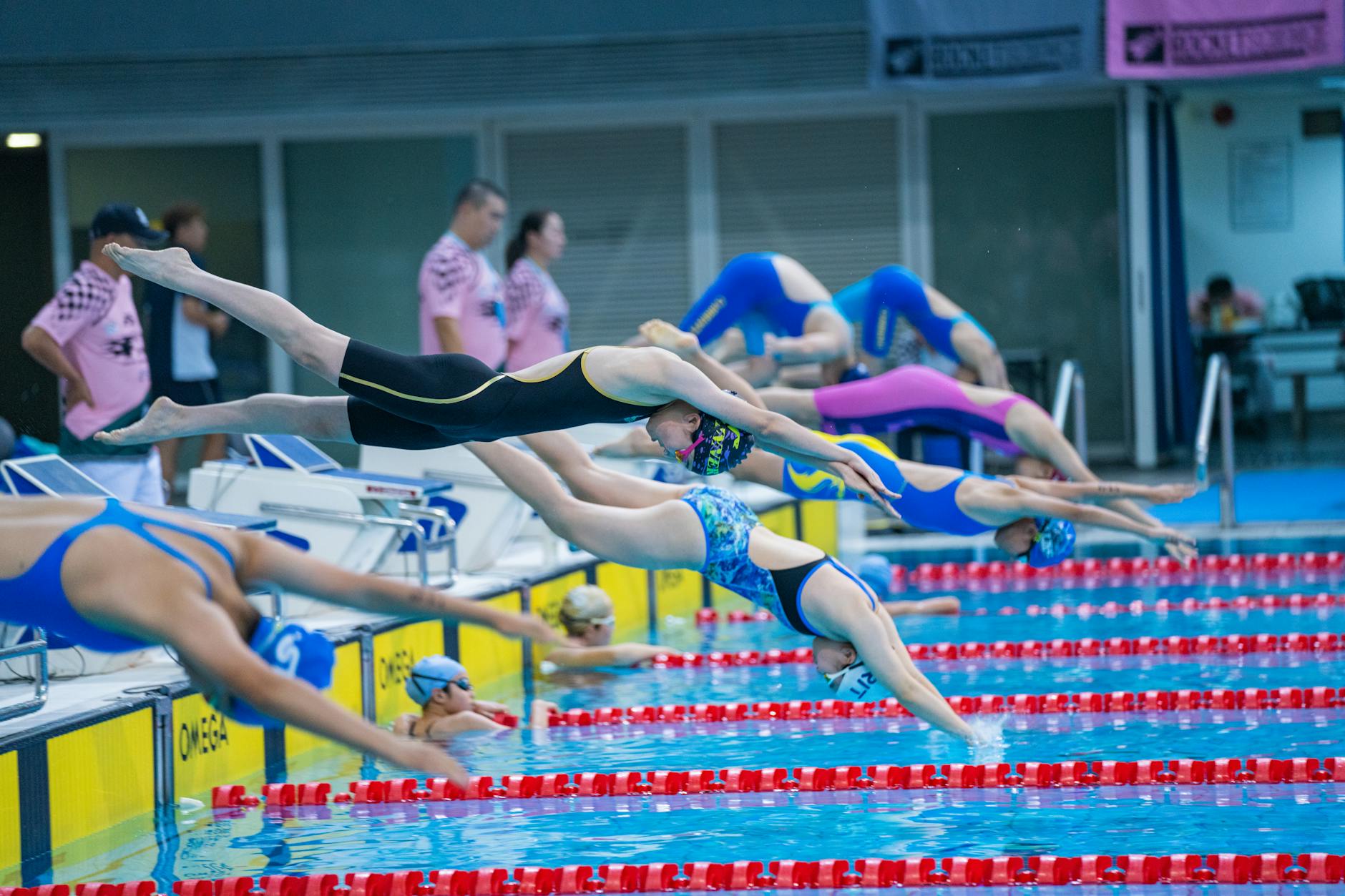
Magnussen, the swimmer who signed first and staked something of his legacy on the concept, finished last – twice.