



A Long-Standing Warning, Now Mainstream
Bernie Sanders has spent the better part of his political career making arguments that were easy to dismiss. Concentrated wealth corrupts democratic institutions. Billionaires should not exist alongside mass poverty. Corporate power, left unchecked, eventually cannibalizes the systems meant to govern it. For most of those decades, the response from political and media establishments was either ridicule or quiet indifference. That calculation, Sanders now believes, has shifted.
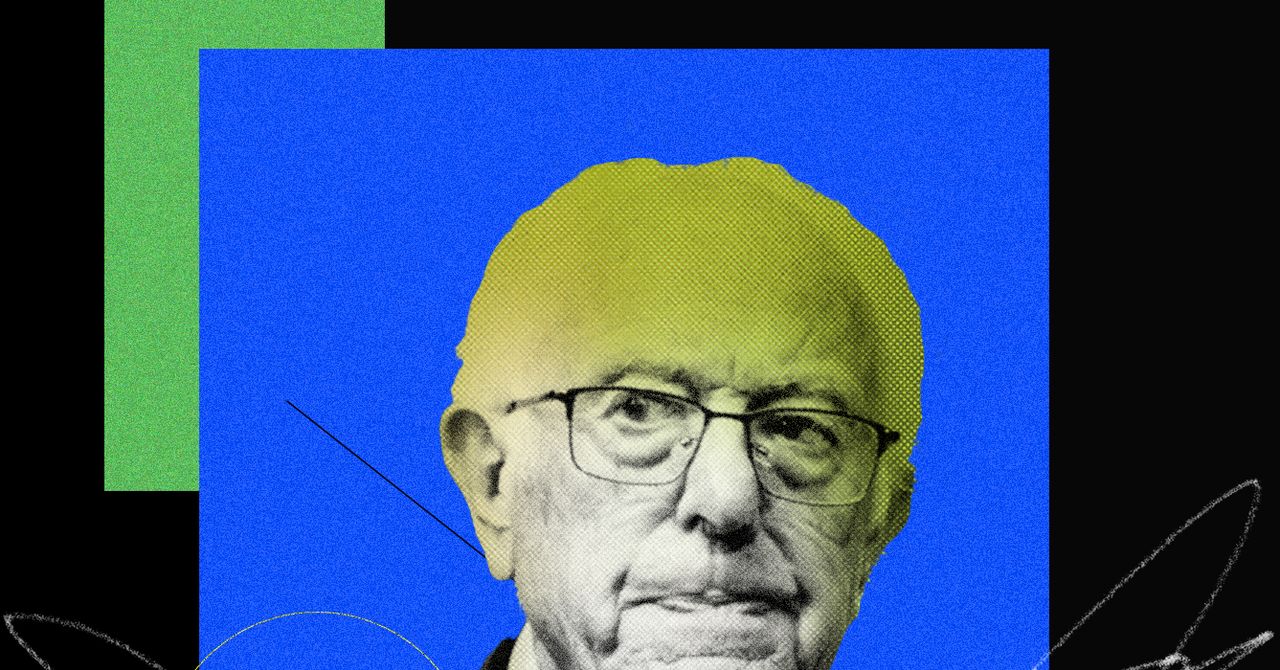
In a recent interview on the Wired Big Interview podcast, the Vermont senator made clear that he sees the current moment as a convergence – frustration with Big Tech, billionaire political influence, and the unchecked expansion of artificial intelligence arriving at the same point simultaneously. He is not claiming credit for predicting it. He is, however, positioning himself as the person who has been making the case longest and, therefore, the one best suited to address it.
Big Tech as the New Focal Point
What has changed is not Sanders’s argument – it is the target. For years, his critique centered on Wall Street banks, pharmaceutical companies, and the fossil fuel industry. Those fights persist, but AI and the technology sector have moved to the center of his concern. The speed at which a small number of companies have accumulated data, capital, and political access has given the old inequality argument a new and more urgent form.
The concentration of AI development inside a handful of firms is, in Sanders’s framing, not a technical problem – it is a political one. When the infrastructure shaping how people communicate, work, find information, and make decisions is owned by a small number of extraordinarily wealthy individuals, the question of democratic accountability becomes acute. That framing is gaining traction in places it previously couldn’t: town halls, union meetings, and congressional hearings that would have once focused on trade or healthcare are now partly consumed by debates over who controls these systems and what recourse ordinary people have when those systems cause harm.
Sanders connects the billionaire question directly to AI’s development trajectory. The companies advancing the most powerful AI models are, in several cases, led by individuals whose personal net worth exceeds the GDP of small nations. That is not incidental to how those systems get built, he argues – it shapes what they optimize for, who benefits, and who absorbs the disruption. When Elon Musk, Jeff Bezos, and a small number of peers hold both the capital and the political relationships to steer these technologies, the public has no meaningful seat at the table.
There is also the labor dimension. Automation anxiety is not new, but the pace at which AI tools are being deployed across white-collar work – legal research, medical documentation, journalism, software development – has moved the conversation from theoretical to immediate. Sanders has long argued that productivity gains should be distributed broadly rather than funneled to shareholders, and AI is producing those gains at a rate that makes the distributional question impossible to defer. The question of who captures the economic surplus from machine intelligence is, for him, the defining economic issue of the next decade.

The Tipping Point Argument
Sanders’s bet is specific: that public frustration with these dynamics has passed a threshold that makes political action possible in a way it wasn’t five or ten years ago. That is a claim worth examining carefully, because political tipping points are often declared prematurely. The anger is real. Whether it translates into durable legislative pressure is a separate question.
What Sanders points to is a broadening of the coalition. Concerns about AI’s effects on employment and democracy are no longer confined to left-wing critics or academic researchers. Conservative voices worried about Big Tech censorship, libertarians concerned about surveillance, labor unions facing automation in manufacturing and logistics – these groups do not agree on solutions, but they share a diagnosis. An unaccountable concentration of technological power is a problem. That overlap, fragile as it is, creates openings that did not previously exist. Issues like police use of facial recognition technology – already producing documented wrongful arrests in Florida – illustrate how AI’s reach into daily life is generating friction across ideological lines.
What “Doing Something” Actually Requires
Sanders has not, in recent public statements, laid out a comprehensive AI policy agenda. What he has articulated is a framework: that the development and deployment of powerful AI systems should be subject to democratic oversight, that the workers displaced by automation deserve direct support – not retraining programs that frequently fail to produce employment – and that the accumulation of AI-driven wealth by a narrow elite is not an acceptable outcome for a democratic society.
The practical obstacles are considerable. Congress has struggled to pass meaningful tech regulation for years, hampered by lobbying budgets that dwarf what most regulatory agencies spend on everything. The AI sector specifically has embedded itself into defense contracting, financial services, and healthcare in ways that make surgical regulation difficult. Every major firm can point to national security arguments, efficiency arguments, or innovation arguments as reasons why aggressive oversight would be counterproductive. Sanders’s counter – that these arguments have always been made by concentrated power to forestall accountability – is consistent. Whether it is sufficient to move legislation is a different matter.

There is also the timeline problem. AI capabilities are advancing faster than any legislative process can track. By the time a bill addressing today’s concerns passes committee, the underlying technology may have moved in directions the bill’s drafters did not anticipate. Sanders is not a technologist, and he has not claimed to be. His argument is that the political and economic structures governing AI – not the code itself – are where the decisions that matter most will be made. That may be correct, but it also means that the urgency he conveys about AI as a social force sits in tension with the grinding pace of institutional response.
The senator from Vermont has outlasted a lot of political moments that were supposed to marginalize him. The question his current position raises is whether being right about a problem – early, consistently, and loudly – actually produces the power needed to do anything about it. He is 83 years old, operating in a Senate where AI legislation remains nascent, speaking to an electorate that is angry but not yet unified around any specific set of demands. The frustration he is counting on is real. So is the distance between frustration and law.