



Meta Bets on Its Own Silicon
Meta has confirmed that production of its new custom AI chips will begin in September, marking a concrete step in the company’s long-running effort to reduce dependence on third-party semiconductor suppliers. The move puts Meta alongside Google and Amazon, both of which have developed proprietary chips to power their AI infrastructure at scale.
What makes this rollout distinct is not just the timeline but the design philosophy behind it. Meta is building these chips using a modular architecture – a deliberate choice that reflects how quickly AI requirements are shifting, even between the moment a chip is designed and the moment it rolls off a production line.
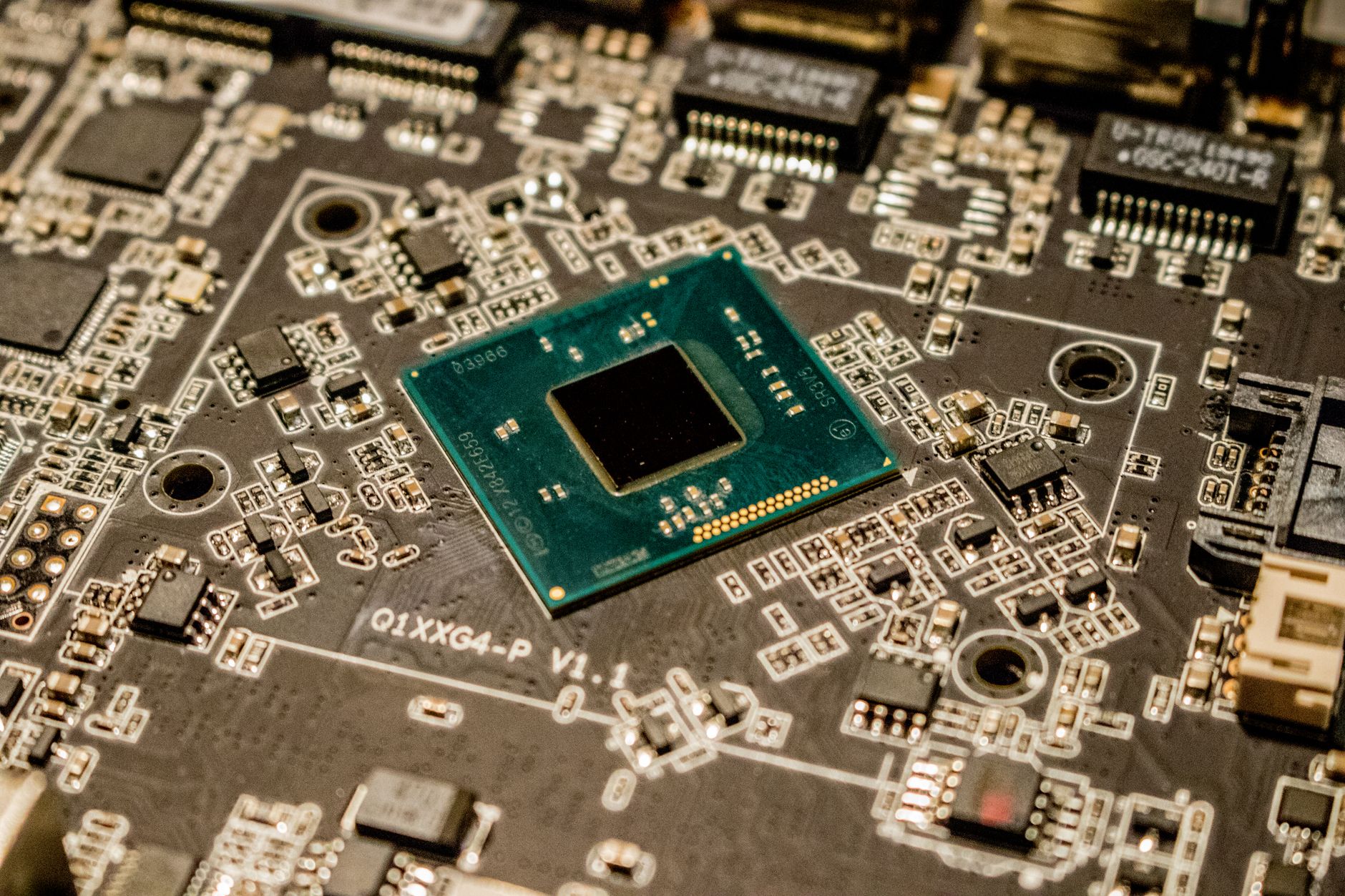
Why Modular, and Why Now
The modular approach gives Meta room to adjust. AI workloads in 2025 look different from those in 2023, and the workloads expected in 2027 will likely diverge further still. By designing chips in discrete, swappable components rather than as monolithic units, Meta is building in the ability to update specific parts of the chip’s function without scrapping the entire design. That kind of flexibility has real cost implications at data center scale.
The company is explicitly anticipating that its needs will change by the time these chips are in active production – an admission that speaks to how fast the AI hardware landscape is moving. Designing for a fixed AI environment is increasingly a liability. What sufficed for large language model inference a year ago may already be inadequate for the multimodal, real-time systems being deployed today.
Meta’s AI ambitions have expanded well beyond its social platforms. The company is running AI assistants, recommendation engines, content moderation systems, and generative tools across Facebook, Instagram, WhatsApp, and its Ray-Ban smart glasses. Each of those applications has different computational demands, and a modular chip architecture could allow Meta to tune silicon for specific workloads rather than forcing every task through a general-purpose processor optimized for none of them.
The September Production Window
September is a specific and telling deadline. Getting chips into production by then positions Meta to have working hardware in its data centers before the end of the year – in time to inform 2026 infrastructure planning and procurement decisions. AI chip development cycles are long, and the September date suggests this project has been in motion for years, not months.
The timing also lands in the middle of an intensifying competition for AI compute capacity. Nvidia remains the dominant supplier of AI accelerators, and demand for its H100 and B200 GPUs continues to outpace supply in certain configurations. Companies that can build their own silicon gain some insulation from that supply chain pressure – and from Nvidia’s pricing power.

What Modular Design Means in Practice
Modular chip design is not a new concept, but applying it specifically to AI acceleration is a more recent development. The idea is to break a chip into discrete functional blocks – compute tiles, memory interfaces, interconnects – that can be swapped or upgraded independently. This is sometimes implemented through chiplet architectures, where multiple smaller dies are packaged together rather than fabricated as one large piece of silicon.
For Meta, the practical benefit is longevity and adaptability. A chip designed entirely around today’s AI models risks obsolescence within two or three years. A modular chip can theoretically age more gracefully, with individual components refreshed as new manufacturing processes or new architectural insights become available. That matters when you are building chips at the scale Meta operates.
There is also a talent and process argument for modularity. Designing smaller, discrete components is more manageable than coordinating every aspect of a massive monolithic design simultaneously. Teams can work in parallel on different modules, and testing becomes more contained. For a company still building out its chip design organization, that structure has real engineering advantages.
Still, modular architectures introduce their own complications – particularly around how modules communicate with each other and how latency accumulates across interconnects. Those tradeoffs are manageable, but they require careful engineering decisions that can make or break performance benchmarks. Meta’s chip team will be measured not just on whether production starts in September, but on whether the silicon that emerges actually performs at competitive levels against Nvidia’s offerings and against what Google has achieved with its TPU line.

The Larger Question
Custom silicon is expensive to develop and risky to deploy. Google spent years and significant resources before its TPUs became a genuine infrastructure advantage. Amazon’s Trainium and Inferentia chips have gained traction but are still working to displace Nvidia at the performance frontier. Meta is entering that same long game.
September production is a beginning, not a finish line. The real test comes when these chips run live workloads – when Meta’s engineers find out whether the modular gamble pays off or whether the interconnect overhead and integration complexity eat into the gains the architecture was supposed to deliver.