


A Natural Experiment Under Threat
For decades, the coral reefs of Egypt’s Red Sea did something that reefs almost nowhere else on Earth managed to do: they survived rising ocean temperatures without bleaching. Now, that streak is ending – and scientists who spent years trying to explain the immunity are racing to understand what changed before the window closes.
Why the Red Sea Was Different
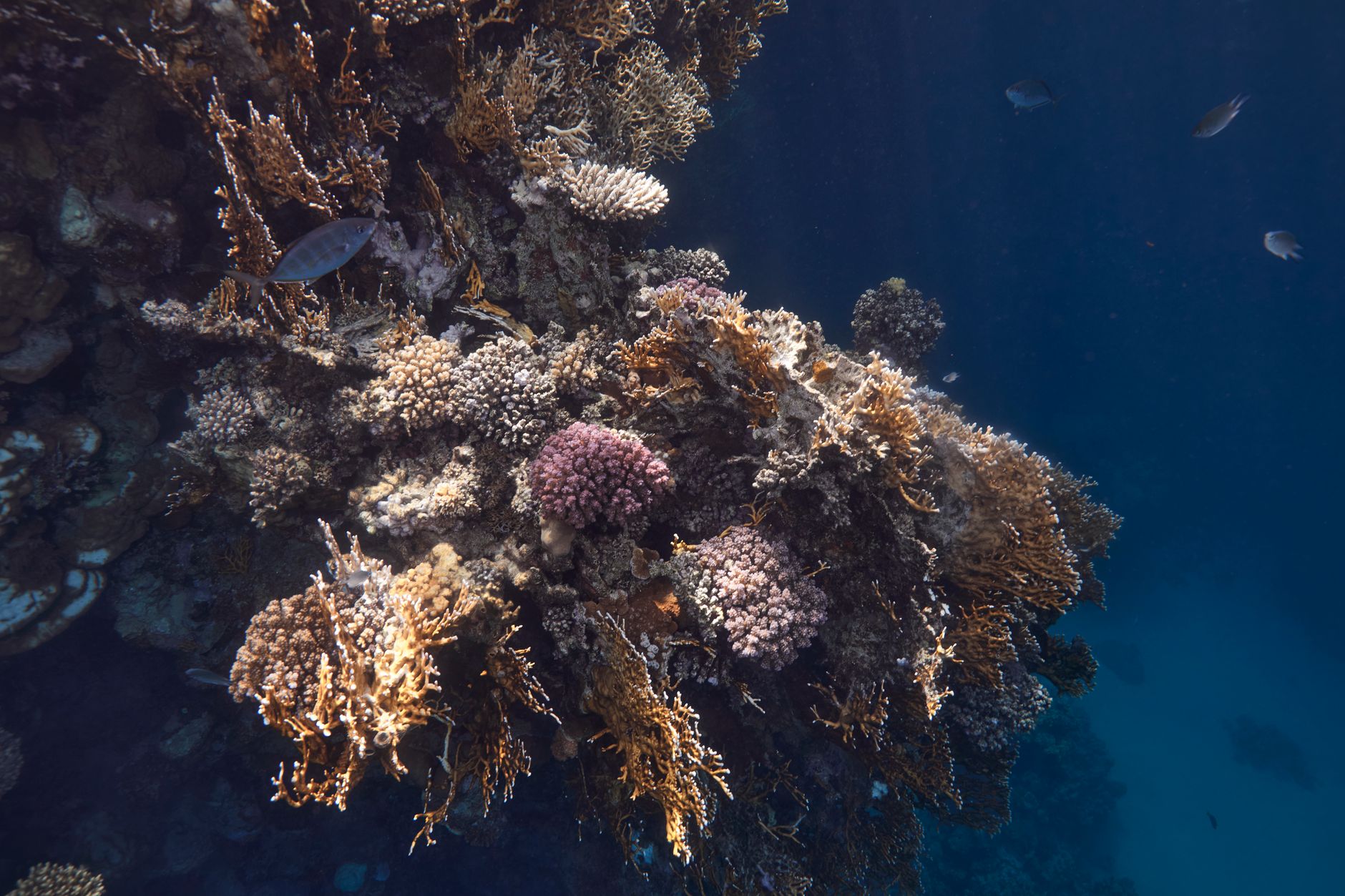
Coral bleaching happens when water temperatures climb high enough to stress coral polyps, causing them to expel the symbiotic algae living in their tissues. Without those algae, corals turn white and, if conditions don’t improve, die. It’s the mechanism behind mass bleaching events that have devastated reefs across the Pacific, Indian Ocean, and Caribbean over the past four decades. The Red Sea, conspicuously, kept escaping that fate.
The leading theories involve the Red Sea’s geography and its unusual thermal history. The sea is long, narrow, and largely enclosed – conditions that create significant temperature variation from north to south. Corals in the northern reaches, near Egypt’s Sinai coast and the Gulf of Aqaba, have historically experienced water temperatures that fluctuate enough to potentially condition them to heat stress. The hypothesis is that repeated mild thermal exposure across generations has selected for corals with higher bleaching thresholds. Whether that conditioning is genetic, epigenetic, or tied to specific symbiotic algae strains is something researchers haven’t fully settled.
The algae angle has gained attention. Different strains of Symbiodiniaceae – the family of algae that live inside coral tissue – vary considerably in their heat tolerance. Some researchers believe Red Sea corals host strains that simply withstand higher temperatures before getting expelled. Others point to the coral hosts themselves, arguing that certain genetic lineages in the region produce proteins that protect cellular structures under thermal stress. The honest answer is that both mechanisms may be operating at once, making the Red Sea reefs a compound system that proved harder to destabilize than individual components would suggest.
What made these corals genuinely useful to science wasn’t just their survival – it was the theoretical possibility of transplanting their resilience. If researchers could isolate what makes a Red Sea coral resistant to bleaching, they could potentially apply that knowledge to reef restoration projects elsewhere: selectively breeding tougher corals, transplanting resistant symbiont strains, or identifying genetic markers that predict survival under heat stress. That prospect turned Egypt’s reefs into one of the more closely watched natural laboratories in marine biology.
The Cracks Appearing in the System
The current situation is more complicated than a simple reversal. Red Sea corals haven’t suddenly collapsed – but they are bleaching in ways and at frequencies that researchers didn’t expect to see this soon. The events are being linked to broader climate patterns pushing ocean temperatures into ranges that even the most resilient corals in the region appear unequipped to handle. The buffer that geography and evolutionary history provided is narrowing.
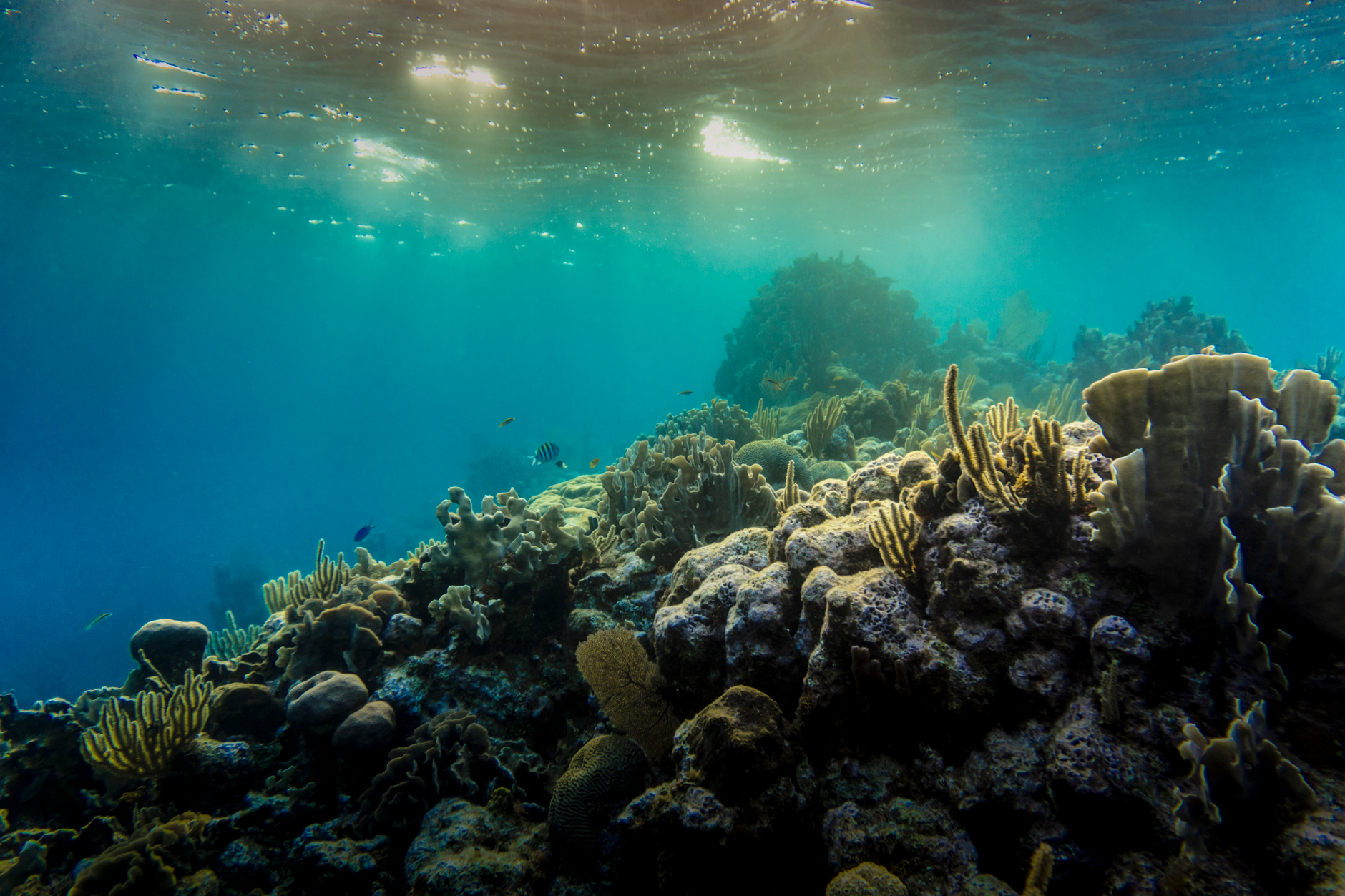
This matters for a specific and uncomfortable reason. The Red Sea’s corals were treated, in some scientific circles, as a kind of proof-of-concept – evidence that coral resilience could be a real strategy, not just wishful thinking, for reef conservation. If the toughest corals on the planet start bleaching, it forces a harder question about whether biological resilience can ever outpace the rate at which surface ocean temperatures are rising. The math on that question is getting less favorable.
Ocean warming isn’t uniform, and the Red Sea has its own thermal dynamics driven by regional wind patterns, monsoon systems, and limited deep-water exchange with the broader Indian Ocean. Temperature anomalies that would have been extreme outliers twenty years ago are becoming baseline conditions in some years. Corals adapted to handle moderate thermal stress are now encountering stress that exceeds anything their physiology – however evolved – was shaped to manage. The threshold isn’t moving. The temperature is.
The scientific disagreement over why Red Sea corals were resilient has now gained an urgent practical dimension. If the resilience came primarily from symbiont composition, that might be addressable – researchers could theoretically introduce more heat-tolerant algae strains into stressed coral populations, a technique already under investigation in Australia’s Great Barrier Reef restoration programs. If the resilience is mostly genetic, the timeline for any applied intervention gets much longer, requiring selective breeding programs that take years to produce transplantable colonies at meaningful scale. Not knowing which factor dominates means not knowing which intervention to prioritize.
There’s also the question of what Egypt’s reefs mean economically. The Red Sea coast – particularly around Sharm el-Sheikh and Hurghada – supports a tourism economy heavily dependent on reef health. Dive tourism, snorkeling operations, and the coastal hospitality industry tied to reef access generate significant revenue for a country where foreign exchange is a persistent pressure point. A degraded reef system doesn’t just affect marine biology; it affects the financial calculations of a government already managing a difficult economic environment. That pressure creates both urgency around conservation and, in some cases, conflicts with coastal development that damages reef ecosystems through runoff, anchoring, and construction.
What Comes Next for Research
The scientific community studying these reefs is working against a shrinking window. Monitoring efforts are tracking bleaching frequency and severity, while genetic studies are attempting to build a clearer picture of which coral populations show the most durable resistance. Some researchers are collecting tissue samples specifically to preserve the genetic material of the most heat-tolerant individuals – a kind of biological insurance against further loss.

The unresolved core question – what exactly made these corals special – now carries consequences beyond academic interest. Every bleaching event that occurs before researchers find a definitive answer is potentially destroying the very specimens that could have provided it. The Red Sea’s reefs are simultaneously the subject of the study and the thing being lost in the time it takes to complete it.