


The Quiet Component Doing Heavy Lifting
Most people building a home audio setup focus on speakers and a source – a turntable, a streaming device, a TV. The amplifier sits somewhere in the background, unglamorous, often misunderstood. Whether you need one, and what it actually does to your sound, depends on a few things worth understanding before spending money.
What an Amplifier Actually Does
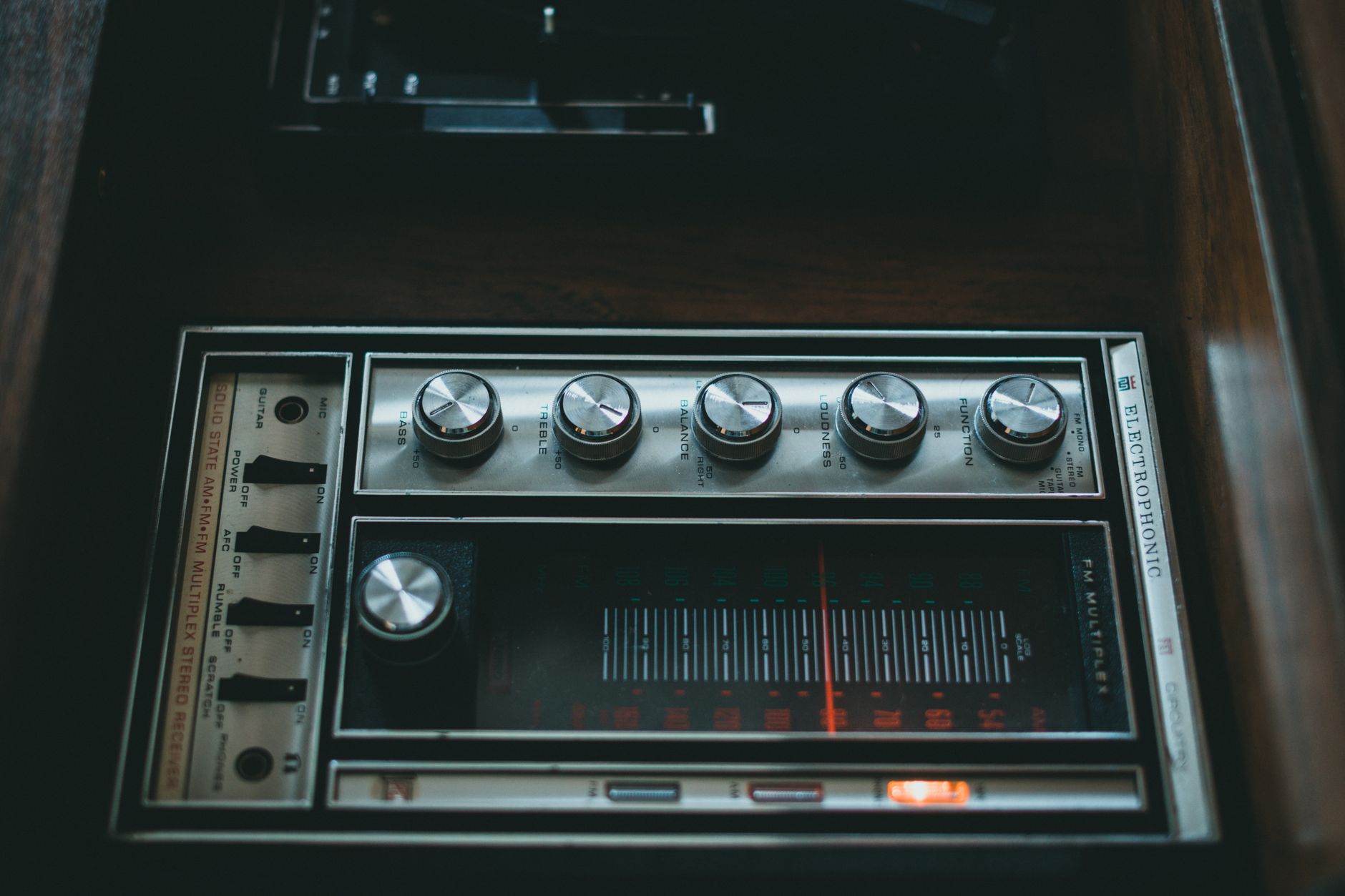
An amplifier takes a low-level audio signal – the kind produced by a phone, a DAC, a turntable’s preamp, or a streaming device – and increases its power enough to physically move speaker drivers. That movement is sound. Without sufficient power behind the signal, speakers either produce very little volume or distort badly as they’re pushed beyond what the source signal can cleanly drive them to.
The signal coming out of most consumer electronics is measured in milliwatts. Speakers, depending on their efficiency rating and impedance, can require anywhere from a fraction of a watt to hundreds of watts to perform at their rated output. The amplifier bridges that gap. It doesn’t change the character of the signal in the way an equalizer does – ideally, it just makes the signal bigger while adding as little noise or coloration as possible.
Efficiency matters here more than raw wattage. A speaker rated at 90dB sensitivity will reach a given volume with far less power than one rated at 85dB. High-sensitivity speakers work well with low-powered amplifiers, including tube amps that often output 10 to 15 watts. Low-sensitivity speakers – common in studio monitors and certain audiophile designs – demand more power, and pairing them with an underpowered amp leads to clipping, which distorts the signal and can damage the drivers over time.
Impedance – measured in ohms – is the other variable. Most home speakers run at 4, 6, or 8 ohms. An amplifier rated to handle 4-ohm loads draws more current and generates more heat than one running an 8-ohm speaker at the same volume. Using a 4-ohm speaker with an amplifier only rated for 8 ohms won’t necessarily destroy it immediately, but it stresses the output stage and shortens the amp’s lifespan while degrading performance.
Integrated, Separate, and Built-In – What the Options Look Like
The most common type people encounter is the integrated amplifier, which combines a preamplifier and a power amplifier in a single chassis. The preamp handles input selection and volume control; the power amp handles the actual signal amplification. Keeping them together saves money and space. Separating them – using a dedicated preamp and a separate power amp – gives you more control over each stage and can improve performance, but at significantly higher cost and complexity.

Many modern speakers, particularly bookshelf and studio monitor designs marketed to home users, are active or powered speakers. They have amplifiers built directly into the cabinet. This removes the need for a separate amplifier entirely, and the internal amp is usually matched specifically to the speaker’s drivers, which can be an advantage. The tradeoff is that you lose the ability to swap or upgrade the amp independently. If the amp inside the speaker fails, the repair is more involved than simply replacing an external unit.
Passive speakers – the traditional kind with no internal electronics – require an external amp. These are the speakers most associated with serious home audio setups, largely because they give the owner flexibility. Swap the amp, change the sound. Run different speaker cables, adjust the presentation. Passive systems invite experimentation in a way active ones don’t. That’s a feature for some people and an unnecessary complication for others.
A/V receivers used in home theater systems are essentially multi-channel amplifiers with additional processing built in – Dolby Atmos decoding, HDMI switching, room correction software. They amplify five, seven, nine, or more channels simultaneously. The per-channel wattage from a receiver is usually lower than a dedicated two-channel stereo amp at a similar price point, which is why some home theater enthusiasts use a receiver for processing and surround channels while adding a dedicated stereo amp for the front left and right speakers.
Headphone amplifiers occupy a separate category. Most headphones can be driven by the output stage built into a phone or laptop, but planar magnetic headphones and certain high-impedance dynamic headphones – models from Sennheiser and Beyerdynamic that run at 300 or 600 ohms – genuinely benefit from a dedicated headphone amp. The volume control on a phone doesn’t have enough swing to drive those headphones to a comfortable listening level without maxing out and introducing distortion. A dedicated amp gives you proper gain and a lower output impedance, which tightens bass response and reduces noise. Sound reproduction quality at the hardware level shapes the listening experience far more than people expect – the same principle that makes large-format film sound so distinct applies at the headphone level too.
Class D amplifiers have changed the market considerably over the past decade. Where Class A and Class AB designs – the traditional topologies – generate significant heat and require large heat sinks and heavy chassis, Class D amps switch their output transistors rapidly to achieve high efficiency with minimal heat. A modern Class D amplifier can output 100 watts per channel from a unit smaller than a paperback book, running cool enough to sit in a closed cabinet. Audio purists have historically been skeptical of Class D sound quality, but the gap has closed substantially, and several well-regarded brands now build around Class D output stages without apology.
When You Actually Need One
If your speakers are passive, you need an amplifier – there’s no scenario where that’s optional. If your speakers are active, you don’t, unless you’re adding a subwoofer that requires its own amplification (most powered subwoofers include a built-in amp, so this usually resolves itself). If your headphones are low-impedance and efficient, your phone or laptop is probably fine. If they’re not, you’ll know – the volume maxes out before reaching a comfortable level, or the sound at high volume sounds strained and compressed.

The honest answer for most people assembling a straightforward system is that the amplifier question resolves around speaker choice. Pick passive speakers and you’re committed to an external amp. Pick active speakers and you’re not. The more interesting question comes for people who already have a system and feel like something is wrong – volume that runs out before the room is filled, bass that sounds loose or undefined, a harshness at higher levels. Those symptoms often point to an amplifier either mismatched to its speakers or simply underpowered for the listening environment. A 20-watt amp might test fine on a bench at moderate levels while consistently clipping in a room where someone wants real volume at 15 feet.