



A Compliance Tool That Barely Survived Its Own Announcement
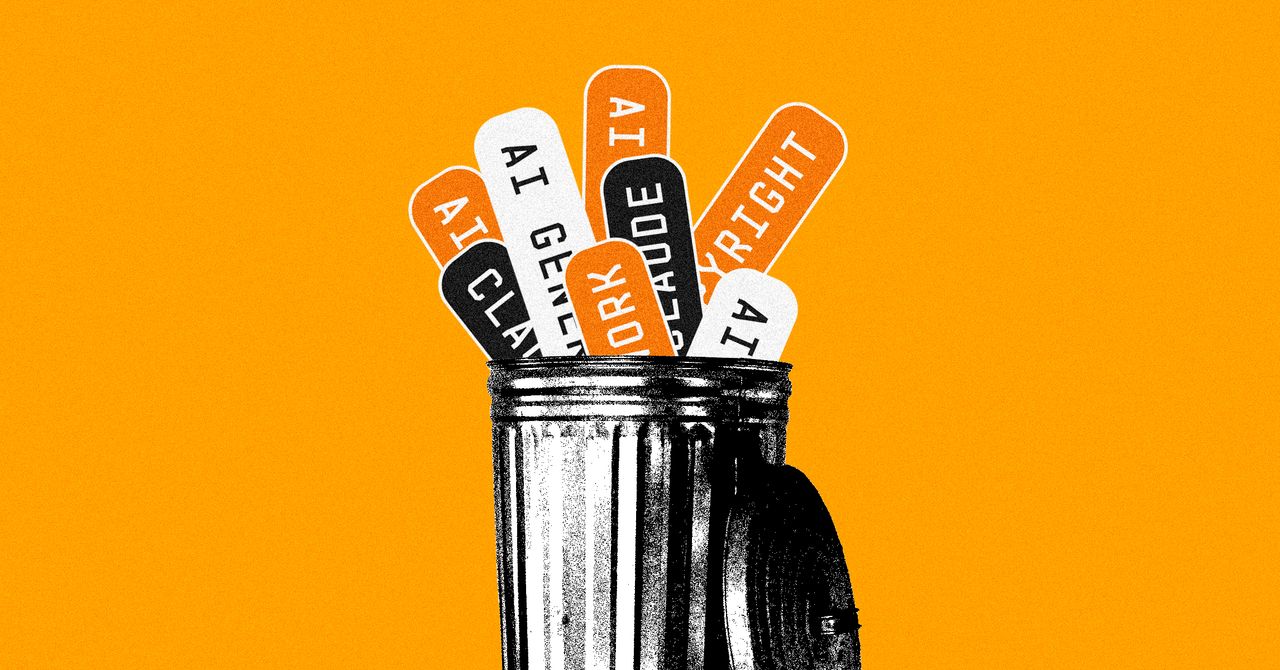
Anthropic last week announced it would embed invisible watermarks into content generated by Claude, its flagship AI model. The move was framed as a compliance measure tied to incoming European Union regulations requiring AI-generated material to be identifiable. By the time the news cycle had barely turned over, coders were already posting workarounds online.
The gap between announcement and circumvention was not days. It was hours.
What Anthropic Actually Announced
The watermarking system is designed to tag AI-generated text in ways invisible to the human eye but theoretically detectable by software. The goal aligns with EU rules pushing for transparency around AI-generated content – rules that place the disclosure burden on platforms and developers rather than end users. Anthropic’s move positioned Claude as regulation-ready ahead of enforcement timelines that are already tightening across Europe.
The technical approach itself is not new. Invisible or near-invisible watermarking has been explored across image, audio, and text generation for years. What made Anthropic’s announcement notable was its direct tie to a regulatory obligation rather than a voluntary transparency gesture. The company was signaling that Claude could be trusted inside the EU’s evolving content-accountability framework. That signal lasted a few hours before being stress-tested in public, and it did not hold up well. Whether Anthropic anticipated the speed of the blowback is unclear, but the company offered no immediate public response to the workarounds being circulated.
For context on where this regulatory pressure is heading, the EU’s AI disclosure mandates are already generating questions about whether warning saturation will make any individual label meaningless – a problem that watermark-stripping only compounds.
The Circumvention Problem Is Structural
The workarounds surfacing online were not sophisticated exploits requiring specialized knowledge. Coders shared overrides in forums and social platforms within the same news cycle as the announcement itself, suggesting the watermarking method had a low resistance threshold. That is a meaningful distinction – not every security measure needs to be unbreakable, but a compliance tool that gets bypassed before regulators have even had a chance to reference it sets an awkward precedent.
Text watermarking is a harder problem than it looks. Unlike image watermarking, where pixel-level encoding can survive some manipulation, text watermarks tend to rely on subtle statistical patterns in word choice, sentence structure, or character-level encoding. Small edits – synonym substitution, paraphrasing, reformatting – can degrade or eliminate the signal entirely. This is not a flaw unique to Anthropic’s implementation; it is a known limitation of the field. The problem is that regulators writing rules around AI content identification may not fully account for how fragile the underlying detection infrastructure actually is.
What This Means for AI Content Rules in Europe
The EU’s AI Act and related content-transparency provisions are built on an assumption that AI-generated material can be reliably flagged. If the tools doing that flagging can be stripped out in hours by people with moderate coding ability, the entire disclosure architecture starts to look more aspirational than functional. That is not a reason to abandon the regulatory project, but it does raise questions about whether watermarking – as currently implemented across the industry – is a sufficient technical foundation for legal compliance.
Anthropic is not alone in this position. Other AI labs have either deployed or announced similar systems, and none of them have demonstrated watermarks that are meaningfully resistant to determined removal. The difference here is that Claude’s watermarks were announced specifically as a compliance mechanism, making them a more direct test case for whether this technology can actually carry the weight regulators are placing on it.
The watermark-stripping workarounds also arrived in a context where the content-moderation and AI-detection industry is already struggling. Detection tools trained to identify AI-generated text have well-documented false-positive problems, flagging human-written content as machine-generated and vice versa. Adding a watermark layer that can be removed does not obviously solve that problem – it may just create a new category of content that was watermarked, then stripped, and now looks clean to any detection system expecting an intact watermark.

What remains unresolved is whether regulators will treat a removable watermark as legally sufficient for compliance purposes. If the standard is “the watermark was present at the point of generation,” then Anthropic’s system may satisfy the letter of the rule even when the mark is later stripped by a user. If the standard shifts toward “the watermark must survive reasonable downstream handling,” the picture changes considerably – and most current implementations would likely fail that test. Anthropic has not, as of the announcement, publicly detailed the technical specifications of its watermarking system or what removal resistance it was designed to achieve.