

Anthropic has filed its long-anticipated IPO prospectus, OpenAI announced three scientific breakthroughs, Microsoft moved to cut roughly 60,000 jobs through a buyout program, and researchers inched closer to a pill that mimics exercise – a week dense with developments that pull in different directions across the AI and technology landscape.
Anthropic Steps Into the Public Market – With 100 Pages of Caveats
The 335-page prospectus Anthropic submitted to regulators is, among other things, a document about identity. Around 100 of those pages address risk factors, covering concerns that range from catastrophic AI dangers to massive compute costs – and a month-long training pause that the filing apparently discloses in detail. That a company going public would dedicate nearly a third of its filing to existential and operational hazards says something about the business it has built, and the audience it thinks it needs to reassure.
Anthropic has spent years cultivating multiple, sometimes incompatible public images. It presents itself as an AI safety research organization committed to reducing harm from advanced AI systems. It also operates as a profit-driven technology company with soaring revenues. And its founders, several of whom left OpenAI, have been explicit about their belief that they are building toward superhuman AI – a goal that sits uncomfortably alongside safety-first positioning. After the IPO, those founders will retain voting control of the company, according to reporting from The Verge, meaning outside shareholders get the upside without the governance leverage.
The financial picture the prospectus sketches is a familiar one for high-growth AI companies: revenues climbing sharply, losses still staggering. Neither figure has been specified in sources available here, but the pattern – aggressive spending on compute infrastructure offset by accelerating enterprise and API revenue – tracks with what the broader AI sector has reported throughout 2025 and into 2026. The listing is widely expected to set a tone for whether large-scale AI investment maintains its momentum or begins to meet shareholder skepticism more directly.
What the IPO probably will not resolve is the tension at the center of Anthropic’s story. Safety research costs money and slows deployment; commercial growth requires speed and scale. For years, Anthropic has managed to hold both positions without being forced to choose publicly. A quarterly earnings call – with analysts, obligations to disclose material changes, and institutional investors demanding returns – is a different kind of accountability than a research blog post or a Congressional hearing.

Microsoft Cuts, OpenAI Publishes, and the Grid Tries to Keep Up
While Anthropic prepared for its market debut, Microsoft announced it is offering buyouts to approximately a quarter of its workforce. Around 60,000 employees are eligible for the program, according to Bloomberg. The context matters: Microsoft has committed to $190 billion in AI spending this year, per the New York Times, and that kind of capital reallocation almost inevitably shows up somewhere in headcount decisions, even at a company of Microsoft’s size.
OpenAI, meanwhile, moved in a different direction – outward, toward credibility. The company announced three new scientific discoveries spanning mathematics, computer science, and physics. To get those findings into the research community, it enlisted what Gizmodo described as expert “shepherds” to help publish the breakthroughs through established channels. Whether that process satisfies the peer-review standards traditional researchers expect remains an open question, but the structural decision to embed domain experts in the publication pipeline is a meaningful departure from simply posting results online.
The infrastructure holding all of this AI activity together is under pressure that rarely makes headlines. Electrical transformers – not the neural-network kind, but the hardware moving power across the US grid – have barely changed in design for roughly a century. Solid-state versions, currently still in development, could reduce supply constraints and cut power losses as demand from data centers and EV charging continues to climb. The technology is not ready at scale, but researchers and companies are actively investing in it as a long-term answer to grid bottlenecks that AI’s energy appetite is making harder to ignore.
On the energy generation side, solar is quietly overtaking nuclear as a global power source, driven by falling panel and battery prices. A separate trend – balcony solar installations – is beginning to gain traction in the United States after taking hold in parts of Europe. Neither development directly solves the immediate strain that large data center clusters place on regional grids, but they shift the longer-term supply picture in ways that matter for the economics of running AI infrastructure.
Elsewhere in the week’s science and technology news: company documents obtained by the Los Angeles Times reveal that the plastics industry was aware microplastics could enter the human body as far back as 1974, decades before the issue reached mainstream public attention. And a startup called Reflec conducted a demonstration of lighting Earth from space – a project that has drawn alarm from astronomers and dark-sky advocates concerned about interference with ground-based observation.
The Exercise Pill and the Longer Arc of Biotech AI
Researchers are working to develop medicines that replicate specific benefits of physical exercise – muscle growth, lower blood pressure, improved mood – without requiring the activity itself. The goal, as MIT Technology Review’s Cassandra Willyard reported, is not to give healthy people a workout shortcut but to extend the physiological benefits of movement to people living with frailty, disability, or chronic illness. The science involves mapping exactly how the body responds to exercise at a molecular level, then identifying pathways that drugs could activate directly.
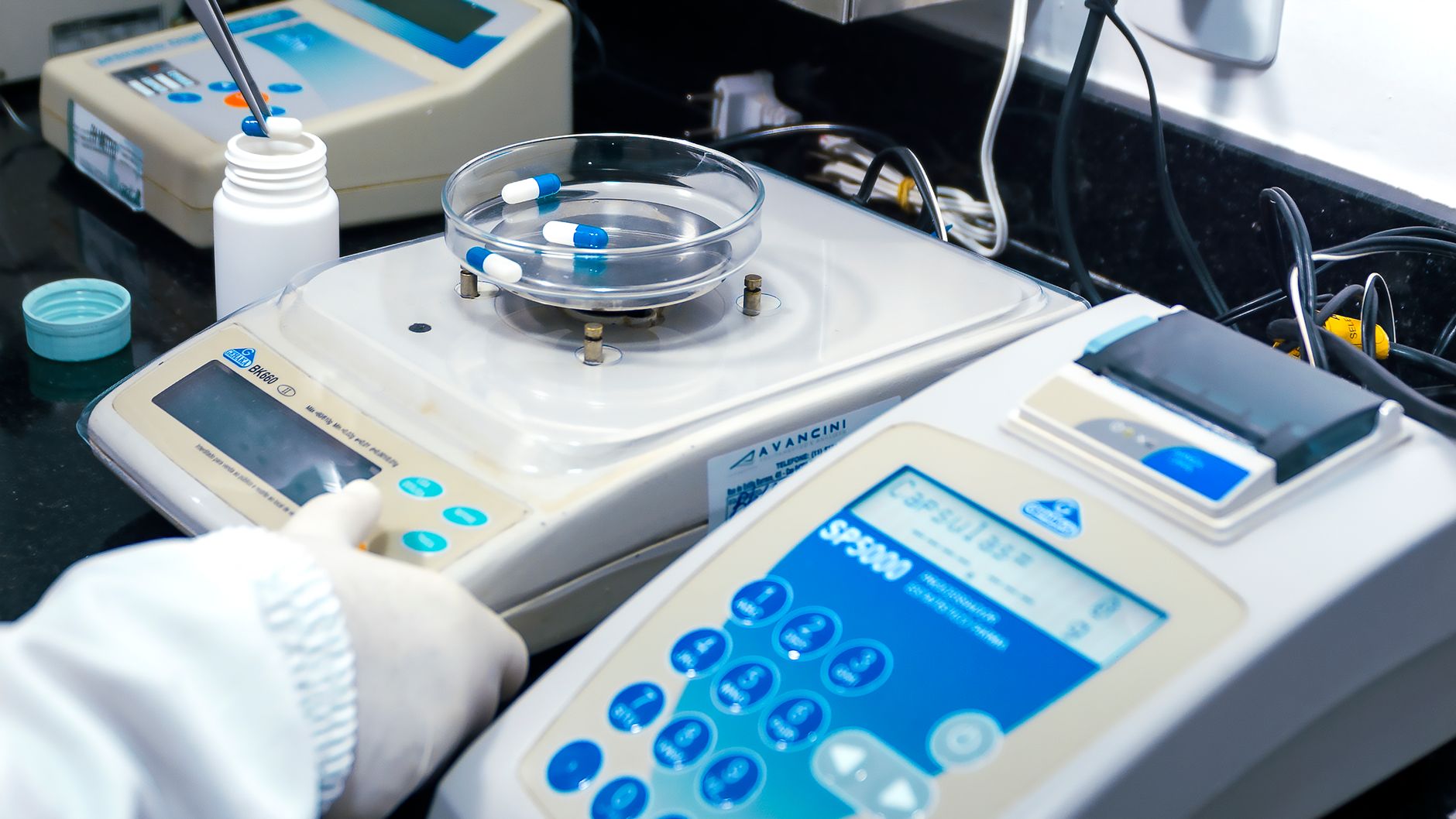
The exercise pill sits alongside five other long-promised technologies that MIT Technology Review is assessing in a new series called “Are we there yet?” from its Impossible issue – each scored on a progress meter based on where the science actually stands. Progress on the exercise front is real but incomplete: researchers understand more about the mechanisms than they did a decade ago, and some candidate compounds exist, but nothing has cleared the bar for clinical use. Given how much AI-assisted drug discovery has accelerated target identification in adjacent fields, it is worth asking whether the exercise pill’s timeline shortens further if the same tools get turned toward this problem – or whether the biology here is simply harder than a model can fix.