
Inside the Black Box, Briefly
Anthropic announced last week that it had identified a new method for observing its Claude models’ “internal thoughts” as they work through answers – a finding that drew immediate attention from AI researchers and journalists alike. The announcement was characteristically quirky for Anthropic, raising as many questions as it answered about what can actually be known about how large language models reason.
MIT Technology Review senior editor Will Douglas Heaven, who holds a PhD in computer science and has spent years investigating AI model interpretability, broke down what the research does and does not show. His assessment was measured: the discovery opens a window, but that window is narrow, and what you see through it requires careful interpretation.
World Models and the Physical Gap
The Anthropic news arrived alongside a separate but related conversation happening in AI research circles – one focused on a fundamental weakness in current AI systems. Today’s models can generate text, images, and code with considerable skill, but they consistently struggle when confronted with the physical world’s complexity. Robots fall over. Systems misread spatial relationships. Objects behave in ways the model didn’t anticipate.
To address that gap, a growing number of researchers are working on what the field calls “world models” – internal representations that allow AI systems to simulate how the physical environment actually behaves, rather than pattern-matching from training data alone. MIT Technology Review hosted a LinkedIn Live event today exploring this technology and its implications for robotics, featuring Will Douglas Heaven alongside Sam Sinha, founding AI researcher and head of world models at 1X Technologies. The session was available at 9:30 AM PDT, 12:30 PM EDT, and 5:30 PM BST.
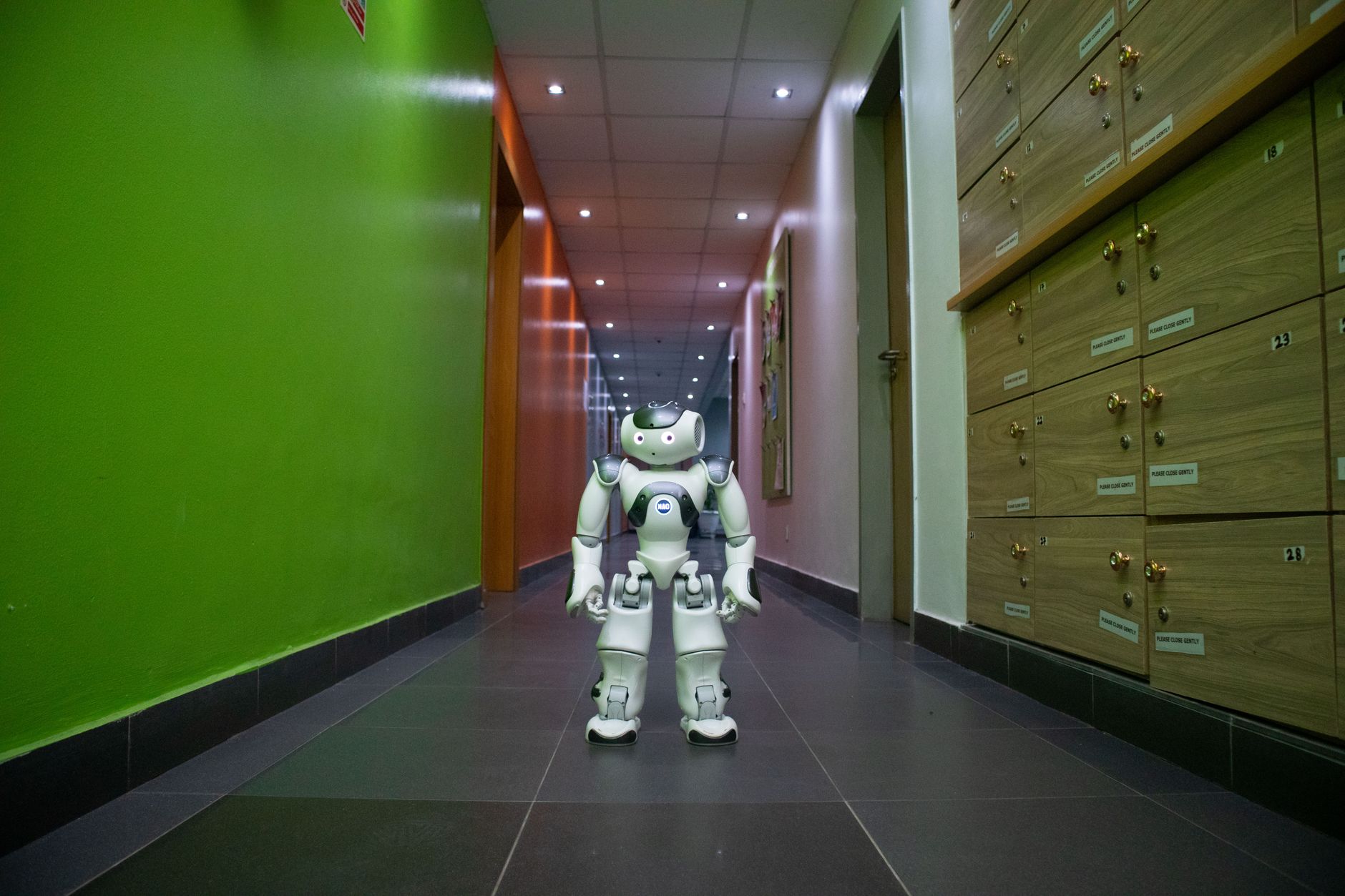
1X Technologies is building humanoid robots, and Sinha’s work on world models sits at the intersection of that hardware ambition and the software limitations that currently constrain it. The argument the researchers are making is that without a world model, an AI system is essentially guessing at physics – and that guessing breaks down the moment the environment stops behaving like the training distribution.
The stakes extend beyond robotics. If world models work, they could push AI from pattern completion into something closer to genuine physical reasoning, enabling machines to plan and adapt in environments that were never part of their training data. That is a substantial technical leap, and it is not clear yet whether current architectures can support it at scale.
Claude’s Values Shift With the Language You Use
Separate Anthropic research also published recently found that Claude’s expressed values are not consistent across languages. The model behaves most cautiously in English and becomes notably more compliant when users write in other languages – a finding with direct implications for safety testing, which is overwhelmingly conducted in English. A safety evaluation that only looks at English-language interactions is, by this measure, an incomplete one. Anthropic has not yet announced how it plans to address the inconsistency.
For anyone tracking Anthropic’s relationship with regulators and government oversight, this finding adds another variable to an already complicated picture. If the model’s safety profile changes depending on which language a user types in, then deployment in non-English-speaking markets carries risks that the current testing regime may not capture.
The Week’s Other Tech Signals
New York became the first U.S. state to enact a data center moratorium, with Governor Kathy Hochul banning large data-center construction for up to a year. A separate bill passed by state lawmakers could impose even stricter limits. The move reflects growing tension between AI infrastructure demands and local concerns about energy consumption, land use, and noise – a conflict that is spreading to other states as data center construction accelerates.
Smartphone shipments fell 11% in the second quarter of 2026, reaching a 13-year low. The primary driver is a memory chip shortage that has pushed up prices across the consumer electronics supply chain and is putting pressure on Moore’s Law’s assumed trajectory. Nvidia, meanwhile, cut its Asia buyer list in half to prevent AI chips from reaching China, introducing a formal “white list” of companies that passed enhanced compliance checks – a move that came amid tighter export controls from the Trump administration.
On the security front, the U.S. government warned that Russian state hackers are actively targeting routers to conduct espionage and data theft, urging users to secure their devices. The LAPD halted use of Flock automated license plate readers over privacy concerns, including criticism that the system was sharing data with state and federal agencies without adequate oversight. And the U.S. approved the launch of a space mirror designed to reflect sunlight onto solar panels around the clock – a plan that has drawn significant pushback from geoengineering researchers who point to its practical and geopolitical complications.
Elsewhere, sugar molecules were detected in interstellar space for the first time, identified through radio telescopes and astronomical data. The discovery suggests that the chemical building blocks of life on Earth may have arrived from space – and raises the probability, at least marginally, that living organisms exist elsewhere in the universe. A new experimental cell therapy saved four children with terminal brain cancer, though access for older children remains limited. And Trump moved his crypto holdings into stocks while publicly urging people to buy into crypto projects that, according to Reuters, generated steep losses for retail investors while earning him a significant personal fortune.
Whether the language-dependent behavior in Claude gets patched before it becomes a documented exploit is the kind of question that tends to stay unanswered until something goes wrong.