


The Speed of Medical Revolution
Healthcare systems worldwide are implementing AI diagnostic tools faster than any previous medical technology in history. What took decades for traditional medical equipment now happens in months as hospitals race to deploy artificial intelligence that can detect cancer, predict heart attacks, and diagnose rare diseases with unprecedented accuracy.
The numbers tell a striking story. More than 500 FDA-approved AI diagnostic devices now operate in American hospitals, compared to fewer than two dozen just five years ago. Major health systems like Mayo Clinic, Cleveland Clinic, and Kaiser Permanente have integrated AI across multiple departments, fundamentally changing how doctors make life-or-death decisions.
This acceleration stems from a perfect storm of factors: pandemic-driven digital transformation, physician shortages, rising healthcare costs, and breakthrough AI performance that now matches or exceeds human specialists in specific diagnostic tasks.
Proven Results Drive Adoption
AI diagnostic tools deliver measurable improvements that hospital administrators can’t ignore. Google’s AI system detects diabetic retinopathy with 90% accuracy, potentially preventing blindness in millions of patients. IBM Watson for Oncology analyzes cancer cases in minutes rather than hours, helping oncologists develop treatment plans faster.
Stanford University’s AI model identifies skin cancer as accurately as dermatologists, while MIT’s system predicts breast cancer risk five years before conventional methods. These aren’t incremental improvements – they represent quantum leaps in diagnostic capability that save both lives and money.
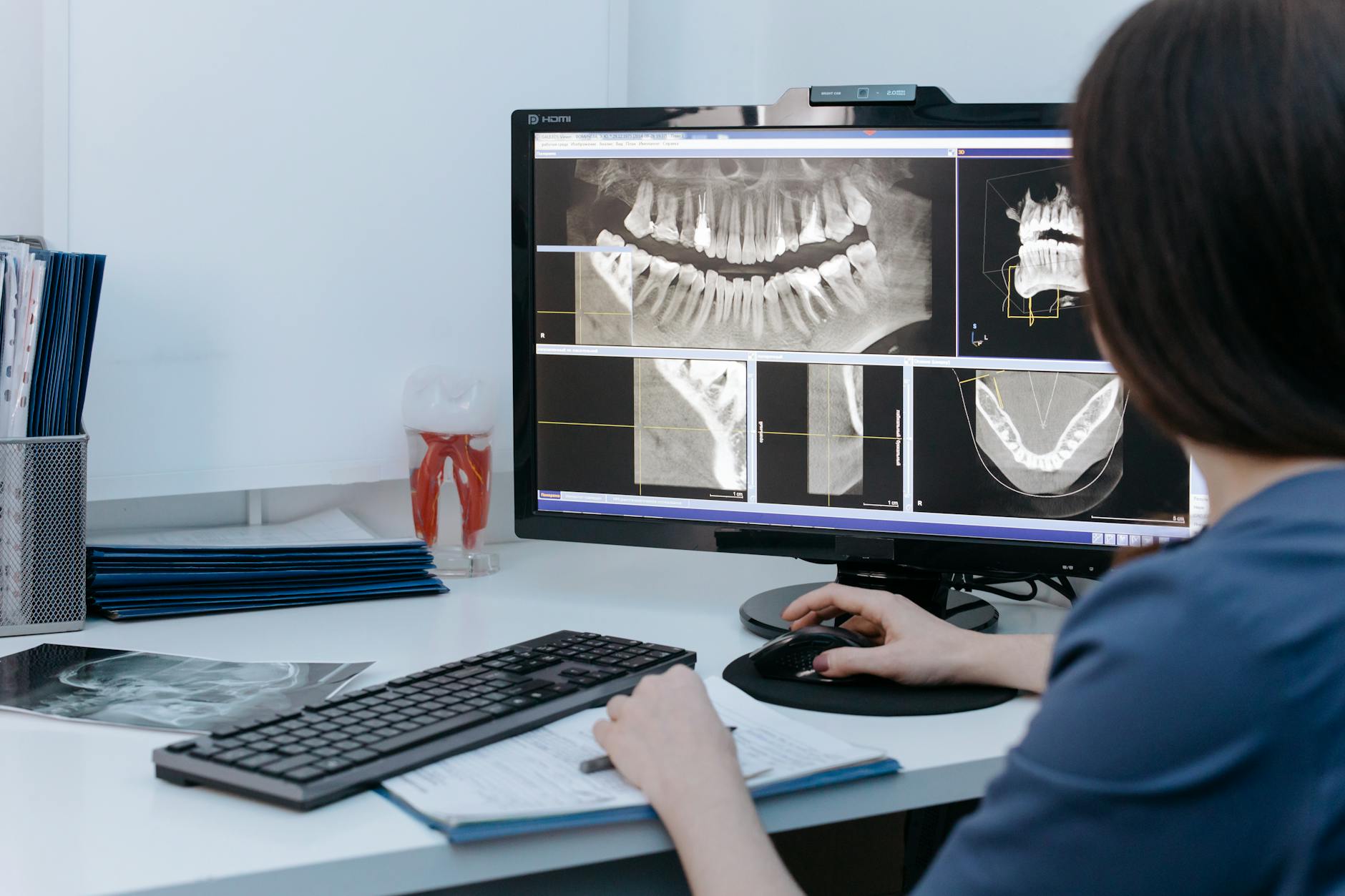
The economic impact proves equally compelling. AI reduces diagnostic imaging interpretation time by up to 70%, according to recent studies. Radiologists using AI assistance complete more cases per day while maintaining higher accuracy rates. This efficiency translates directly to reduced patient wait times and increased hospital revenue.
PathAI’s platform helps pathologists detect cancer in tissue samples 99% of the time, compared to 96% accuracy for human analysis alone. When dealing with thousands of biopsies annually, that 3% improvement represents hundreds of potentially life-saving early detections.
Breaking Down Traditional Barriers
Healthcare’s historically slow adoption of new technology is crumbling under AI’s demonstrated value. Regulatory approval processes have streamlined significantly. The FDA created specific pathways for AI device approval, reducing review times from years to months for breakthrough technologies.
Integration challenges that previously derailed healthcare IT projects are dissolving. Modern AI diagnostic tools plug into existing hospital systems seamlessly. Companies like Aidoc and Zebra Medical Vision design their platforms to work with standard PACS (Picture Archiving and Communication Systems) that radiologists already use daily.
Cost barriers are falling too. Cloud-based AI services eliminate the need for expensive on-premises hardware. Hospitals can access sophisticated diagnostic AI through subscription models, making advanced technology affordable for smaller healthcare systems that previously couldn’t compete with major medical centers.
Training requirements have simplified dramatically. Today’s AI diagnostic tools require minimal additional education for medical professionals. The technology enhances existing workflows rather than replacing them entirely, reducing resistance from medical staff who might otherwise view AI as threatening their expertise.
Addressing the Healthcare Crisis
America faces a severe shortage of medical specialists, particularly radiologists and pathologists. The American College of Radiology reports a 75% vacancy rate for radiologist positions in rural areas. AI diagnostic tools help bridge this gap by enabling general practitioners to perform specialized diagnostic tasks with expert-level support.
Telemedicine expansion during the pandemic created infrastructure that AI diagnostic tools now leverage. Remote diagnostic capabilities powered by AI allow specialists at major medical centers to serve patients hundreds of miles away. This democratizes access to expert medical analysis regardless of geographic location.
The technology addresses healthcare’s quality consistency problem. Human diagnostic accuracy varies significantly between practitioners and institutions. AI provides standardized, reproducible analysis that maintains consistent quality across different hospitals and medical systems.
Emergency departments benefit enormously from AI diagnostic speed. Stroke detection AI analyzes brain scans in under five minutes, compared to 30-60 minutes for traditional radiologist review. In stroke treatment, every minute counts – this speed improvement directly saves lives and reduces long-term disability.
Building Tomorrow’s Healthcare Infrastructure
The rapid AI adoption we’re witnessing today lays groundwork for even more dramatic healthcare transformation. Machine learning algorithms improve continuously as they process more patient data, meaning diagnostic accuracy will only increase over time.
Integration with other emerging technologies promises exponential improvements. As Google DeepMind’s protein folding AI advances drug interaction predictions, diagnostic AI will incorporate these insights for more comprehensive patient analysis.
The data generated by AI diagnostic tools creates valuable feedback loops. Hospitals using these systems contribute to larger datasets that improve AI performance industry-wide, creating a collaborative effect that benefits all patients regardless of where they receive care.
Healthcare systems that hesitate to adopt AI diagnostic tools risk falling behind competitors who can offer faster, more accurate diagnoses. The technology has moved beyond experimental phases into proven, mission-critical applications that define modern medical practice. As AI continues proving its value through improved patient outcomes and operational efficiency, healthcare’s digital transformation will only accelerate, making today’s rapid adoption pace seem conservative in retrospect.
Frequently Asked Questions
How accurate are AI diagnostic tools compared to human doctors?
Many AI systems match or exceed specialist accuracy, with some achieving 90-99% accuracy rates in specific diagnostic tasks like cancer detection.
What barriers prevent faster AI adoption in healthcare?
Traditional barriers like regulatory approval, integration challenges, and training requirements are rapidly dissolving as technology improves.