



Four Cities, No Safety Drivers
Waymo is pushing its driverless operations into San Diego, Las Vegas, Tampa, and Denver – four cities where human supervisors will soon be removed from the vehicles entirely.
What the Expansion Actually Means
Until now, Waymo’s fully autonomous, supervisor-free service has been concentrated in a handful of markets where the company spent years accumulating road data and refining its software stack. Removing human operators from vehicles is not a cosmetic change – it fundamentally alters the liability structure, the operational cost per mile, and the public perception of what these cars are actually doing on city streets.
San Diego, Las Vegas, Tampa, and Denver each present distinct driving environments. Las Vegas brings heavy pedestrian traffic around the Strip, unpredictable tourist behavior, and high-speed arterials running alongside densely packed blocks. Tampa introduces Florida’s afternoon thunderstorms and a road network that mixes highway interchanges with surface streets at an unusually compressed scale. Denver adds elevation, snow-season road conditions, and a grid that breaks apart near the mountains. San Diego, meanwhile, sits closest to Waymo’s existing California footprint and may be the most straightforward of the four transitions.
Dropping human supervisors means Waymo’s software is now the sole decision-maker in every situation those vehicles encounter – merging onto a freeway in a downpour, navigating a construction detour at 11 p.m., or handling a pedestrian who steps off the curb mid-block. The company has been operating with human supervisors in these markets as a testing and data-collection measure. That phase is ending.
The cost logic is direct: human supervisors are expensive. Every vehicle that requires a trained safety operator adds salary, benefits, scheduling overhead, and a hard ceiling on how many cars can run at once. Removing that layer makes the per-ride economics sharply better and allows fleet size to scale without a proportional increase in staffing. That math is central to Waymo’s path toward a business that can sustain itself without constant capital infusion.
The Broader Autonomous Vehicle Context
Waymo has been one of the few companies in the autonomous vehicle space to maintain consistent public deployment rather than retreating to test tracks after industry setbacks hit competitors. General Motors shut down its Cruise robotaxi unit following a serious incident in San Francisco. Other players have scaled back timelines or pivoted toward trucking and closed-campus applications. Waymo has moved in the opposite direction, expanding geography and removing human oversight incrementally.
That trajectory isn’t without complications. Earlier this year, Waymo recalled 3,800 robotaxis over a software flaw tied to how the vehicles handled closed freeway situations. The recall was a reminder that even a company with Waymo’s testing depth can ship edge-case failures into the real world. A software-only fix resolved the issue, but the episode illustrated exactly the kind of problem that becomes more consequential when there’s no human in the car to intervene.
Regulators in each of these four cities will have a direct say in how quickly the fully autonomous rollout actually moves. Waymo needs state and local approvals to operate without supervisors, and the regulatory posture varies considerably across California, Nevada, Florida, and Colorado. Nevada has historically been permissive about autonomous vehicle testing and deployment. Florida passed legislation designed to attract AV operators. California’s regulatory framework through the DMV and CPUC is more layered, and San Diego operations will sit inside that structure. Denver and Colorado add another regulatory conversation entirely.
Public reaction in each city will also shape how this unfolds operationally. Las Vegas, which draws tens of millions of tourists annually, will put driverless cars in front of riders who may never have seen or used one before. That creates a different interaction dynamic than Phoenix or San Francisco, where local residents have had years to grow accustomed to Waymo vehicles as part of the traffic mix. A tourist from a country with strict AV regulations encountering a fully driverless taxi for the first time is a genuinely different situation than a San Francisco commuter who’s been hailing Waymo rides for two years.
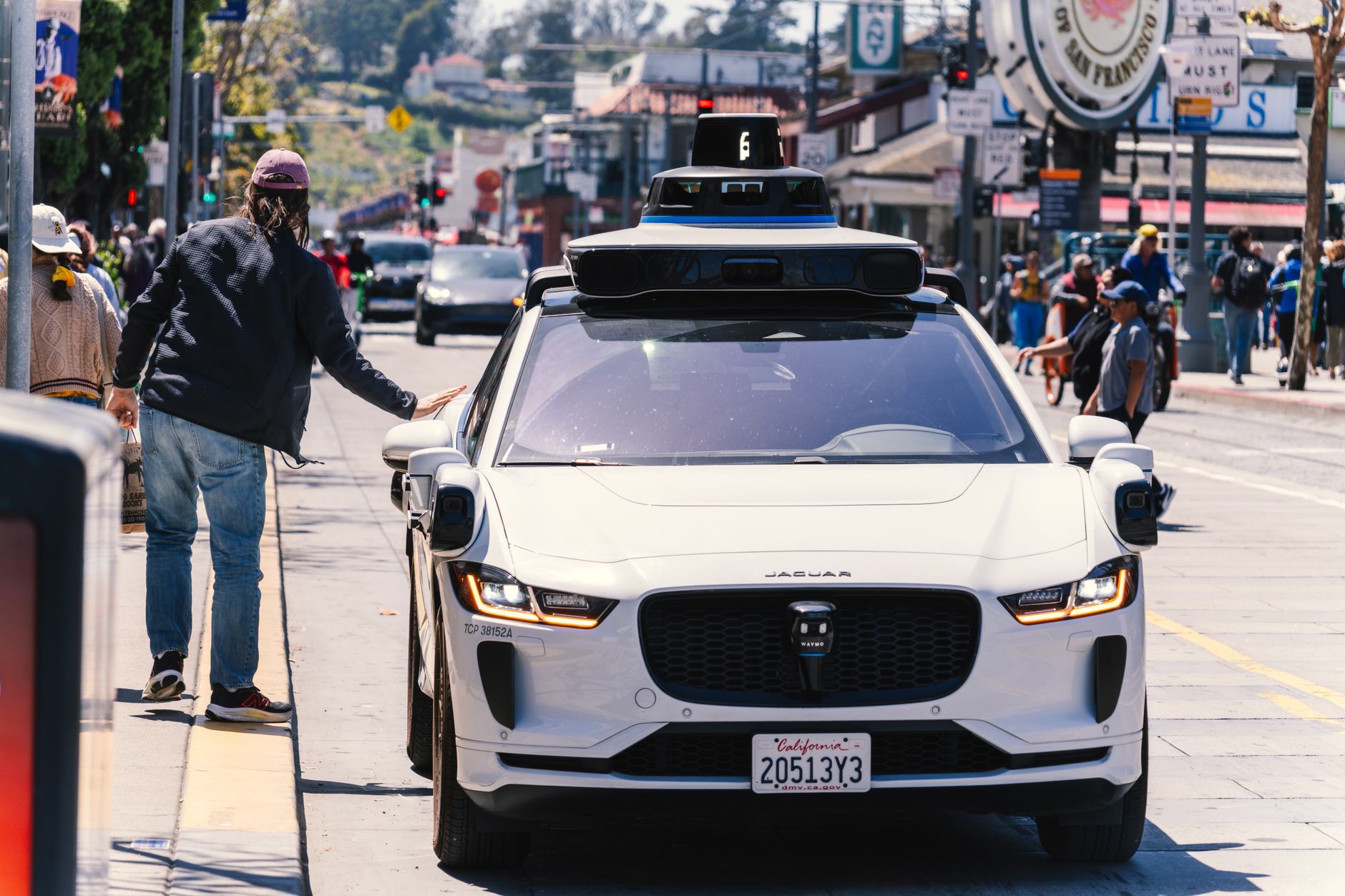
On the hardware side, Waymo’s fifth-generation vehicles – built on the Jaguar I-PACE platform – carry the sensor arrays and compute systems designed for exactly this kind of unsupervised deployment. The company has not announced a separate hardware upgrade tied to this expansion, which suggests the existing fleet configuration is being treated as sufficient for these four markets. How well that holds up across Denver’s winter conditions and Tampa’s storm seasons will be a practical test of that assumption.
What Comes Next Is Not Obvious
Waymo hasn’t published a timeline for when each city transitions fully, or whether all four will go supervisor-free simultaneously. The staged removal of human operators could happen city by city, zone by zone within each city, or in some combination that maps to local regulatory approvals. San Diego is geographically adjacent to Waymo’s existing Los Angeles operations, which could make it the first to flip. But Denver, with its distinctive seasonal driving demands, might require the most lead time before Waymo’s team is confident pulling supervisors entirely.
What makes this expansion worth watching is less the headline count of cities and more the specific question of whether Waymo’s system performs consistently across genuinely different environments at the same time – not sequentially over years, but concurrently, with no human fallback, in a desert gambling hub, a Gulf Coast city prone to sudden flooding, a mile-high western metro, and a California beach city where cyclists and pedestrians share lanes with beach traffic on a Saturday afternoon in July.