


A Legal Argument With Political Teeth
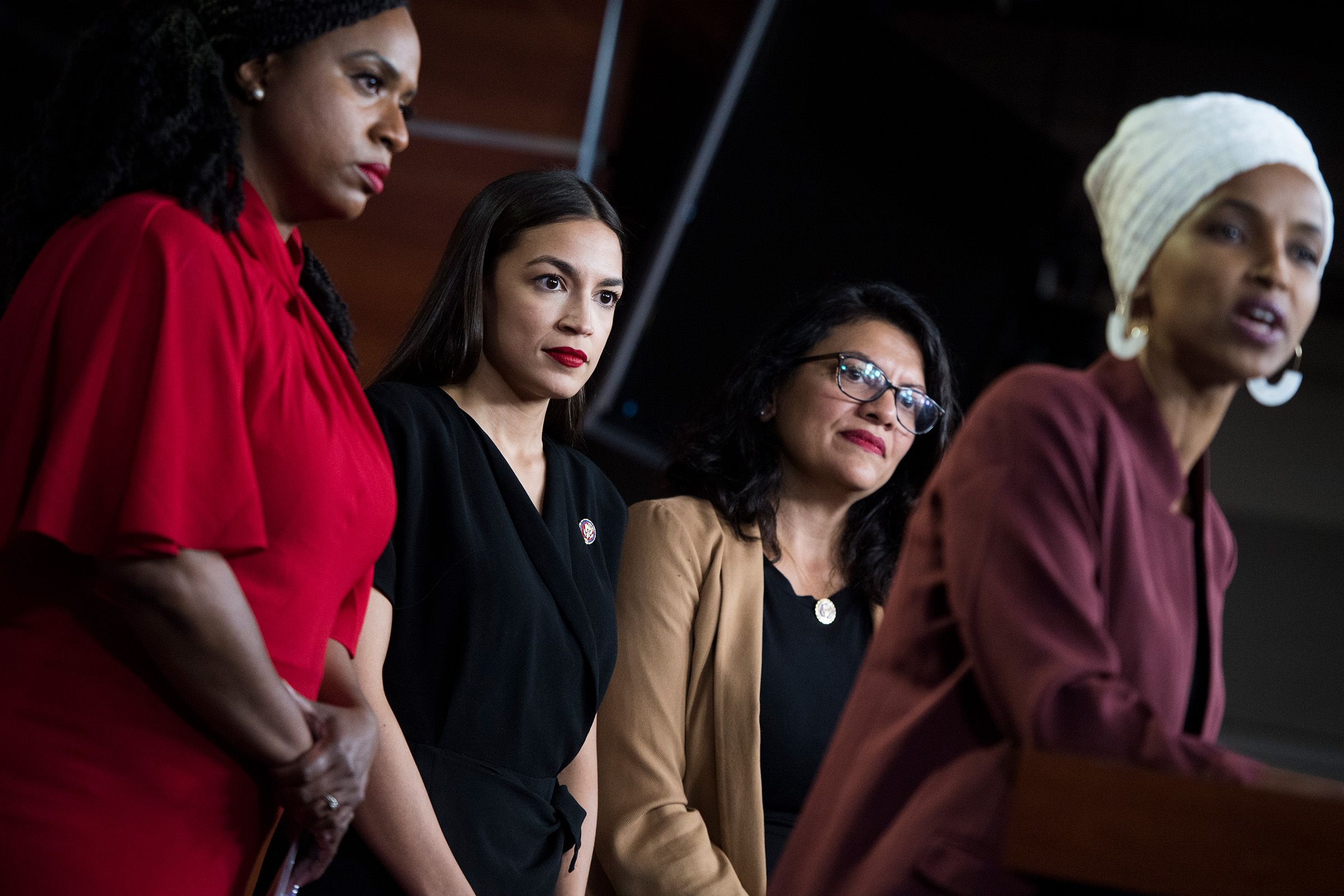
The Center for Renewing America, a right-wing think tank with direct ties to the conservative policy infrastructure in Washington, has put forward a formal plan to block certain elected Democrats from being sworn into Congress – arguing that specific members cannot, in good conscience, take an oath to defend the United States Constitution.
What the Center for Renewing America Is Actually Proposing
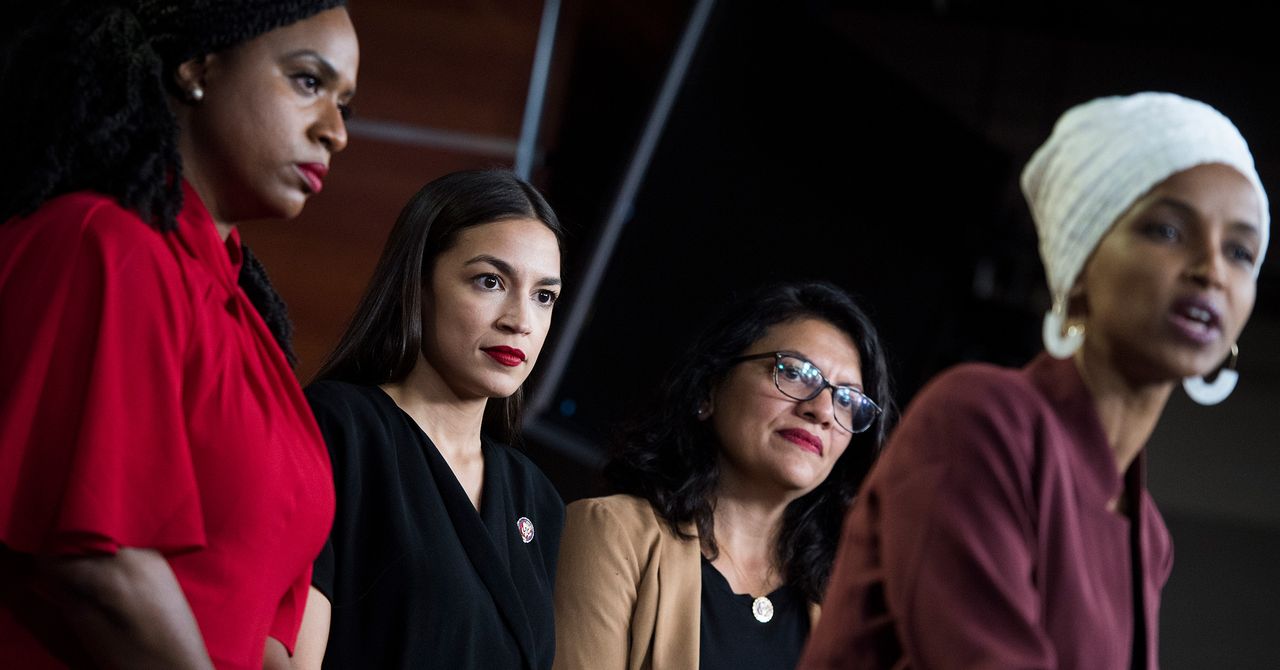
The think tank’s argument is not procedural or administrative – it is ideological at its core. The Center for Renewing America contends that people it describes as “neo-Marxist progressives and anti-Western Muslims” are constitutionally ineligible to serve in Congress, not because of any legal disqualification on record, but because the group believes such individuals cannot sincerely swear an oath to uphold and protect the Constitution. That oath is a mandatory step before any elected member of Congress can assume office.
The proposal leans on the swearing-in process as a mechanism for exclusion. Under Article VI of the Constitution, all legislators are required to be bound by oath to support the document. The Center for Renewing America is arguing that this requirement creates an opening – that if a member’s stated beliefs or affiliations are deemed incompatible with the Constitution’s values, Congress itself has the authority to refuse seating that member. This is a reading of congressional power that most constitutional scholars have treated as a fringe interpretation, though it is not entirely without historical precedent in the broadest technical sense.
The think tank is not a fringe operation. The Center for Renewing America was founded by Russ Vought, who served as Director of the Office of Management and Budget under President Donald Trump. Vought returned to that role after Trump’s 2024 election victory, giving the think tank’s alumni direct influence over federal budget and policy decisions. The organization has been a significant force in drafting conservative policy blueprints, including contributions to broader project-level frameworks aimed at reshaping the federal government.
What makes the proposal notable is its specificity. Rather than targeting a class of legislation or policy position, it targets the act of assuming office itself – the moment at which an election result becomes binding governmental authority. Blocking a member before the swearing-in is a categorically different action than censuring, expelling, or opposing a member once seated, and it would require Congress to make ideological determinations about individual members’ sincerity as a condition of service.
The Mechanics of Exclusion and Where This Goes
Congress does have a historical record of refusing to seat elected members, though the circumstances have been narrow and the legal basis fiercely debated each time it has occurred. The most frequently cited modern case is the 1967 exclusion of Adam Clayton Powell Jr., a Democratic congressman from New York, which the Supreme Court later ruled was unconstitutional. In Powell v. McCormack, the Court held that the House cannot exclude a duly elected member who meets the Constitution’s basic qualifications – age, citizenship, and residency. The Center for Renewing America’s argument attempts to work around that precedent by framing the oath requirement as a separate and distinct qualification, not an additional one.
That distinction is doing a great deal of legal work. The argument essentially asks Congress to rule, in advance, that certain elected members are lying when they swear to protect the Constitution – and to use that presumed insincerity as grounds for exclusion. It is a standard that has no clear enforcement mechanism and no objective measure, which means any application of it would be inherently political. The group applying the ideological label and the body voting on the exclusion would both be partisan actors making subjective determinations about the inner convictions of their political opponents.
The categories the think tank invokes – “neo-Marxist progressives” and “anti-Western Muslims” – are not legal classifications. They are political descriptors, and the proposal offers no criteria for which members would fall into them or who would make that determination. That absence of definition is not a minor technical gap; it is the entire question. A process that lets a legislative majority decide which minority members are too ideologically suspect to be seated is, structurally, a mechanism for partisan exclusion dressed in constitutional language.
There is a congressional procedure angle worth taking seriously, even if the proposal’s merits are contestable. Under the Constitution’s rules, each chamber of Congress is the judge of the elections, returns, and qualifications of its own members. This self-judging authority has been used historically in ways both legitimate and contested. The argument the Center for Renewing America is making tries to stretch that authority into new territory – from judging whether someone meets formal qualifications to judging whether someone’s ideological convictions are compatible with holding office.
The timing of the proposal matters. It arrives at a moment when the Republican Party holds majorities in both the House and Senate following the 2024 elections, which means the party in a position to act on such a proposal controls both chambers where seating decisions are made. Whether any Republican leadership figures formally adopt the Center for Renewing America’s framework remains an open question, but the think tank’s close ties to the current administration give its policy output a closer relationship to actual governance than most outside groups can claim.
A Threshold Question About Democratic Representation
The proposal forces a concrete question about the boundary between political opposition and institutional exclusion. Disagreeing with an elected member’s ideology, voting against their legislation, campaigning to defeat them – these are the standard mechanisms of political competition. Blocking them from taking office after a valid election is a different category of action, and the legal theory required to justify it would, if accepted, have no obvious limiting principle. Any majority could apply the same logic to any minority it deemed insufficiently devoted to constitutional values as the majority defines them.

The Center for Renewing America published its plan publicly, which means the argument is now part of the active conservative policy conversation. Russ Vought, its founder, currently holds one of the most operationally powerful positions in the federal government as OMB Director. Whether the plan moves from think tank document to congressional consideration depends on choices that Republican leadership has not yet publicly made – but the distance between a policy paper and a procedural motion on the House floor is shorter than it used to be.