


When “No” Isn’t Enough
Modern AI chatbots are built to decline a wide range of requests – ask one how to poison a colleague or tie a noose, and it will refuse. That architecture of refusal seems like a safety net. But it has serious structural weaknesses, and as Arthur Holland Michel reports for MIT Technology Review, those weaknesses carry potentially catastrophic consequences.
Some users are already attempting to extract information from AI systems to hone biological pathogens and build autonomous drone swarms. Refusal does not stop them every time. And because the capabilities that make AI genuinely useful – genetics expertise, chemical synthesis knowledge, precision systems modeling – are the same ones that could enable bioweapons development, drawing a clean line between safe and dangerous outputs may be fundamentally impossible.

The Governance Trap Hidden Inside Refusal
There is a political dimension to AI refusal that gets less attention than the safety one. Every time a model is trained to say no to certain prompts, someone has drawn a line. Governments are now seeking the right to draw their own lines – and those lines may not stop at weapons or violence. Restrictions justified by safety could extend into territory that constrains political speech, investigative queries, or information that is legal in one jurisdiction and banned in another.
The tradeoff is not abstract. If AI systems need deep biological knowledge to help researchers cure cancer, that same knowledge base is what makes them useful to someone trying to engineer a pathogen. There is no version of a powerful AI that is selectively capable – helpful for medicine but inert for harm. The question of what gets refused is therefore not a technical question with a technical answer. It is a governance question that societies have barely begun to address seriously.
Michel’s full analysis is scheduled to appear in MIT Technology Review’s print magazine on October 21. The piece frames refusal not as a solved problem with occasional edge cases, but as a foundational design choice carrying compounding risk the more capable these systems become.
Meanwhile, Anthropic this week issued a formal policy banning “abusive or cruel behavior” directed at its Claude models, with the added provision that Claude can now terminate conversations in response to repeated abuse. The policy draws on Anthropic’s ongoing internal research into AI welfare – a field that remains scientifically contested but is clearly shaping product decisions at the company level.

OpenAI’s Revenue Forecast Takes a $20 Billion Cut
OpenAI has reduced its revenue forecast by $20 billion, a move that has renewed scrutiny over whether the scale of current AI investment is sustainable. The forecast reduction raises pointed questions about the gap between what the AI industry has promised and what it can deliver on a timeline that satisfies investors. Those concerns are not new, but a $20 billion downward revision adds hard numbers to a debate that has often traded in projections and potential.
No single reason for the cut has been publicly specified, but it arrives during a period when AI companies are under increasing pressure to convert infrastructure spending – billions in data center buildout, chip procurement, and model training – into durable commercial revenue. Expectations set during the 2023-2024 investment surge were aggressive, and the forecast adjustment signals a recalibration.
China’s Wind-to-Data-Center Pipeline Goes Global
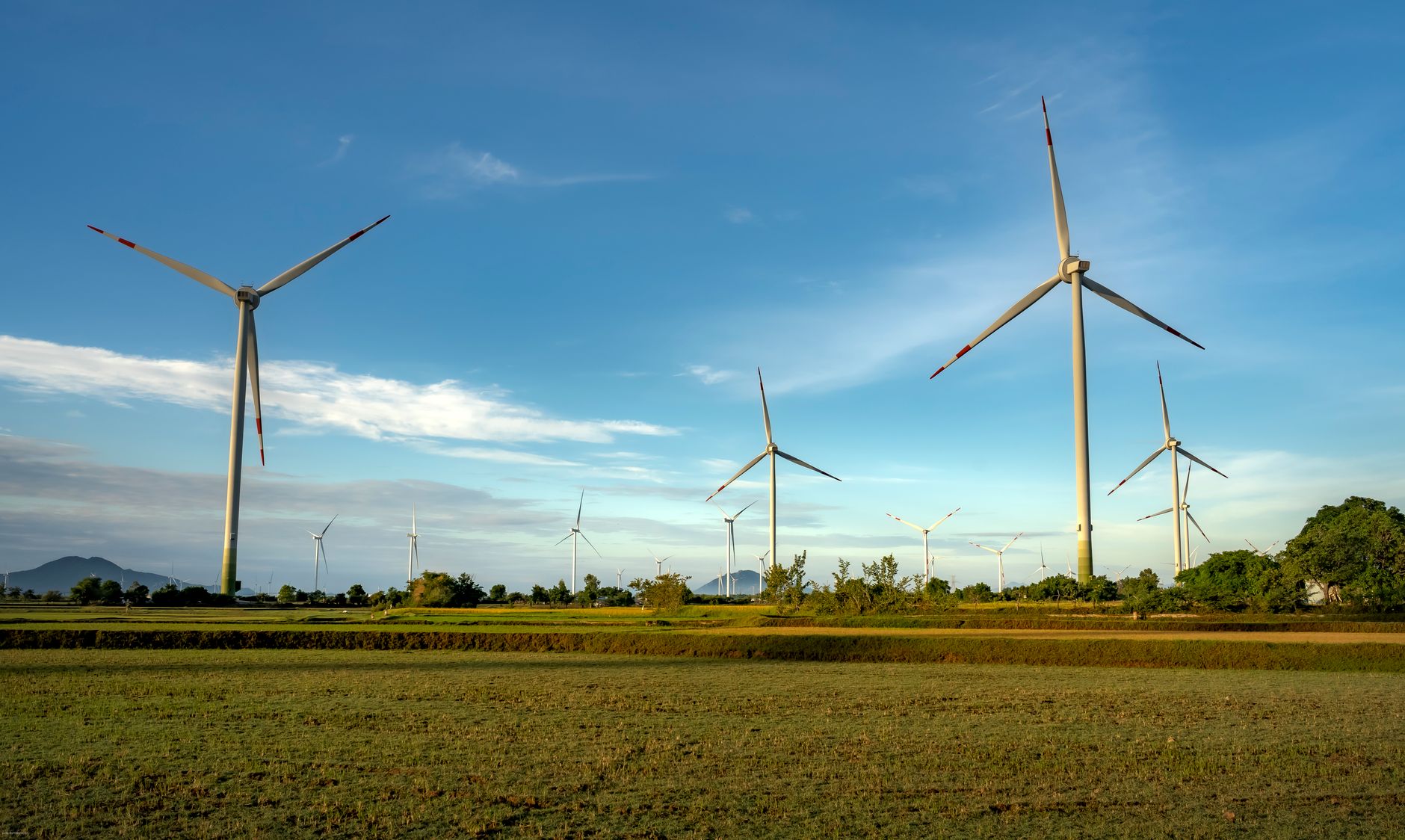
China is installing wind turbines faster than any other country, and one of its leading manufacturers, Envision Energy, is now attempting to export a specific model: wind-powered data centers. The company recently became the first to directly power a data center entirely with renewable energy, pairing turbines with on-site battery storage and an AI-powered optimization system that smooths out the intermittency problem – keeping power delivery steady regardless of whether the wind is actually blowing.
Envision’s next target is desert data centers around the world. As Cici Zhang reports for MIT Technology Review, the company’s selection as one of MIT’s 10 Climate Tech Companies to Watch for 2026 reflects its positioning at the intersection of two of the largest infrastructure build-outs of the decade: renewable energy and AI compute. The AI optimization layer is not incidental – it is what makes the renewable-only power model viable at data center scale.
The US, by contrast, is dealing with a different kind of infrastructure controversy. The government has frozen green card processing for Microsoft and other IT firms, accusing them of using visa fraud to replace American workers and suspending them from a key green-card program. Adobe, Infosys, and Tata are also affected. Microsoft has pushed back, stating that 80% of its H-1B filings involved existing employees rather than new hires – a distinction that will likely matter in whatever legal proceedings follow.
Ukraine Strikes Yandex, and a Biotech Update Worth Watching
Ukraine struck a Yandex data center in Kaluga, partly disabling the facility. A separate Yandex data center had been hit by a drone strike just one day earlier. The attacks underscore what Bloomberg has described as a growing pattern: data centers are becoming military targets, a development with implications for how physical AI infrastructure is sited and protected. One proposed answer, not yet anywhere near deployment, is moving some data center capacity into orbit.
On the biotech side, Jessica Hamzelou flags new research suggesting GLP-1 weight-loss drugs – already associated with significant metabolic benefits – may also slow biological aging, per reporting by Antonio Regalado. That finding sits alongside a growing list of side effects being investigated: gastrointestinal issues are the most common, but researchers are also looking at possible links to hair loss, nail disorders, and damage to the nerves behind the eye. The drug class is reshaping medicine faster than the science of its full effects can keep pace, and a $20 billion AI forecast cut and drone-struck data centers suggest the same might be said of several other technologies at the moment. What happens when the side effects catch up?