

From EV Maker Offshoot to Electric Bicycle Startup
Also, the electric vehicle startup that emerged from Rivian, is finally moving bikes out of development and into customers’ hands – ending a stretch of delays that kept its debut product, the TM-B e-bike, grounded longer than anticipated.
The TM-B Arrives After a Prolonged Wait
The TM-B is Also’s first product to reach consumers, and its arrival matters more than a typical product launch might. For a young company still building credibility, the gap between announcement and delivery is the period where startups either prove they can execute or bleed enthusiasm. Also spent months in that gap.
The delays weren’t unusual for hardware-focused startups, where supply chain complexity, manufacturing tolerances, and regulatory requirements stack up against optimistic timelines. Getting a new electric two-wheeler certified, assembled, and shipped involves a different kind of operational weight than pushing a software update. Also is now past that stage – at least for this model.
What distinguishes Also from the crowded e-bike market isn’t its current product lineup so much as its origin story and its stated direction. The company spun out of Rivian, the electric truck and delivery van maker backed by Amazon, which gives Also a specific kind of institutional DNA – one oriented toward fleet logistics and last-mile delivery rather than recreational cycling.
Also describes itself as a “vehicle” company, not a bicycle company. That framing is intentional. Positioning the TM-B as one product in a broader vehicle portfolio, rather than the company’s defining identity, signals where Also expects its business to grow. The e-bike gets you in the door. What comes next is a different category entirely.
Amazon, Cargo Vehicles, and the Real Business Model
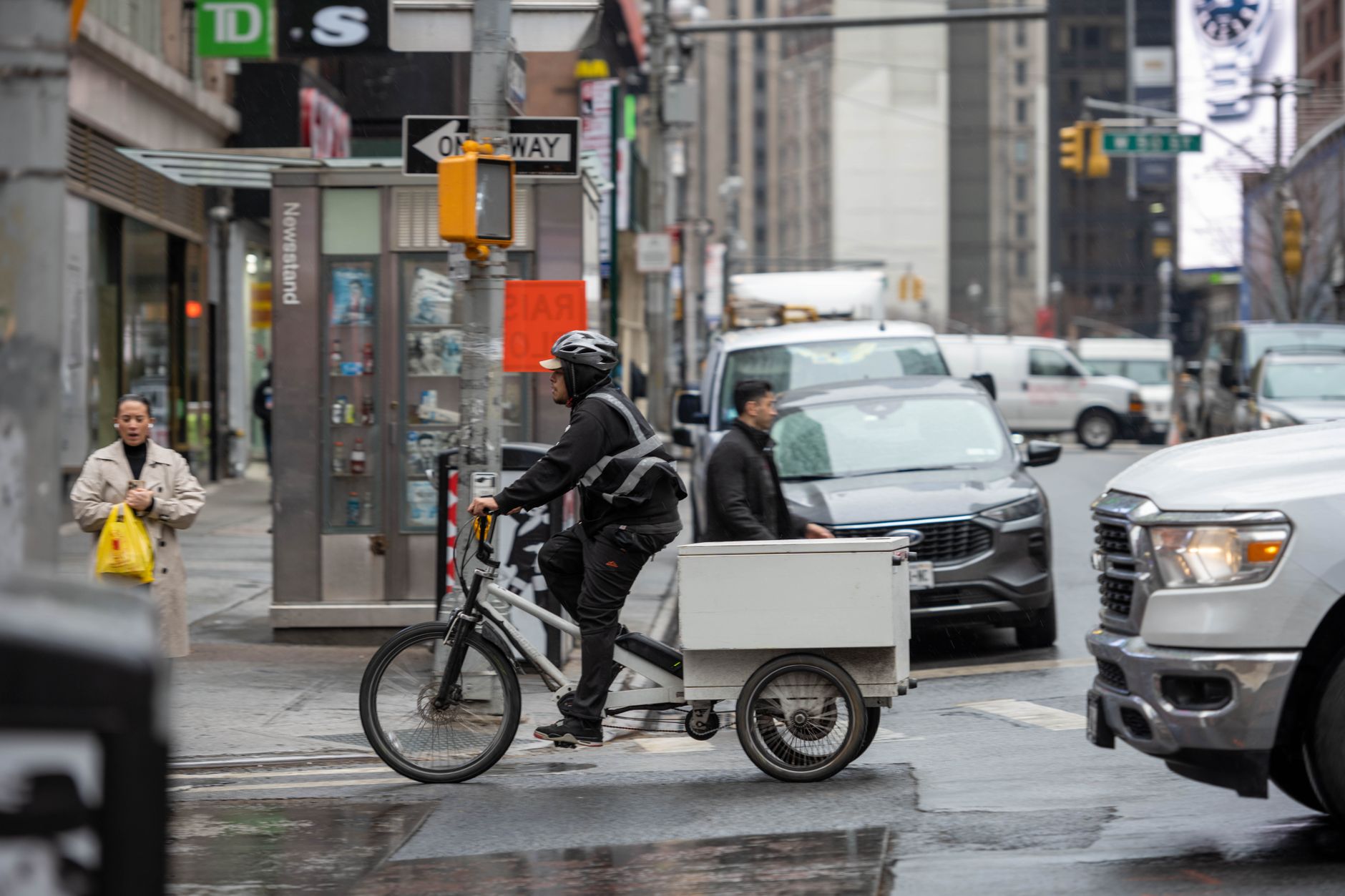
The more revealing part of Also’s roadmap isn’t the TM-B – it’s the four-wheel pedal-assist cargo vehicles the company is developing for Amazon. That project points to where Also’s commercial weight actually sits. Building last-mile delivery vehicles for one of the world’s largest logistics operations is a fundamentally different business than selling consumer e-bikes, and the revenue potential, contract structure, and operational scale don’t compare.
Amazon’s connection to Also runs deeper than a vendor relationship. Rivian, Also’s parent company, has had a long-standing partnership with Amazon to produce electric delivery vans – a contract that reshaped Rivian’s production priorities and balance sheet. Also inheriting a working relationship with Amazon through that lineage isn’t accidental. It’s an asset that most e-bike startups simply don’t have access to.
Pedal-assist cargo vehicles occupy an interesting space in urban logistics. They’re slower than electric vans but cheaper to operate, easier to park, and viable in dense corridors where larger vehicles struggle with traffic and access restrictions. Cities like New York, Paris, and Amsterdam have seen cargo e-bike deployments grow as delivery density increases and zero-emission zones expand. A four-wheel pedal-assist cargo vehicle adds stability and load capacity to that model – effectively a step between a standard cargo bike and a small electric van.
Whether Amazon deploys Also’s cargo vehicles at scale depends on factors that have nothing to do with the quality of the product – fleet integration costs, routing software compatibility, regulatory approval across different city jurisdictions, and Amazon’s own internal logistics priorities. Still, having Amazon as a named target customer before a product is even out of development is a position most startups spend years trying to reach.
Also starting deliveries of the TM-B now gives the company something concrete to point to while its larger cargo vehicle ambitions take shape. A delivered, functioning product – even a consumer e-bike – establishes that Also can move hardware through manufacturing and fulfillment. That operational track record matters when the stakes of the next project are considerably higher.
A Spinoff With Specific Ambitions
Rivian spinning out Also reflects a deliberate choice to let a more nimble entity pursue the lighter-vehicle, pedal-assist segment without the overhead of a full EV manufacturer. Rivian’s core business – electric trucks and commercial vans – operates at a completely different scale and cost structure than e-bikes and cargo cycles. Keeping Also separate lets the startup move faster and fail cheaper if something doesn’t work.
The TM-B deliveries starting now puts a small but real stake in the ground. Also has a vehicle in the market, a high-profile customer in its pipeline, and a self-description that deliberately avoids the word “bicycle.” The question isn’t whether the TM-B succeeds on its own terms – it’s whether Also can actually deliver a four-wheel pedal-assist cargo vehicle to Amazon at a volume and price point that makes the whole venture worthwhile.