


Your Kitchen as a Training Ground
A new category of gig work has quietly taken hold in homes across the country: getting paid to do your own chores while cameras record every movement, every grip, every stumble – all to feed the data pipelines building tomorrow’s humanoid robots.
What This Work Actually Looks Like
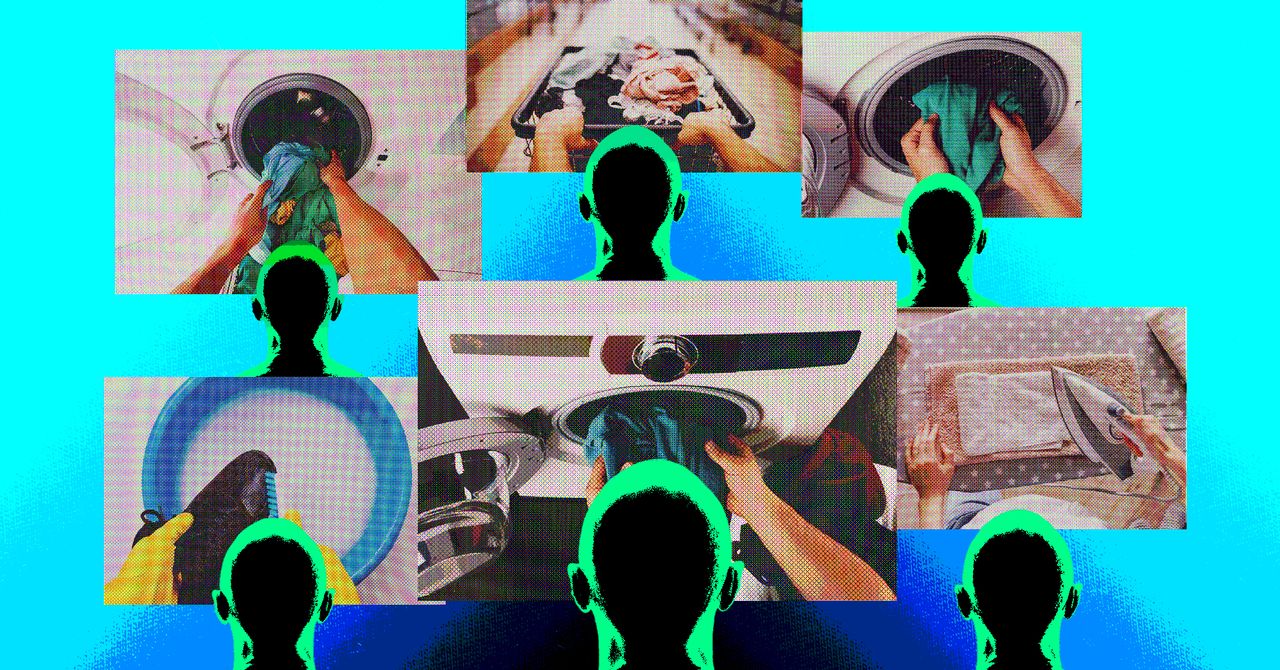
The setup sounds almost comedic. You cook a meal, fold a shirt, wipe down a counter – tasks so ordinary they barely register as decisions – while wearing sensors or moving in front of cameras that log the precise mechanics of how a human body navigates domestic space. The data isn’t about what you’re doing so much as how you’re doing it: the angle of your wrist when you grip a pot handle, the way your weight shifts when you reach into a cabinet, the micro-corrections your hand makes when stacking plates that don’t quite line up.
Humanoid robot development has run into a hard wall that pure simulation can’t solve. Robots trained entirely in virtual environments struggle to transfer those skills into real kitchens, real laundry rooms, real clutter. Physical spaces are chaotic in ways that are difficult to model – floors that aren’t perfectly level, lighting that changes, objects that don’t sit where they’re supposed to. Real human motion data, collected inside actual homes, closes that gap in a way that synthetic data hasn’t managed to.
That demand has produced a cottage industry of data collection programs where ordinary people are compensated for performing household tasks under observation. Cooking, doing laundry, and tidying up are among the most sought-after activities because they involve the widest variety of object interactions, surface types, and unpredictable variables. A person loading a dishwasher generates dozens of distinct grasping motions in under three minutes. To a robotics team, that’s a dense, valuable sequence.
The experience of actually doing this work for a week, as documented in a firsthand account published by Wired, produces a specific kind of cognitive dissonance. You start noticing your own movements in a way that feels foreign – pausing before picking something up, becoming aware of how automatic most of what you do really is. The work doesn’t feel like labor in any traditional sense, but it doesn’t feel passive either. It sits in an uncomfortable middle space, which is part of what makes it worth examining.
The Data Economy Behind the Dishes
Household chores are, in the language of machine learning, exceptionally high-dimensional problems. Folding laundry alone requires recognizing fabric type, managing a floppy, unpredictable object, adapting to garments of different sizes, and executing a final fold that looks consistent across attempts. Robots have notoriously struggled with laundry for decades – not because engineers haven’t tried, but because the task resists the kind of rule-based programming that works for structured factory environments. Human demonstration data offers something rules cannot: the organic, adaptive quality of a body that has done this thousands of times and built a form of muscle memory that no one has ever formally written down.
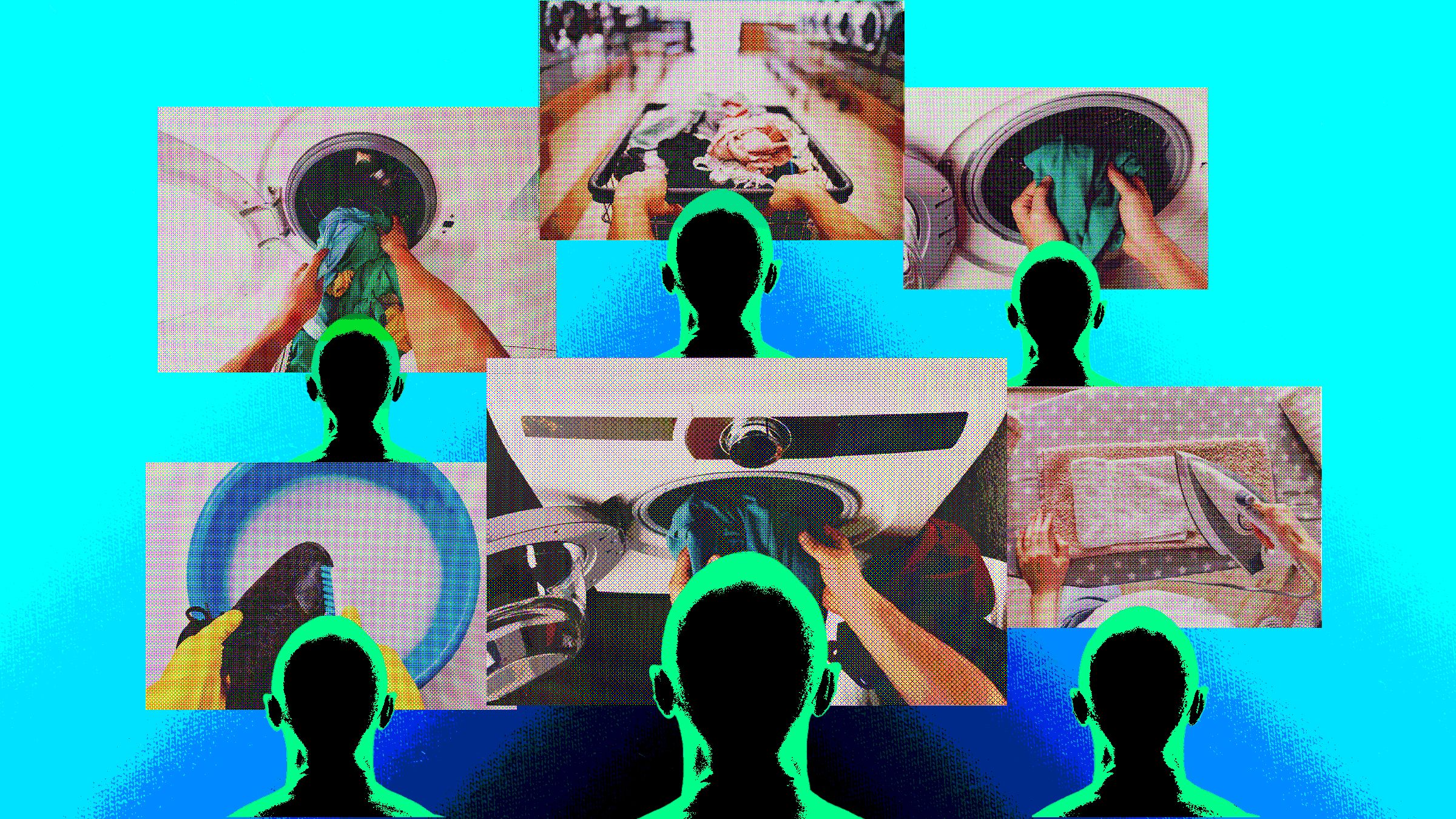
The companies building humanoid robots – and the contractors who supply them with training data – are effectively outsourcing a massive knowledge-extraction project to the general public. Workers record themselves, submit footage or sensor logs, and get paid per task or per hour depending on the program. The financial incentive is real but modest. It positions the work somewhere between a side hustle and a scientific contribution, and most participants likely don’t think much about the second part.
What the Wired account surfaces, though, is a question that the compensation structure tends to obscure: once your movement data has been used to train a robotic system, what exactly is your relationship to that system? If a humanoid robot eventually folds laundry the way you fold laundry – because your demonstrations were part of its training set – there’s a strange continuity there that doesn’t come with any ongoing credit, royalty, or acknowledgment. The data transaction is a one-time exchange. The robot’s capability, informed by thousands of people like you, persists.
This is not entirely unlike other forms of digital labor that have fueled AI development – the broader pattern of biometric and behavioral data being collected from people in exchange for access or small payments has precedent across industries. But household motion data carries a particular intimacy. It’s collected inside people’s homes, during private routines, and it maps the physical grammar of how someone inhabits their own domestic life. The terms around how that data is stored, shared, or eventually used downstream are rarely the focus of the sign-up process.
There’s also the question of what this work does to the people performing it at scale. One week of self-conscious chore performance, as described in the Wired piece, already produces a noticeable shift in how the participant experiences their own household routines. The tasks feel observed even when no camera is running. Movements that were fully automatic start requiring a kind of deliberate attention. That’s a short-term effect from a brief experiment – what happens to someone who does this for months, treating their kitchen as a permanent data capture environment?
The economics favor continued expansion of these programs. Humanoid robotics is attracting serious investment, and the bottleneck isn’t hardware anymore – it’s the quality and volume of real-world training data. Every task that a robot needs to perform in a home requires substantial human demonstration footage to train on. The appetite for this material is only growing, which means more programs, more participants, and more homes quietly functioning as data collection facilities.
Who Bears the Consequences
The title of the original Wired piece – Who’s the Robot Now? – isn’t just a rhetorical flourish. After a week of performing chores with mechanical self-awareness, executing motions that had always been thoughtless, the author arrives at a genuinely unsettling observation: the process of generating training data for robots requires the human doing it to behave, in certain ways, more like a machine. Consistent. Observable. Repeatable. The irony is structural, not incidental.
What remains unresolved is whether participants fully understand what they’re contributing to. The immediate transaction – task completed, payment received – is clear. Everything after that: how the data compounds across thousands of contributors, how it shapes systems that will eventually operate in homes without any human in the loop, who owns the resulting model capabilities, and whether any of that value flows back to the people who generated it. Those questions don’t have answers in the sign-up form. Does the person who taught a robot to fold a shirt have any claim on what the robot does with that knowledge?