



A Startup Built on a 25-Year-Old Memory
MIT professor Yet-Ming Chiang was retiling a shower in Framingham, Massachusetts, about 25 years ago when he first encountered glass etching cream. That memory sat dormant until researchers at his lab began hunting for a safer way to dissolve silicate minerals – and he found himself asking what, exactly, was in that craft-store product. The answer, ammonium fluoride, has now become the foundation of a lithium extraction process published this week in Science, with a startup called Rock Zero working to bring it to commercial scale.
Chiang, a serial entrepreneur whose previous companies include Form Energy and Addis Energy, believes the stakes are significant: “At scale, we believe this will be the lowest-cost way of sourcing lithium in the world.”
That claim lands against a backdrop where every major battery supply chain – from electric vehicles to grid-scale energy storage – depends on a metal that is either expensive to mine or geographically locked behind a handful of countries’ borders.
Why Current Lithium Methods Have Real Limits
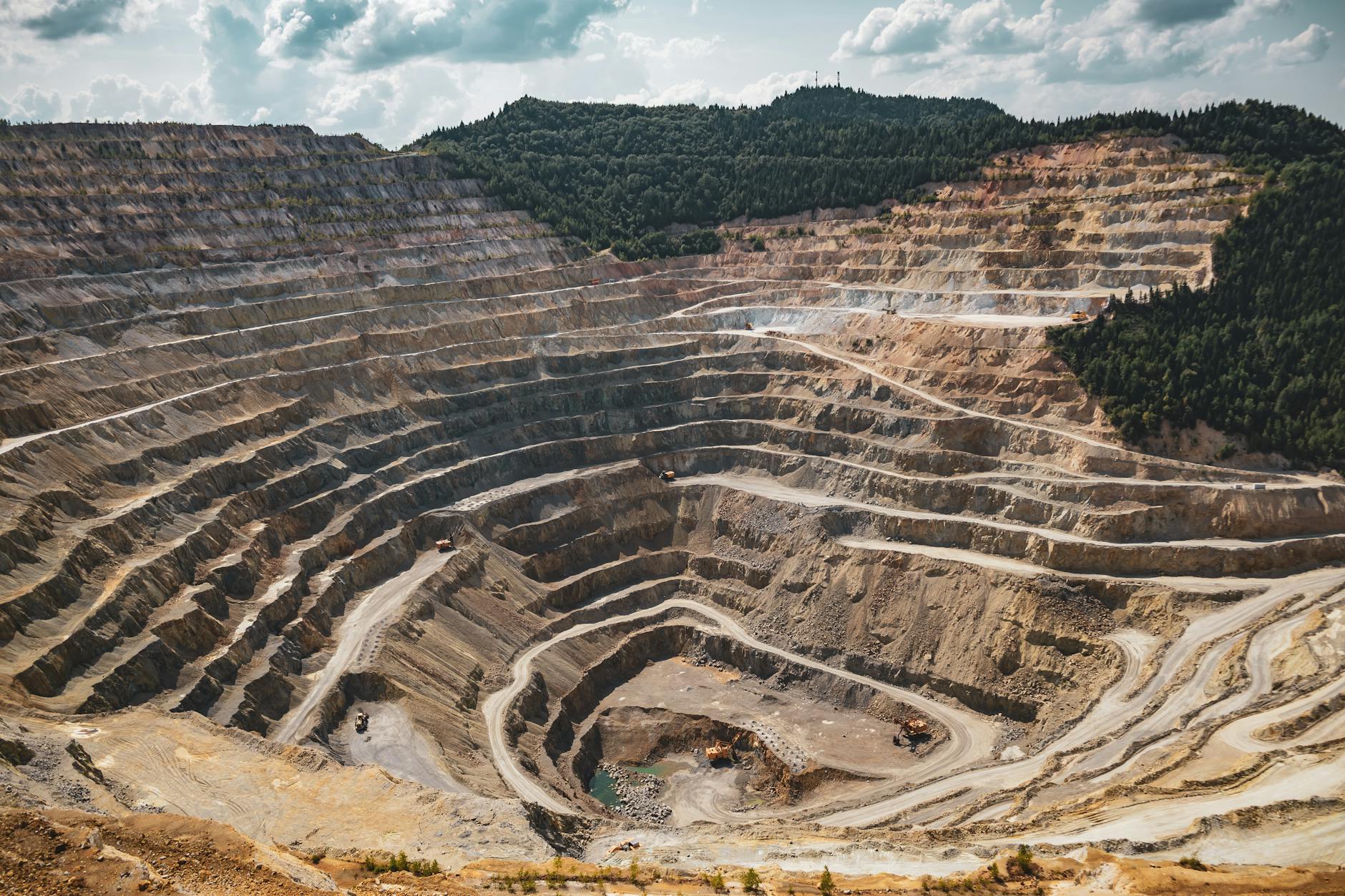
There are two dominant ways to get lithium out of the ground today, and both carry serious drawbacks. The cheaper route – brine extraction – pulls lithium-rich saltwater from underground, then spreads it across enormous evaporation pools for months. It works, but only in specific geographic regions, and the land requirements are enormous. The other method, hard-rock mining, is more widely available but involves blasting apart large ore bodies, roasting them in kilns at extreme temperatures, and processing the results with hazardous chemicals.
Spodumene, the mineral most commonly mined for lithium, normally requires a high-temperature kiln step that triggers a phase transformation – essentially puffing up the material so the lithium inside becomes accessible. That roasting process is energy-intensive, costly, and produces carbon emissions. It also has a material limitation: ore containing too much iron won’t go through the phase change correctly. Instead of transforming, it melts into a glassy substance that’s useless for further processing. That means entire ore deposits are effectively off-limits under current methods.
The dangerous chemical most capable of dissolving silicates without these thermal steps is hydrofluoric acid – one of the more hazardous substances in industrial chemistry. Some fluorine-containing alternatives will produce hydrofluoric acid as a byproduct mid-reaction, which creates its own safety and regulatory problems. Finding something effective that avoids those risks entirely has been an open problem.
What Ammonium Fluoride Actually Does
The indirect origin of Rock Zero’s process traces back to Sublime Systems, another Chiang-founded company that uses electrochemistry to manufacture cement. That team was searching for highly reactive silica to strengthen cement mixtures. Making a nonreactive material reactive involves dissolving it and allowing it to resolidify in a more chemically active form. The hunt for a safe silicate solvent led back to that shower remodel, and to the ammonium fluoride sitting in glass etching cream at any hardware store.
Under the right conditions, the MIT researchers found that ammonium fluoride dissolves silicate minerals without generating hydrofluoric acid as a byproduct. The process works at temperatures up to about 95 degrees Celsius – roughly 200 degrees Fahrenheit – using simple stirred plastic tanks rather than industrial kilns. In early experiments, nearly all of the lithium inside spodumene ore was extracted within a couple of days. Researchers have since cut that timeline further, though the paper does not specify the current figure. Doug Wicks, a former ARPA-E official now advising Rock Zero, was the one who pointed the team toward spodumene as the first target mineral. The dissolution also frees alumina and silica as usable byproducts, which could offset processing costs.
Camden Hunt, CEO and co-founder of Rock Zero and one of the study’s authors, points out that skipping the kiln step does more than reduce energy consumption. It opens up iron-rich ore deposits that were previously unworkable, expanding the range of viable mining sites. Whether that translates into genuine geographic diversification of the lithium supply chain will depend on where those deposits sit and what it costs to reach them.
From Lab Chemistry to Commercial Lithium Supply
Rock Zero is now the commercial vehicle for taking this chemistry out of the lab. The company has not disclosed its funding position, production targets, or timeline for reaching industrial-scale output. What Chiang and Hunt have stated publicly is that the process, at scale, should undercut existing lithium sourcing costs – a bold claim that will be tested as the startup moves from stirred plastic tanks in a research setting to the throughput volumes that battery manufacturers actually need.
The process is not limited to spodumene. Ammonium fluoride can dissolve other silicate minerals, which make up a substantial portion of the Earth’s crust, raising the possibility that future iterations of the technique could be applied to mineral sources beyond lithium extraction. Whether the economics hold across those different mineral compositions remains an open question that Rock Zero will have to answer as it scales – at which point the gap between “lowest-cost in the world” and “lowest-cost in the lab” will become very hard to hide.