

A Design Studio’s First Complete Car Has Arrived
The Ferrari Luce is now visible in full – a luxury electric vehicle that marks the first completed automobile from LoveFrom, the design house founded by Jony Ive after his departure from Apple. Ferrari and LoveFrom have pulled back the curtain on what has been one of the most anticipated design collaborations in recent automotive memory, and the car’s appearance answers at least some of the questions that have surrounded the project since the partnership was announced.
What the Luce represents, functionally, is a bet that Ferrari’s future in electrification does not have to mean a diluted identity. The company is entering the EV segment on its own terms – with a designer whose fingerprints on consumer hardware are immediately recognizable to anyone who has held an iPhone or an iPod – and the result is being positioned squarely at the upper end of the luxury market.
LoveFrom’s Automotive Debut
Jony Ive spent decades at Apple refining a design language built around material restraint, visual silence, and the removal of anything that didn’t need to be there. That sensibility, applied to a Ferrari, creates an interesting tension. Ferrari’s design heritage is expressive – curves that communicate speed even at rest, aggressive intakes, proportions that announce intent. The Luce appears to negotiate between those two poles rather than surrender entirely to either.
LoveFrom was established by Ive after he left Apple in 2019, and Ferrari became one of its most prominent clients. The collaboration between the two organizations has been building toward this reveal for some time. The Luce is the first tangible, complete object to emerge from that process – a car, not a concept study or a rendering, but a finished vehicle that Ferrari is putting forward as a real product.
The name itself – Luce, Italian for light – signals something about the direction Ferrari and Ive agreed upon. It is a departure from the numerically coded or mythologically named models that populate Ferrari’s traditional lineup. Light suggests both the visual and physical: illumination as a design element, and the weight reduction that electric drivetrains, paired with focused engineering, can theoretically achieve. Whether the name holds up against the hardware is a question the full specification sheet will eventually answer.
The EV Question at Ferrari
Ferrari has been deliberate about how it enters the electric vehicle market, resisting the pace at which some competitors have moved. The Luce arriving with Ive’s studio attached to it is a statement about how Ferrari wants its electrification story to be told – not as a compliance exercise, but as a design event.
There is a commercial logic operating beneath the aesthetic one. Luxury EV buyers at the top of the market are not primarily motivated by range anxiety or charging infrastructure – they are motivated by the object itself, by exclusivity, by the credibility of the names attached to it. Ferrari’s brand already carries that weight. Adding Ive, whose work at Apple generated more cultural recognition for industrial design than perhaps any other single designer in recent decades, layers another dimension of provenance onto the vehicle before a single technical specification is evaluated.
What the Design Actually Looks Like
The Luce’s exterior shows a body that pulls back from excess. Lines are drawn with the kind of deliberateness that characterizes Ive’s previous work – nothing appears accidental, and the surfaces hold a tension between being smooth and being structured. Ferrari’s characteristic rear haunches are present, but interpreted with more restraint than models like the SF90 or the Roma push toward. The overall silhouette reads as a grand tourer rather than a track-oriented machine, which aligns with the electric platform’s likely strengths.
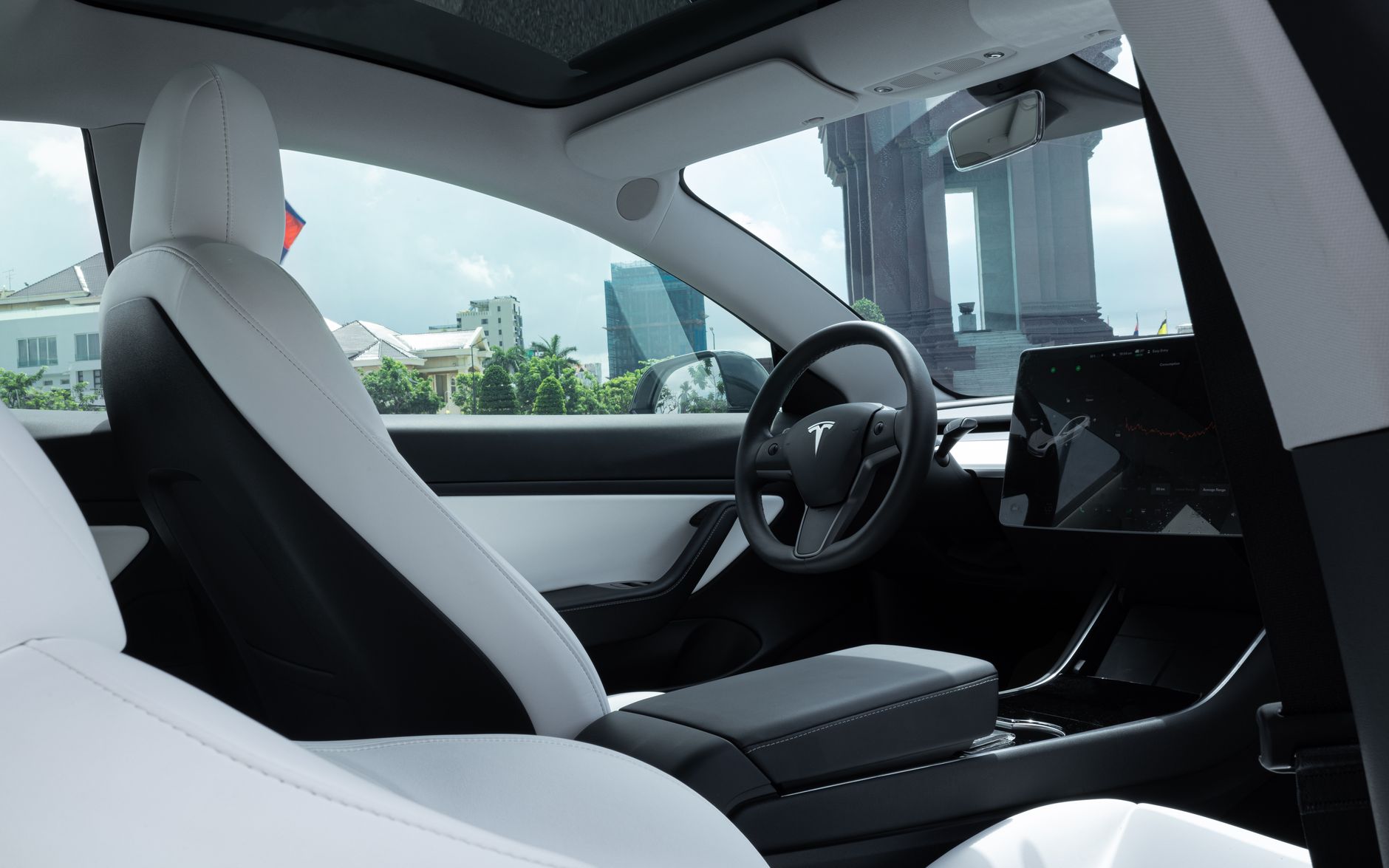
The interior, based on available imagery, carries the same philosophy inward. Controls appear reduced and organized around a coherent visual hierarchy – a pattern directly traceable to the interface thinking that defined the iPhone era at Apple. Whether that translates comfortably to a car cockpit, where physical tactility and analog feedback still matter to drivers in ways that touchscreen interaction on a phone does not demand, is something that only extended seat time will reveal.
Ferrari has not yet released the complete technical profile for the Luce – powertrain output, range, charging specifications, and pricing remain either unconfirmed or absent from the initial reveal. What exists publicly right now is primarily the visual case: a car that looks like a collaboration between Ferrari’s engineering culture and Ive’s reduction-focused design thinking. The absence of hard numbers is a choice, and it focuses attention exactly where Ferrari wants it – on the object’s appearance before its performance metrics become the lens through which everything else gets evaluated.
Ferrari has positioned the Luce as an upcoming vehicle, which means the gap between this first look and actual delivery to customers remains undefined. The design is done enough to show. Everything else – the price, the range, the production timeline, the waiting list – is still Ferrari’s to control, and the company has given no indication it intends to rush any of it.