



European car manufacturers are mounting their most coordinated challenge yet to Tesla’s charging infrastructure empire. Seven major automakers announced a landmark partnership to accelerate the rollout of ultra-fast charging stations across Europe, directly targeting Tesla’s Supercharger network dominance that has given the American electric vehicle maker a critical competitive advantage for over a decade.
The alliance, dubbed ChargeForward, brings together Volkswagen Group, Mercedes-Benz, BMW, Stellantis, Renault, Volvo Cars, and Ford of Europe to pool resources and establish 30,000 new high-speed charging points by 2030. This represents the largest coordinated charging infrastructure investment in European history, with an estimated combined commitment exceeding 7 billion euros across participating companies.
Tesla’s Supercharger network currently operates approximately 12,000 charging points across Europe, controlling roughly 25% of the continent’s fast-charging market. The network’s reliability, speed, and seamless integration with Tesla vehicles has long been considered one of the company’s strongest competitive moats, often cited by customers as a key factor in their purchase decisions.
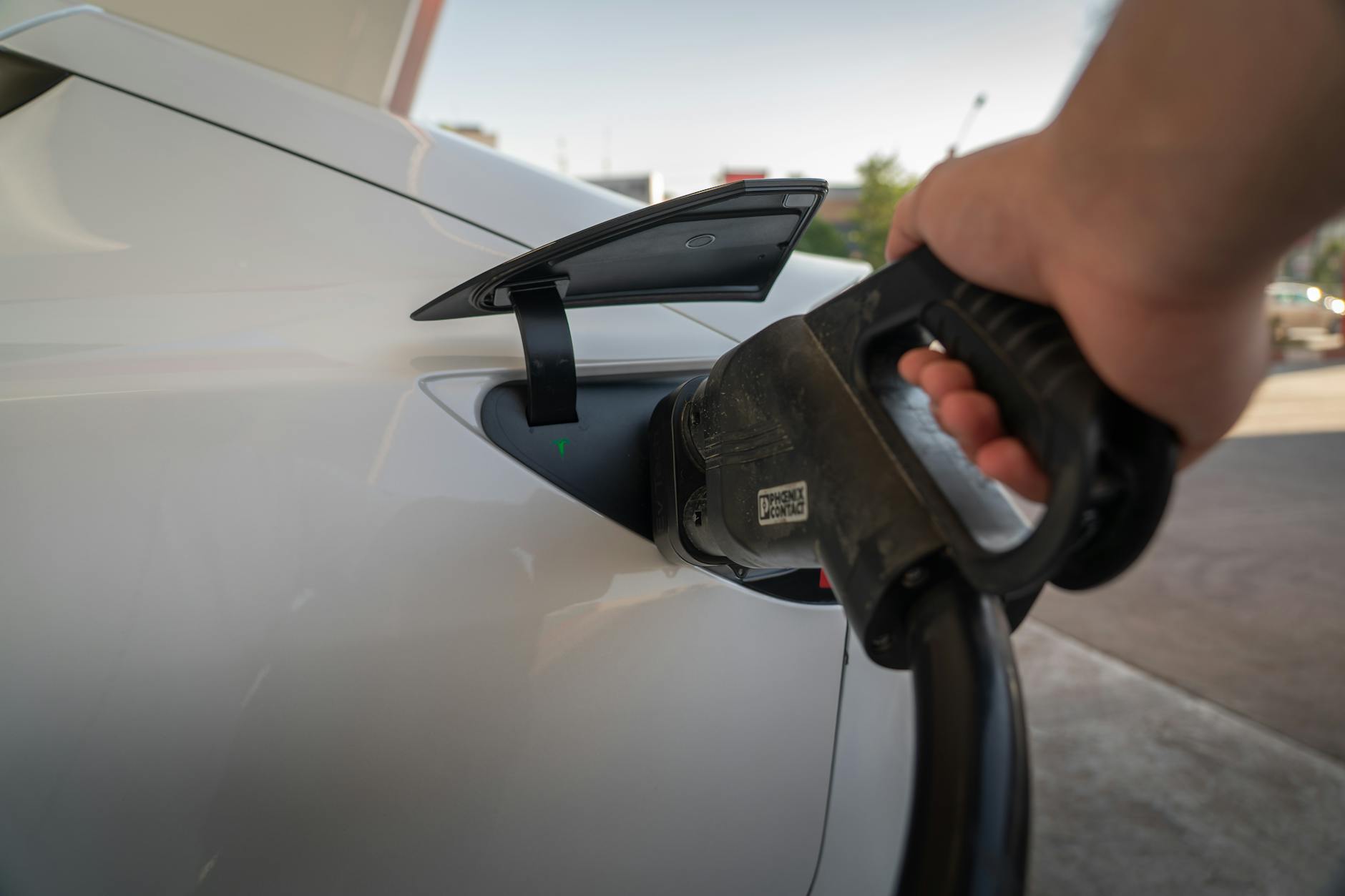
Breaking Tesla’s Infrastructure Stranglehold
The timing of this alliance reflects growing urgency among traditional automakers as electric vehicle adoption accelerates. Tesla’s charging advantage has become increasingly problematic for European manufacturers who have watched the company capture significant market share despite producing vehicles in lower volumes than established players.
“Range anxiety remains the number one barrier to EV adoption, and Tesla has solved this better than anyone,” explains automotive analyst Maria Berger from Frankfurt-based consulting firm AutoForecast Solutions. “European manufacturers realized they couldn’t compete on infrastructure individually, but collectively they have the scale to challenge Tesla’s dominance.”
The ChargeForward network will feature charging speeds up to 350kW, significantly faster than most current infrastructure. The stations will use the Combined Charging System (CCS) standard, making them compatible with all European EVs except Tesla models, which use a proprietary connector for their Supercharger network.
Critically, the alliance plans to leverage artificial intelligence for dynamic pricing and grid management, potentially offering more competitive rates than Tesla’s fixed pricing model. The system will integrate with each manufacturer’s vehicle software to provide real-time availability updates and automatic payment processing.
Strategic Positioning Across Key Corridors
ChargeForward’s rollout strategy focuses on high-traffic transportation corridors connecting major European cities, directly competing with Tesla’s network placement. Priority locations include routes between London-Paris, Berlin-Munich, Madrid-Barcelona, and Rome-Milan, where Tesla currently maintains significant charging infrastructure.
The partnership announced plans for flagship “charging hubs” featuring 12-24 ultra-fast chargers at strategic highway intersections, shopping centers, and urban locations. These hubs will include amenities like restaurants, retail spaces, and business lounges, positioning them as destination charging rather than simple refueling stops.
Mercedes-Benz brings particular expertise to the partnership through its existing Ionity venture, which already operates over 400 charging stations across Europe. BMW contributes advanced battery management technology, while Volkswagen Group offers manufacturing scale and software integration capabilities through its Electrify Europe subsidiary.

Ford of Europe’s participation proves especially significant, as the company recently gained access to Tesla’s Supercharger network in North America through a partnership agreement. This dual approach allows Ford to hedge its charging strategy while supporting European alternatives to Tesla’s infrastructure.
The alliance also announced integration with renewable energy sources, partnering with European utility companies to ensure 100% green electricity at all ChargeForward locations. This sustainability focus addresses growing consumer and regulatory pressure for environmentally responsible charging options.
Technology Integration and User Experience
ChargeForward’s technical architecture emphasizes seamless integration across different vehicle brands, addressing one of the current charging network’s major pain points. Unlike Tesla’s closed ecosystem, the new network will support universal plug-and-charge functionality, allowing drivers to simply connect their vehicle without apps or payment cards.
The system incorporates advanced load balancing to optimize charging speeds based on grid demand and battery conditions. Machine learning algorithms will predict charging patterns and adjust pricing dynamically, potentially reducing costs during off-peak hours while maximizing revenue during high-demand periods.
Vehicle integration represents another key differentiator. ChargeForward stations will communicate directly with participating manufacturers’ vehicles to precondition batteries during navigation to charging locations, maximizing charging speeds upon arrival. This level of integration currently exists primarily within Tesla’s ecosystem.
The alliance also announced development of a unified mobile application providing real-time station availability, reservation capabilities, and integrated payment processing across all seven automotive brands. This addresses consumer complaints about the current fragmented charging experience requiring multiple apps and payment methods.
Regulatory Support and Market Implications
The ChargeForward initiative aligns closely with European Union policies promoting charging infrastructure development and reducing dependence on non-European technology providers. The EU Parliament’s recent landmark AI regulation bill includes provisions supporting European technology sovereignty, which extends to critical infrastructure like EV charging networks.
European governments have pledged matching funds and regulatory support for the alliance, including fast-track permitting processes and preferred locations at government facilities. Germany alone committed 2 billion euros in co-funding through its National Charging Infrastructure program.

The market implications extend beyond charging infrastructure. ChargeForward’s success could fundamentally alter the competitive dynamics of Europe’s EV market by removing Tesla’s infrastructure advantage. This levels the playing field for European manufacturers who often match or exceed Tesla’s vehicle technology but lack comparable charging network access.
Industry observers predict Tesla may respond by opening its Supercharger network more broadly in Europe, similar to recent moves in North America. However, this would reduce one of Tesla’s key competitive differentiators while potentially generating new revenue streams from competing manufacturers.
The ChargeForward alliance represents more than infrastructure investment – it signals European automakers’ determination to control their electric future rather than cede critical advantage to Tesla. If successful, this coordinated approach could serve as a model for similar partnerships in other regions, fundamentally reshaping the global EV charging landscape. The race to electrify European transportation just accelerated dramatically, with consumers the ultimate beneficiaries of this high-stakes infrastructure competition.
Frequently Asked Questions
Which companies joined the ChargeForward alliance?
Volkswagen Group, Mercedes-Benz, BMW, Stellantis, Renault, Volvo Cars, and Ford of Europe formed the partnership.
How many charging stations will ChargeForward build?
The alliance plans to establish 30,000 new high-speed charging points across Europe by 2030.