



Siri Takes Center Stage at Apple’s Annual Developer Conference
Apple used WWDC 2026 to put Siri front and center, framing the long-running voice assistant as the primary vehicle for its expanding AI ambitions. The announcements, spanning iOS 27 and the broader Apple Intelligence platform, leaned heavily on artificial intelligence – not as a side feature, but as the connective tissue running through nearly every product update shown on stage.
For a company that spent years watching Siri fall behind competitors in raw capability, the 2026 conference marked a visible attempt to close that gap – or at least make the case publicly that it has.
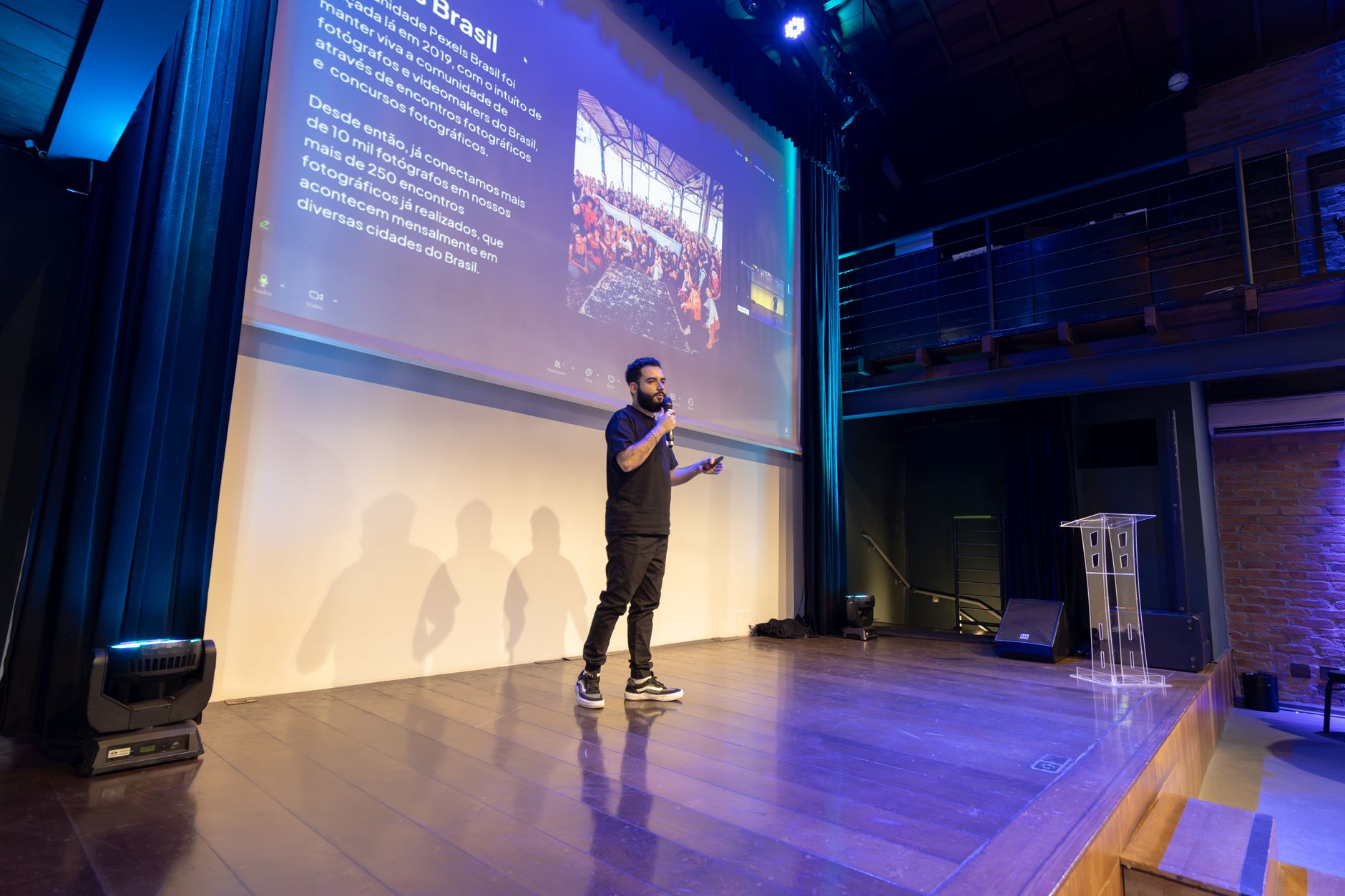
The through-line across the entire WWDC 2026 keynote was AI. Whether Apple was talking about iOS 27 system features, Siri’s expanded role, or Apple Intelligence integrations, artificial intelligence was the justification, the mechanism, and the marketing pitch – sometimes all three at once. That concentration of focus on a single technology direction is notable for a company that typically spreads its keynote energy across hardware, software, and services in roughly equal measure.
What Apple Actually Announced: Siri and Apple Intelligence
Siri’s upgrades under Apple Intelligence were positioned as an experience improvement rather than a ground-up rebuild. Apple’s framing centered on making the assistant more useful across everyday tasks – understanding context better, handling requests that span multiple apps, and responding in ways that feel less like querying a database and more like talking to something that retains what you’ve already told it. The company has been building toward this for several years, but WWDC 2026 is where those capabilities were packaged together and presented as a coherent product story.
iOS 27 carries much of the AI functionality at the operating system level, which means the improvements aren’t isolated to Siri as a standalone app or feature. The intelligence layer is woven into the OS itself – affecting how notifications are summarized, how search works, and how the system anticipates what a user might need next. That architectural choice reflects a decision Apple made with Apple Intelligence from the beginning: that AI should operate as infrastructure, not as a discrete product users opt into separately.
Apple Intelligence, the branded AI framework Apple introduced at WWDC 2024 and has continued building out since, remained the umbrella under which most of the 2026 announcements sat. The company has consistently used that branding to distinguish its approach – emphasizing on-device processing and privacy as differentiators – from the cloud-heavy models that define competitors like Google and Microsoft. Whether those distinctions hold up under scrutiny is a separate question, but at WWDC 2026, Apple leaned into them again as core selling points for the updated Siri experience.
The Broader Context: AI Pressure Across the Industry
Apple is making these moves in an environment where AI assistant capability has become a direct competitive metric. Google has pushed Gemini aggressively into Android and Search. Microsoft has embedded Copilot across its Office and Windows products. Amazon has been rebuilding Alexa with large language model architecture. For Apple, a company whose device ecosystem depends on users finding the software experience worth staying inside, a Siri that feels outdated is a retention problem, not just a PR one.
The AI-heavy structure of WWDC 2026 also signals something about where Apple sees developer interest concentrated right now. WWDC is, at its core, a conference for the people building apps and tools on Apple platforms. If Apple is leading with AI capabilities – in Siri, in the OS, in Apple Intelligence APIs – it’s partly because that’s what developers are asking for and partly because that’s where the platform competition is sharpest. Giving developers better AI tools means giving them reasons to build experiences on Apple hardware that they couldn’t build as well elsewhere.
There’s also the question of timing. Apple has faced pointed criticism for moving slower on generative AI than its rivals, and some of that criticism has come from its own developer community. WWDC 2026’s AI-first structure reads, in part, as a response to that pressure – a public demonstration that the company’s AI roadmap is progressing, even if Apple would frame it less as catching up and more as moving deliberately.

What Comes Next for iOS 27 and Apple Intelligence
iOS 27 will go through its standard beta cycle before a public release expected in the fall, giving developers the summer to build against the new APIs and AI capabilities Apple announced. Apple Intelligence features have historically rolled out on a staggered schedule even after a major iOS release, with some capabilities arriving months after the initial launch – a pattern that has occasionally blunted the impact of big WWDC announcements when users find that the features shown on stage aren’t immediately available on their devices.
Siri’s improved experience, specifically, will face real-world testing at scale in a way that a keynote demonstration cannot replicate. Apple controls the environment on stage. It does not control the range of accents, ambient noise conditions, unusual phrasing, or edge-case requests that millions of users will throw at an updated assistant the moment it ships. That gap between demo performance and daily use is where Siri has historically lost ground, and it’s the same gap Apple will need to close for the WWDC 2026 announcements to land as more than a well-produced presentation.
Apple also hasn’t fully resolved the tension between its privacy-first AI positioning and the reality that the most capable AI models – the ones users increasingly compare Siri against – run on massive cloud infrastructure. On-device processing has real advantages, but it also has real constraints in what it can compute. Apple’s answer to that tension, as of WWDC 2026, is still essentially the same as it was in 2024: private cloud compute for tasks that exceed on-device capacity, with privacy guarantees attached. Whether that architecture can keep pace with what competitors are building in the open is a question that no keynote can fully answer.
Siri has been Apple’s voice interface for over a decade, and for most of that time, “improved Siri” has been a WWDC fixture – announced, released, and then quietly absorbed into the background of user expectation without fundamentally changing what people thought of the assistant.