



A Record IPO, a New AI Venture, and an Eyeball Injection – One Big Week in Tech
A $1.77 trillion SpaceX valuation, Jeff Bezos bankrolling an “artificial general engineer,” and a biotech company injecting experimental treatment directly into a glaucoma patient’s eye – this week stacked up fast.
SpaceX Goes Public at a Scale No Company Has Managed Before
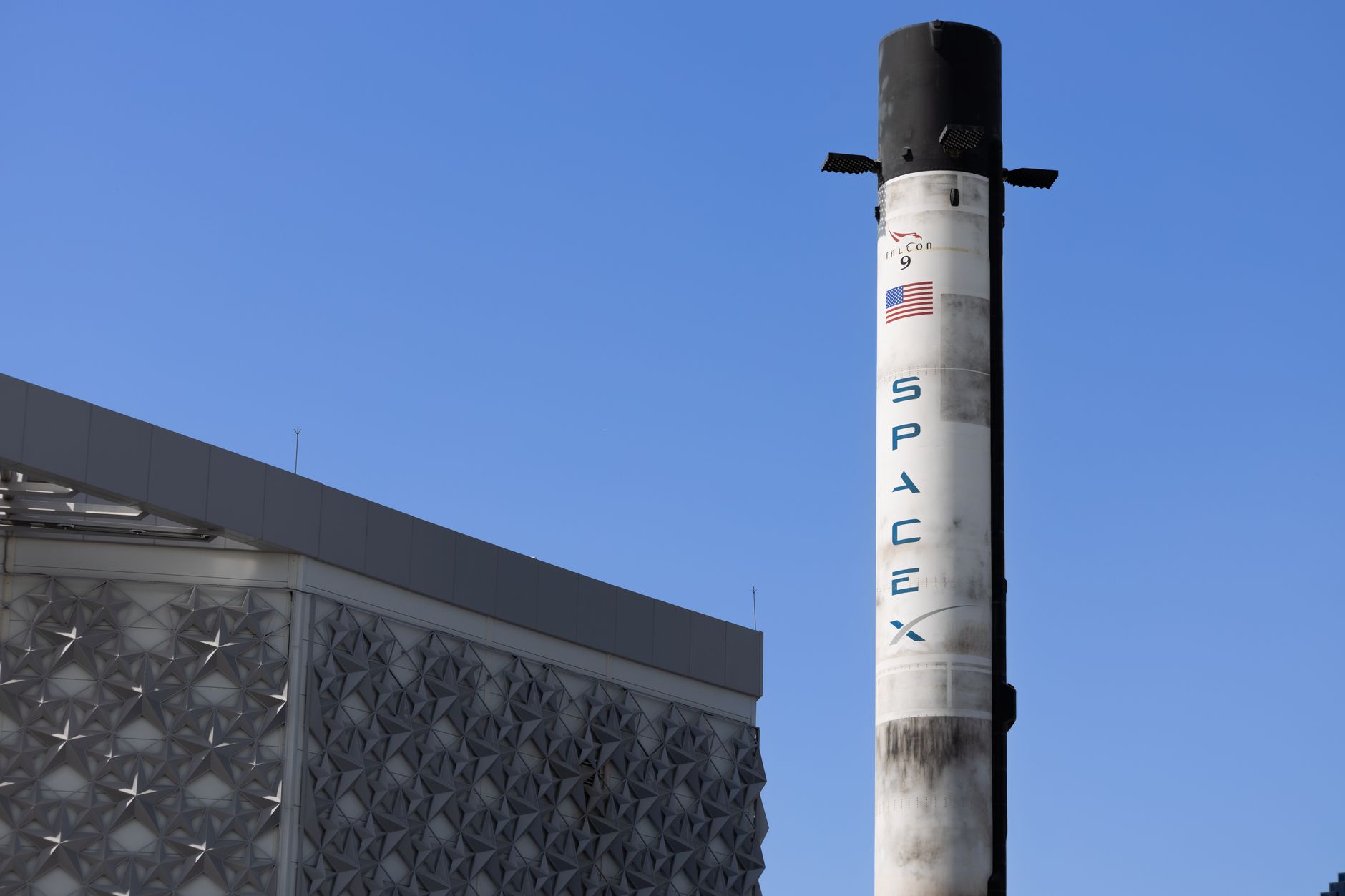
SpaceX has closed what is now officially the largest IPO in history, raising $75 billion at a $1.77 trillion valuation. The listing would, on paper, make Elon Musk the world’s first trillionaire. That milestone sounds abstract until you consider how much of Musk’s net worth was already tied to a private company that individual investors had no path into – until now.
The IPO doesn’t just hand Musk a larger number on a balance sheet. It introduces a new layer of accountability. Musk has built his brand on what Wired calls “extreme ownership,” the posture that he personally controls outcomes at his companies through sheer will and proximity. Public markets have a way of complicating that posture, introducing quarterly expectations, shareholder pressure, and scrutiny that doesn’t disappear between news cycles.
Meanwhile, the competitive landscape around SpaceX’s Starlink satellite internet business is shifting. China is attempting to develop a domestic rival, and separate challenges to SpaceX’s dominance in the orbital internet sector are already surfacing. Being the biggest public company in the world by valuation doesn’t make you immune to geopolitical competition or infrastructure constraints.
One of those constraints is getting more attention: orbital data centers are turning out to be significantly harder to build and operate than Silicon Valley’s enthusiasm for them has suggested. The physics of space – heat dissipation, power generation, latency – don’t bend to optimism. SpaceX enters its public era in a market where its actual engineering limits are being tested in real time.
Bezos, AI Researchers, and the Push to Automate Technical Thinking
While Musk’s listing dominated headlines, Jeff Bezos quietly became the face of what may be the week’s more consequential story in AI. His new industrial AI startup, Prometheus, has raised $12 billion, valuing the company at $41 billion. The stated goal: build an “artificial general engineer.” Not a general-purpose chatbot, but a system designed to handle the kind of technical problem-solving that currently requires specialized human engineers.

That framing matters. The phrase “artificial general intelligence” carries enormous weight – and controversy – in AI circles, partly because it remains undefined enough to mean almost anything. “Artificial general engineer” is a more bounded claim, but it’s still an aggressive one. Bezos is betting $12 billion that AI can automate not just rote tasks, but domain-specific reasoning at the level of trained professionals. That kind of automation is already reshaping hiring at the entry level across technical industries, and Prometheus would push that displacement further up the skills ladder.
OpenAI is pursuing a parallel ambition, building what it describes as a fully automated researcher. The two projects aren’t competing directly – engineering and scientific research are distinct domains – but together they signal where the frontier labs and well-capitalized new entrants think AI is actually going: away from tools that assist humans and toward systems that substitute for them in specialized cognitive work.
Google’s AI news this week ran in a darker direction. The company says Chinese cybercriminals used its Gemini model to run AI-powered scams targeting Americans, and Google is now suing the network behind the alleged scheme. The case is one of the clearest examples yet of how general-purpose AI models, built for productivity, can be redirected toward fraud at scale. Google has characterized these as “supercharged scams” – faster to deploy, harder to detect, and cheaper to run than previous generations of fraud operations.
Anthropic, meanwhile, is dealing with a different kind of backlash. Its Fable model – built with stringent safety rules – has drawn widespread criticism from users who say the restrictions are too aggressive, resulting in refusals to help with requests that aren’t genuinely dangerous. Anthropic has already walked back some of those policies in response, which puts the company in the position it has always tried to avoid: making visible tradeoffs between safety and usefulness in public, under pressure, after the fact.
Chinese regulators added a geopolitical layer to the AI story. After a period of relative restraint, Beijing has sharply intensified tech enforcement, admonishing e-commerce giants Alibaba and JD.com and blocking Meta’s attempted acquisition of Chinese AI startup Manus. That last move is notable because it signals China’s willingness to use regulatory tools specifically to keep AI capabilities from moving into American corporate hands, even when the target company is Chinese.
Cells, Signals, and an Experimental Shot in the Eye
Away from the financial and regulatory noise, two pieces of science research stood out this week for different reasons. Life Biosciences, a biotech company focused on age-related disease, announced it had dosed its first human volunteer – a person with glaucoma who received an experimental treatment injected directly into their eye. The treatment aims to regenerate healthy nerve tissue. If it works for glaucoma, the company believes similar approaches could address other diseases of aging, and potentially aging itself. The strategy is built on “reprogramming” cells to revert to a biologically younger state, an approach that has moved from speculative to actively clinical faster than most researchers expected.

Separately, research into interoception – the body’s internal sense of its own physical state – is accelerating after a 2021 Nobel Prize brought new attention to the field. Scientists are now mapping how signals move between body and brain, with findings that could change how medicine approaches obesity, chronic pain, and anxiety. And in a detail that sits at the intersection of consumer tech and defense applications, Pokémon Go’s location data has reportedly been used to train AI systems that could help military drones orient themselves in unfamiliar environments – the same dataset also training delivery robots. Whether the original players knew their in-game movements might eventually end up informing autonomous weapons targeting is a question nobody seems eager to answer directly.