



The Cooling Crisis No One Has Solved
Global air-conditioning is on a collision course with the planet’s climate goals. The International Energy Agency projects that the number of AC units worldwide will triple by 2050 – a figure that sounds alarming until you factor in what happens when people don’t have cooling. A Lancet study estimated that air-conditioning prevented nearly 200,000 premature deaths in 2019 alone. The health case for cooling is settled. The environmental math is not.
Artificial chill already accounts for 7% of global electricity use and 3% of global greenhouse-gas emissions. Most AC units operating in the United States run on a refrigerant called R410A, which carries a global-warming potential more than 2,000 times that of carbon dioxide. Improperly disposed units can leak that refrigerant directly into the atmosphere. Three consecutive years of record-breaking heat have only widened the gap between what the world needs from cooling technology and what current technology is willing to offer.
That gap is now attracting serious money and scientific attention toward solid-state cooling – a field that has mostly lived inside mini fridges, EV battery systems, and high-end gaming computers.
What Solid-State Cooling Actually Does
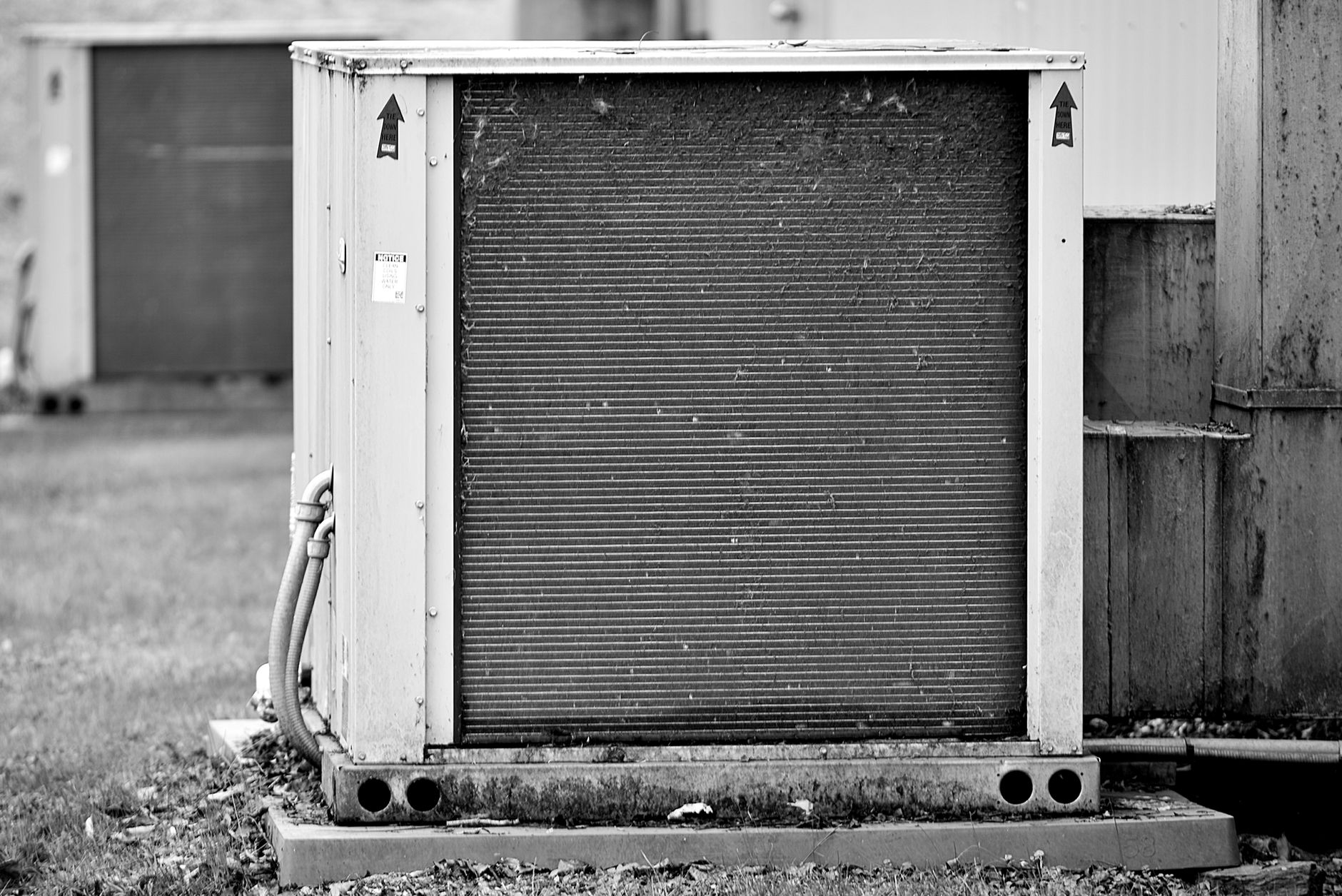
Conventional air conditioners work through a compressor-and-fan system that circulates refrigerant, cycling it between liquid and gas states to transfer heat. Solid-state systems replace that mechanical loop with conductive materials – substances like gadolinium and bismuth telluride that move heat without the same refrigerant dependencies or mechanical complexity. The appeal is straightforward: fewer moving parts, no R410A, and a smaller chemical footprint. The engineering obstacle is efficiency, and it’s a large one.
Jeff Snyder, a professor at Northwestern University who studies electrical and thermal conductivity, points to a metric called the coefficient of performance, or COP. For most modern HVAC systems, the COP sits around 3 – meaning the system moves three units of heat for every single unit of energy it consumes. Thermoelectric solid-state systems, which pass current through semiconductive materials to shift heat from one side to another, fall well short of that benchmark when handling significant temperature changes. Snyder’s assessment is direct: thermoelectrics are currently best suited for niche applications like cooling the back of a car seat, not a living room in July.
Pramod Reddy, a professor of mechanical engineering at the University of Michigan who studies heat transfer, frames the challenge as an open question rather than a closed door. “One of the key questions that remain is why are the solid-state coolers not as efficient as typical thermodynamic cycles?” he says. That question doesn’t have a clean answer yet, which is part of why the technology has stayed confined to small-scale uses for so long.
Who’s Building It Anyway
Despite the efficiency gap, several companies have decided the bet is worth making. Brooklyn-based Mimic Systems is deploying a thermoelectric room-scale climate control system currently being piloted inside an apartment in Vancouver. The German company Magnotherm uses a magnetocaloric approach – magnetizing and demagnetizing materials to transfer heat – and is preparing to test its system inside a chain of supermarkets. A research team in Hong Kong has demonstrated an elastocaloric device that heats and cools as its material expands and contracts, and has shown it can reach temperatures below 0°C. The UK’s Barocal is developing a barocaloric system that changes temperature in response to pressure shifts.
Lindsay Rasmussen, a manager at the Rocky Mountain Institute’s climate tech accelerator Third Derivative – which has backed both Magnotherm and Mimic – argues that efficiency scores don’t capture the full picture. COP is a snapshot measurement, not a longitudinal one. Mimic, for instance, claims its room-scale unit should match the annual energy draw of a conventional AC over a full year of operation, even if its instantaneous COP looks weaker on paper. Rasmussen also points out that conventional systems’ moving parts make them mechanically fragile over time in ways that solid-state designs, with less mechanical complexity, may avoid.
Rasmussen describes elastocaloric and barocaloric systems as holding real promise but notes that room-scale prototypes in either category are probably two to three years away from existing at all. The deeper problem is that without a substantial number of deployed units, researchers cannot yet compare long-term energy consumption data between solid-state and conventional systems. Right now, the efficiency debate is happening without the evidence needed to resolve it.
A Market Shaped by Urgency, Not Readiness
The conditions pushing solid-state cooling forward have little to do with the technology’s readiness and everything to do with the scale of the problem it’s being asked to solve. A tripling of global AC units by 2050 – running primarily on refrigerants with catastrophic warming potential – represents an infrastructure lock-in that becomes harder to reverse with each passing installation cycle. The materials needed for next-generation climate technologies face their own supply bottlenecks, adding pressure on every alternative cooling pathway simultaneously.

Solid-state cooling doesn’t need to be perfect to find a market – it needs to be good enough, deployable at scale, and free of the refrigerant liabilities that haunt conventional systems. Whether any of the current approaches can cross that threshold is genuinely unresolved. Mimic’s Vancouver apartment pilot is still running. Magnotherm’s supermarket test hasn’t concluded. The Hong Kong team’s sub-zero elastocaloric result exists as a laboratory demonstration, not a product. And Barocal’s barocaloric system is competing against a conventional AC industry that has had decades to optimize a COP of 3 – a performance floor that none of the solid-state challengers have publicly matched at room scale.