

Rivian’s latest software update brings artificial intelligence-powered voice control to its electric truck and SUV owners, marking the company’s entry into the competitive automotive AI assistant space. The feature launches across all Generation 1 and Generation 2 vehicles currently on the road, while also coming standard on the upcoming R2 model.
The rollout positions Rivian alongside Tesla and other automakers racing to integrate conversational AI into their vehicles. Unlike traditional voice commands that require specific phrases, the new assistant can handle natural language requests and contextual conversations about vehicle functions, navigation, and entertainment systems.
Natural Language Processing Takes the Wheel
Rivian’s AI assistant processes speech through advanced natural language understanding algorithms, allowing drivers to speak conversationally rather than memorizing command structures. The system can interpret requests like “I’m feeling cold” to automatically adjust climate controls, or “find somewhere to charge near the beach” to locate charging stations along coastal routes.
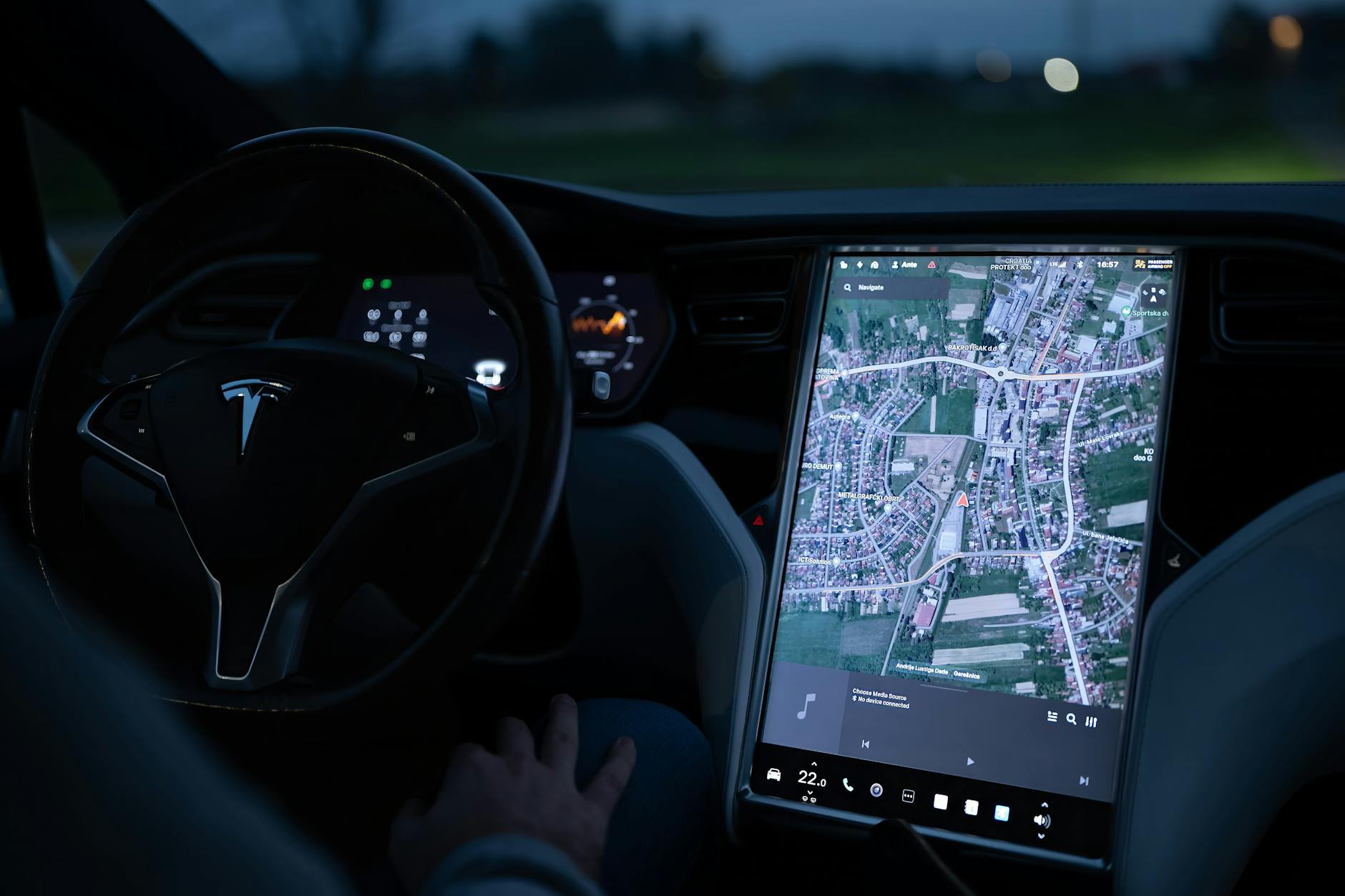
The voice assistant integrates directly with Rivian’s infotainment system and can control most vehicle functions without requiring drivers to touch the center display. Commands range from simple tasks like adjusting seat positions and opening windows to complex multi-step requests involving navigation, music selection, and vehicle settings adjustments. Response times average under two seconds for basic commands, though more complex requests requiring internet connectivity may take longer to process.
Privacy controls allow owners to disable voice recording or limit data sharing with Rivian’s servers. The system can operate in offline mode for basic vehicle controls, though features requiring real-time information like weather updates or charging station availability need an active data connection. Voice data processing happens both locally and in the cloud, depending on the complexity of the request and current connectivity status.

Rolling Out to Existing Fleet
Current Rivian owners will receive the AI assistant through an over-the-air software update scheduled to complete deployment within the next month. The company has been testing the feature with a select group of beta users since early fall, refining speech recognition accuracy and expanding the range of supported commands based on real-world usage patterns.
Both R1T pickup trucks and R1S SUVs from the first and second generation production runs will support the full feature set. Hardware requirements remain within existing vehicle specifications, meaning no additional equipment installations are necessary for current owners to access the AI capabilities.
Competition Heats Up in Automotive AI
The launch comes as automotive voice assistants evolve beyond simple command recognition toward conversational interfaces. Tesla’s recent updates to its voice controls, Ford’s partnership with Alexa integration, and General Motors’ work with Google Assistant have established consumer expectations for intelligent vehicle interaction. Rivian’s approach focuses specifically on electric vehicle needs, with specialized knowledge about charging networks, range optimization, and energy management.
Early testing reveals the assistant’s particular strength in handling charging-related queries. The system can provide detailed information about charging station compatibility, estimate charging times based on current battery levels, and even pre-condition the battery for optimal charging speeds during navigation to charging locations. These electric-specific capabilities differentiate Rivian’s offering from general-purpose automotive assistants.
Integration with Rivian’s mobile app allows the AI assistant to bridge vehicle and smartphone interactions. Users can start conversations on their phone and continue them in the vehicle, or vice versa, maintaining context across both platforms. The system remembers preferences and frequently used locations, learning individual user patterns to provide more personalized responses over time.
The R2 model, expected to begin deliveries in 2026, will launch with the AI assistant as a standard feature rather than a post-delivery addition. This timing allows Rivian to incorporate voice control considerations directly into the R2’s interior design and user interface development, potentially offering deeper integration than the retrofitted approach used for current generation vehicles.