



The creative professional market has become a battlefield between two tech giants, with Apple’s MacBook Air M3 and Microsoft’s Surface Laptop Studio representing fundamentally different approaches to portable workstation design. Both machines promise to handle demanding creative workflows, but their philosophies couldn’t be more different.
Apple’s latest MacBook Air maintains the company’s signature minimalist approach while packing the powerful M3 chip into an impossibly thin chassis. Microsoft counters with the Surface Laptop Studio, a convertible powerhouse that transforms from traditional laptop to digital canvas. The choice between them often determines not just what creative professionals can accomplish, but how they’ll work for years to come.
Performance Architecture: Silicon vs Traditional Power
The M3 chip in the MacBook Air represents Apple’s third-generation custom silicon, built on a 3-nanometer process that delivers exceptional performance per watt. Creative professionals working in Final Cut Pro, Logic Pro, or Adobe’s Creative Suite experience seamless 4K video editing and complex audio mixing without the machine breaking a sweat. The unified memory architecture allows the M3 to share system RAM with graphics processing, creating efficient workflows that traditional laptops struggle to match.
Microsoft’s Surface Laptop Studio takes a different approach with Intel’s latest Core processors and dedicated NVIDIA RTX graphics cards. This traditional architecture provides raw computational power that excels in GPU-intensive tasks like 3D rendering, game development, and machine learning workflows. The discrete graphics solution offers more VRAM for complex projects, though it comes at the cost of battery life and thermal management.
Real-world testing reveals interesting trade-offs. The MacBook Air M3 completes video exports faster thanks to hardware-accelerated encoding, while the Surface Laptop Studio dominates in GPU compute tasks like Blender rendering. Battery life heavily favors the MacBook Air, with creative professionals reporting 12-15 hours of actual work time compared to 6-8 hours from the Surface device.
Design Philosophy: Portability vs Versatility
Apple’s design team created the MacBook Air M3 as the ultimate portable creative workstation. Weighing just 2.7 pounds and measuring 0.44 inches thick, it disappears into any bag while maintaining the build quality Apple users expect. The fanless design eliminates noise during recording sessions or client presentations, though sustained heavy workloads can cause thermal throttling.
The Surface Laptop Studio embraces a completely different philosophy. Its unique hinge system allows the screen to fold forward into “Studio Mode,” creating a digital drawing surface perfect for designers and illustrators. At 4 pounds, it’s significantly heavier than the MacBook Air, but the versatility appeals to creative professionals who need both traditional laptop functionality and tablet-like input methods.
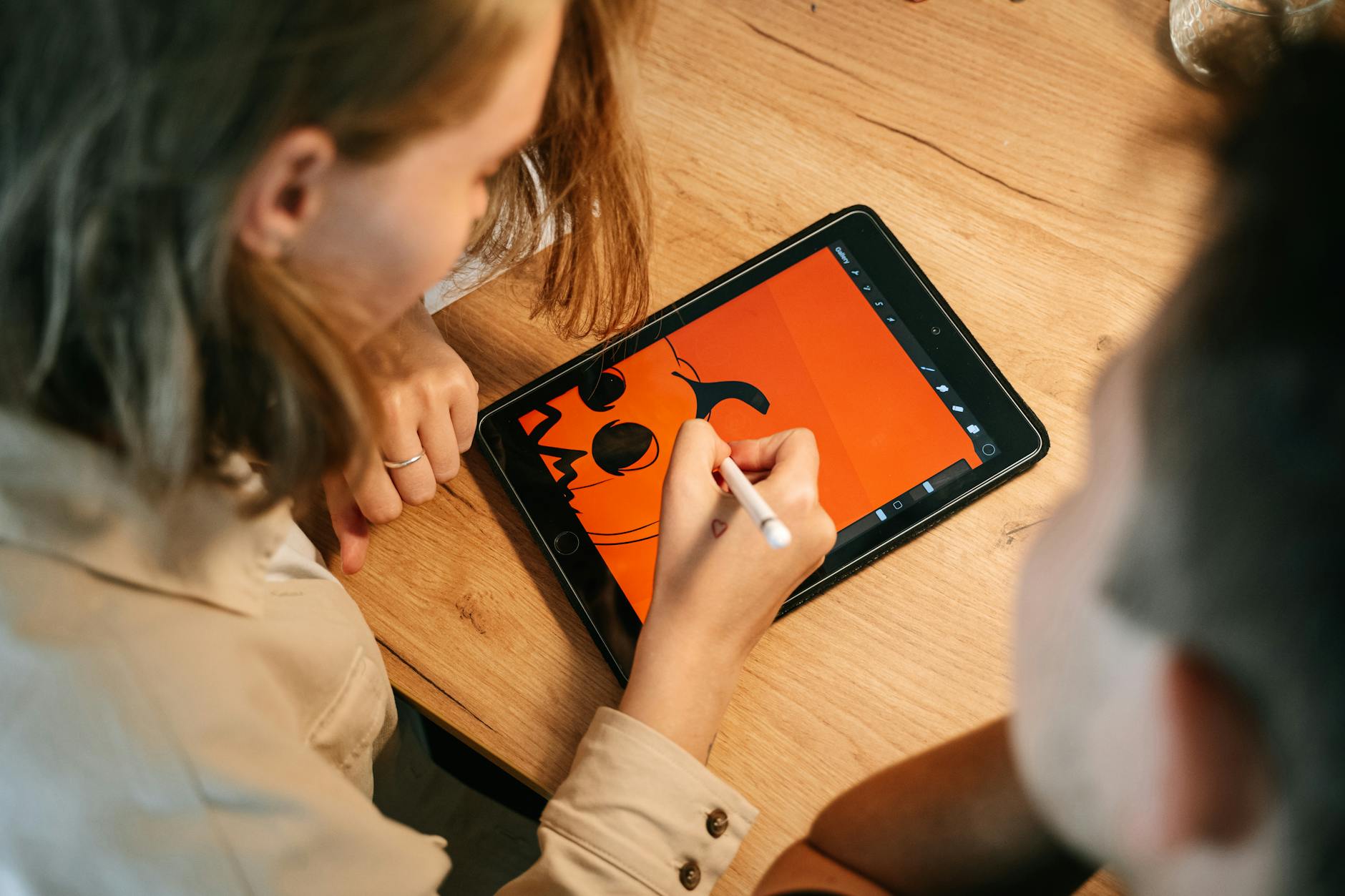
Microsoft’s design includes thoughtful details like the Surface Pen integration and haptic feedback on the trackpad. The keyboard provides excellent tactile response for long typing sessions, while the larger 14.4-inch display offers more screen real estate than the MacBook Air’s 13.6-inch panel. However, the complex hinge mechanism introduces potential points of failure that concern some users about long-term durability.
Creative Workflow Integration
macOS integration gives the MacBook Air M3 significant advantages within Apple’s creative ecosystem. Universal Clipboard, Handoff, and AirDrop create seamless workflows between devices. Creative professionals often praise the color accuracy of Apple’s displays and the consistent color management across applications. The machine excels in photography workflows, with excellent support for RAW processing and color-critical work.
Windows 11 on the Surface Laptop Studio provides broader software compatibility, crucial for creative professionals using specialized industry tools that remain Windows-exclusive. The touch screen and pen support enable direct manipulation of creative content, particularly valuable for digital artists and designers. Microsoft’s integration with Creative Cloud applications continues improving, though it lacks the system-level optimization found in Apple’s ecosystem.
The Surface Laptop Studio’s convertible design shines in collaborative environments. Creative directors can flip the screen into Studio Mode during client reviews, making annotations directly on presentations or design mockups. This flexibility proves invaluable in agencies and studios where client interaction drives the creative process.
Port selection favors different workflows. The MacBook Air M3 offers two Thunderbolt 4 ports and a headphone jack, requiring dongles for legacy connections. The Surface Laptop Studio provides two USB-C ports, one USB-A port, and a Surface Connect port, offering more flexibility without adapters.
Price and Value Proposition
The MacBook Air M3 starts at a more accessible price point while delivering flagship performance. Configuration options allow users to balance cost with capability, though upgrading RAM and storage can quickly increase the total investment. Apple’s excellent resale value helps offset the initial cost for creative professionals who upgrade regularly.
Microsoft’s Surface Laptop Studio commands a premium price that reflects its specialized design and high-end components. The base configuration includes more RAM and storage than comparable MacBook Air models, but the top-tier configurations reach workstation pricing territory. Limited upgrade options mean choosing the right configuration upfront becomes critical.
Both machines offer educational discounts that make them more accessible to students and emerging creative professionals. However, the total cost of ownership varies significantly based on individual workflows and software requirements.
The creative professional market will likely see continued innovation from both companies as they refine their approaches. Apple’s focus on efficiency and ecosystem integration appeals to photographers, videographers, and musicians, while Microsoft’s emphasis on versatility and traditional PC compatibility serves designers, developers, and mixed-media artists. The choice ultimately depends on whether portability or flexibility takes priority in daily creative workflows.
Frequently Asked Questions
Which laptop has better battery life for creative work?
The MacBook Air M3 delivers 12-15 hours compared to the Surface Laptop Studio’s 6-8 hours during creative tasks.
Can the Surface Laptop Studio replace a drawing tablet?
Yes, its Studio Mode and Surface Pen support make it effective for digital illustration and design annotation work.