




The milliseconds matter when you’re streaming a live gaming tournament or conducting remote surgery. That tiny delay between clicking and responding – called latency – has pushed technology companies to rethink how data flows across the internet. Instead of sending everything to distant cloud servers, they’re bringing computing power directly to your neighborhood.
Edge computing represents a fundamental shift in how we process data. Rather than relying solely on massive data centers hundreds of miles away, this technology places smaller computing resources at the “edge” of networks – closer to where data gets created and consumed. The result? Faster responses, reduced bandwidth costs, and new possibilities for real-time applications.
Major tech giants are already investing billions in edge infrastructure. Amazon Web Services launched AWS Wavelength zones embedded in cellular networks. Microsoft’s Azure Edge Zones bring cloud services to metropolitan areas. Google Cloud has deployed edge locations worldwide. These aren’t just incremental improvements – they’re reshaping how digital services work.
The Speed Revolution: Why Proximity Matters
Traditional cloud computing follows a predictable path. Your smartphone sends a request to a cell tower, which routes it through multiple network hops to reach a data center, possibly on another continent. The server processes your request and sends the response back through the same lengthy journey.
This round-trip can take anywhere from 50 to 200 milliseconds – acceptable for loading a webpage, but problematic for time-sensitive applications. Autonomous vehicles need to process sensor data and make driving decisions in under 10 milliseconds. Virtual reality games become nauseating if visual responses lag behind head movements by more than 20 milliseconds.
Edge computing shortens this journey dramatically. Instead of traveling thousands of miles to a central data center, your data might only travel a few dozen miles to a local processing node. Some edge deployments place computing resources directly at cellular base stations or internet service provider facilities.
The telecommunications industry is driving much of this transformation. 5G networks promise ultra-low latency, but that speed advantage disappears if data still needs to travel across continents. Verizon has deployed mobile edge computing nodes at hundreds of cell sites. AT&T’s edge computing platform processes data within their network infrastructure. T-Mobile is building edge zones in major metropolitan areas.
Real-World Applications Demanding Edge Processing
Smart cities are becoming the testing ground for edge computing applications. Traffic management systems process video feeds from thousands of cameras to optimize signal timing and detect accidents. These systems can’t wait for data to travel to distant servers – traffic conditions change by the second.
Manufacturing facilities are embracing edge computing for predictive maintenance. Sensors on factory equipment generate enormous amounts of data about vibration, temperature, and performance. Edge computers analyze this information locally, identifying potential failures before they cause costly downtime. Sending all sensor data to the cloud would overwhelm network connections and delay critical alerts.
Retail environments are using edge computing to enhance customer experiences. Smart mirrors in clothing stores can overlay digital information on reflected images. Inventory management systems track products in real-time using computer vision. Point-of-sale systems process transactions locally, ensuring operations continue even during network outages.
The healthcare sector is exploring edge computing for remote patient monitoring and telemedicine. Wearable devices can analyze heart rhythms and detect irregularities without sending sensitive health data to external servers. This approach improves privacy while enabling faster medical responses.

The Infrastructure Challenge: Building the Edge
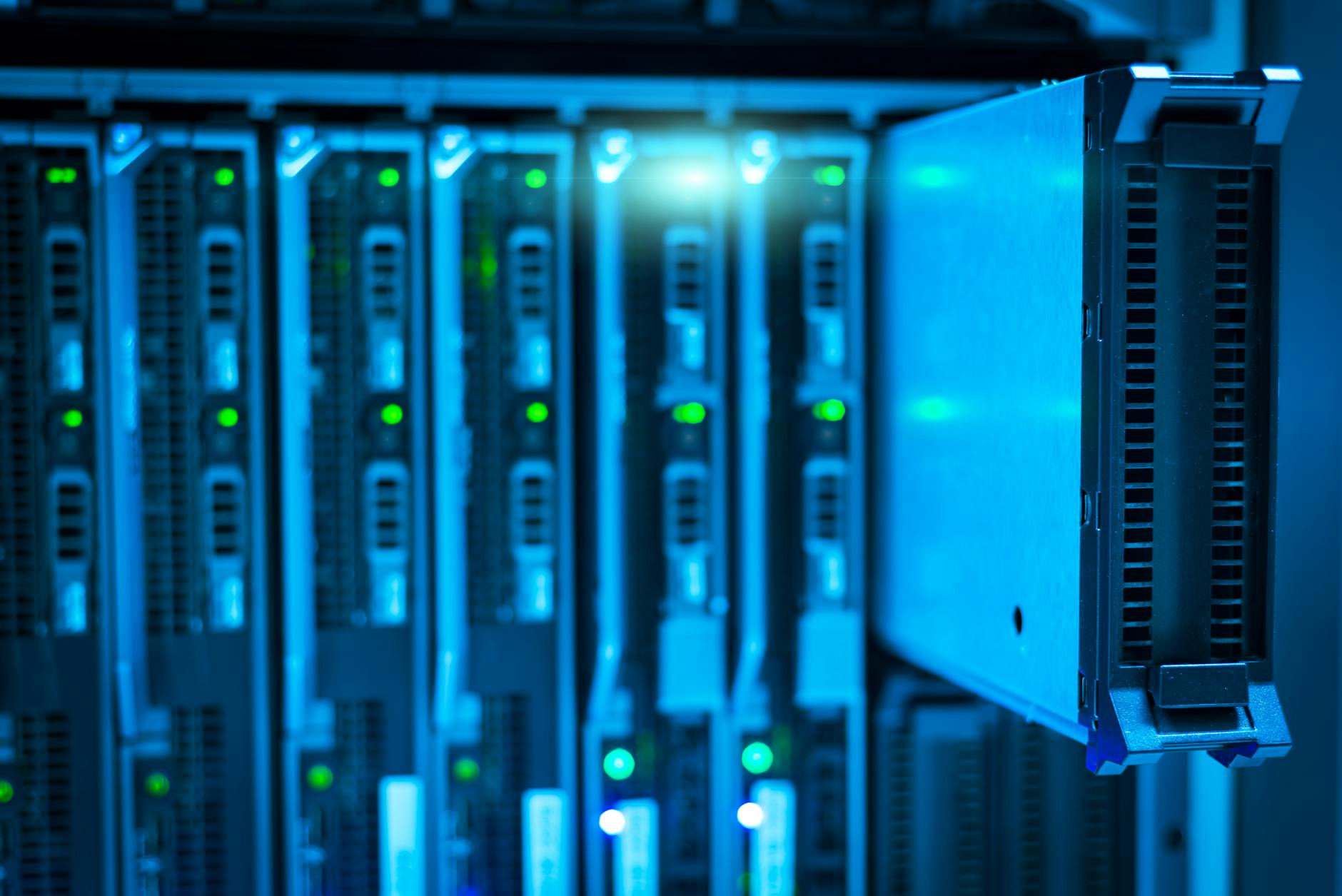
Creating edge computing infrastructure requires rethinking traditional data center design. Edge facilities must be smaller, more automated, and capable of operating in diverse environments. Unlike massive cloud data centers with dedicated staff, edge nodes often run unmanned in cellular towers, retail locations, or small utility buildings.
Power and cooling present unique challenges at the edge. Traditional data centers use sophisticated cooling systems and redundant power supplies. Edge locations must operate efficiently in smaller spaces with limited infrastructure. Companies are developing specialized hardware designed for edge deployments – ruggedized servers that can handle temperature variations and power fluctuations.
Network connectivity becomes more complex with distributed edge infrastructure. Data needs intelligent routing between edge nodes, central cloud resources, and end users. Software-defined networking helps manage this complexity, automatically directing traffic to the most appropriate processing location.
Security concerns multiply with edge computing. Instead of securing a few large data centers, companies must protect hundreds or thousands of smaller edge locations. Each edge node becomes a potential attack vector, requiring robust security measures and remote monitoring capabilities.
Major technology vendors are adapting their software for edge deployment. Kubernetes, the popular container orchestration platform, now supports edge computing scenarios. Microsoft has developed Azure IoT Edge for deploying cloud services to edge devices. Amazon’s AWS IoT Greengrass extends cloud capabilities to local hardware.
Industry Adoption and Market Growth
The edge computing market is expanding rapidly across multiple sectors. According to industry analysts, global edge computing spending is expected to grow significantly over the next five years. This growth is driven by increasing data generation, demand for real-time processing, and the proliferation of Internet of Things devices.
Telecommunications companies are positioning themselves as edge computing providers. They already own extensive network infrastructure and have relationships with enterprise customers. Partnerships between cloud providers and telecom companies are becoming common – combining cloud expertise with network reach.
The gaming industry is embracing edge computing for cloud gaming services. Companies like NVIDIA’s GeForce Now and Microsoft’s Xbox Cloud Gaming rely on edge infrastructure to deliver responsive gaming experiences. Processing game graphics locally reduces latency and improves visual quality.
[Augmented reality applications](https://newstechia.com/why-augmented-reality-glasses-are-finally-ready-for-consumers/) are particularly dependent on edge computing. AR glasses need to overlay digital information on real-world views in real-time. Any processing delay becomes immediately noticeable to users, making low-latency edge processing essential for consumer adoption.
Content delivery networks are evolving into edge computing platforms. Traditional CDNs cached static content closer to users. Modern edge CDN providers offer computing capabilities alongside content caching. This allows for dynamic content generation and personalization at edge locations.

The Future of Distributed Computing
Edge computing represents more than just a technical upgrade – it’s enabling entirely new categories of applications and services. As processing power moves closer to users, we can expect innovations in autonomous systems, immersive media, and real-time analytics.
The convergence of 5G networks and edge computing will unlock applications we’re only beginning to imagine. Smart glasses that provide instant language translation. Autonomous drones that coordinate complex delivery routes. Industrial robots that adapt to changing conditions without human intervention.
However, challenges remain. Edge computing introduces new complexity in application design and network management. Developers must consider how their applications will work across distributed infrastructure. Network operators need new tools for managing thousands of edge locations.
The next phase of edge computing will likely see increased standardization and automation. Industry groups are working on common standards for edge deployments. Artificial intelligence will help manage the complexity of distributed systems, automatically optimizing where different workloads should run.
As edge computing matures, the boundary between “edge” and “cloud” will blur. Applications will seamlessly move between processing locations based on demand, network conditions, and cost considerations. This hybrid approach will deliver the benefits of both centralized and distributed computing.
The transformation is already underway. Every major technology company has edge computing initiatives. Startups are building specialized edge solutions for specific industries. The infrastructure is being deployed in cities worldwide. Edge computing isn’t coming – it’s here, quietly revolutionizing how we interact with digital services by bringing them closer than ever before.
Frequently Asked Questions
What is edge computing and how does it differ from cloud computing?
Edge computing processes data closer to where it’s generated, reducing latency compared to traditional cloud computing that relies on distant data centers.
Which industries benefit most from edge computing?
Gaming, healthcare, manufacturing, smart cities, and autonomous vehicles benefit significantly from edge computing’s reduced latency and real-time processing capabilities.