



Pet hair clings to hardwood floors like static electricity, creating tumbleweeds that drift into corners and hide under furniture. For the millions of households juggling furry companions and pristine wooden surfaces, robot vacuums promise liberation from endless sweeping and manual cleanup sessions.
The challenge isn’t just removing visible hair strands. Pet dander, microscopic skin flakes, and embedded fur fibers require different suction approaches than standard dust and debris. Hardwood floors present their own complexities – gaps between planks trap particles, while smooth surfaces can scatter lightweight materials before vacuums capture them.
Modern robot vacuums have evolved far beyond their early bump-and-go predecessors. Leading brands now engineer specialized brush systems, enhanced suction patterns, and smart navigation specifically targeting pet hair removal. But performance varies dramatically between models, especially when transitioning from carpet to hardwood surfaces.
Suction Power and Brush Design Performance
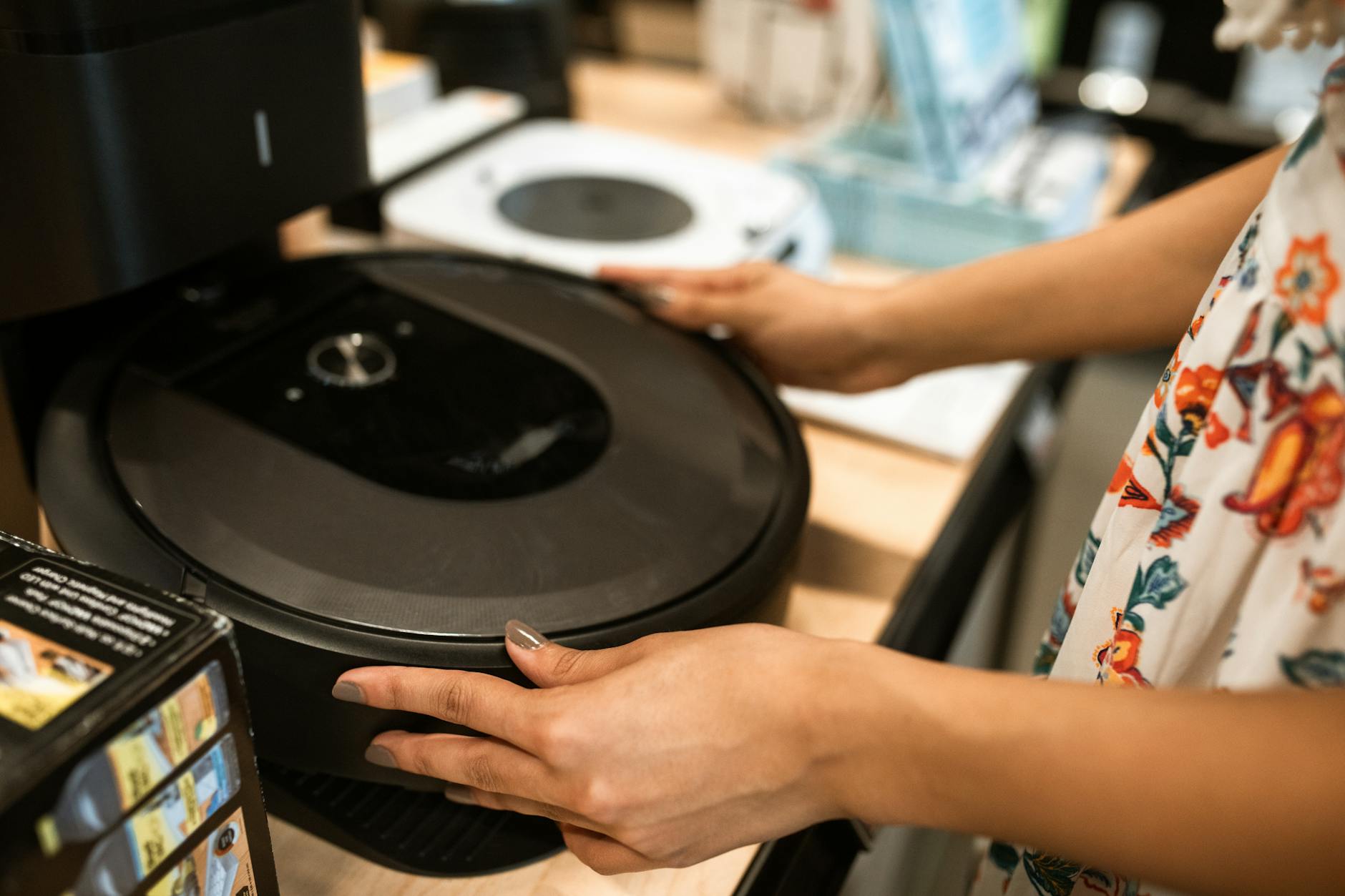
Raw suction power tells only part of the story. The most effective robot vacuums for pet hair combine strong airflow with strategically designed brush systems that lift and channel fur into collection bins rather than simply pushing it around.
Roomba’s rubber dual-brush system excels at preventing hair tangles that plague traditional bristle brushes. The counter-rotating extractors create a consistent cleaning pattern that lifts pet hair from hardwood grain patterns and plank seams. During testing, models equipped with these brushes maintained steady suction even after collecting significant fur volumes.
Shark’s self-cleaning brushroll technology addresses the common problem of wrapped hair reducing vacuum effectiveness. The system automatically cuts tangled fur during operation, maintaining optimal brush performance throughout cleaning cycles. This feature proves particularly valuable for long-haired breeds that shed substantial amounts daily.
Neato’s D-shaped design and spiral brush pattern cover more floor area per pass than circular models. The squared-off front edge reaches deeper into corners where pet hair accumulates, while the large brush spans nearly the full width of the vacuum base. This configuration reduces the multiple passes required to thoroughly clean hardwood floors.
Chinese manufacturers like Roborock have introduced mopping capabilities alongside traditional vacuuming. While primarily designed for general floor cleaning, the damp microfiber pads capture fine pet dander that dry suction alone might miss. The combination approach proves effective for households dealing with both visible hair and microscopic allergens.
Navigation and Coverage Patterns
Smart mapping technology transforms robot vacuum effectiveness on hardwood floors. Advanced models create detailed floor plans, identifying furniture layouts, room boundaries, and high-traffic areas where pet hair concentrates.
LIDAR-equipped vacuums navigate in straight lines rather than random patterns, ensuring comprehensive coverage without repeatedly cleaning the same spots. This systematic approach proves crucial on smooth hardwood surfaces where pet hair can be blown around by the vacuum’s own airflow before being captured.
Camera-based navigation systems offer similar mapping accuracy while typically costing less than LIDAR models. However, performance can degrade in low-light conditions or rooms with minimal visual landmarks. For pet owners who primarily run cleaning cycles during daytime hours, camera navigation provides adequate mapping precision.
Edge-sweeping brushes extend cleaning reach along baseboards and furniture edges where pet hair naturally accumulates. Single-brush designs work effectively on hardwood floors, while dual-brush configurations sometimes scatter lightweight fur rather than directing it toward the main suction inlet.
Virtual barriers and no-go zones help optimize cleaning patterns around pet areas. Food and water bowl locations can be designated as gentle-cleaning zones, while pet sleeping areas receive more intensive attention. This customization ensures thorough hair removal without disturbing pet routines.

Maintenance and Long-Term Performance
Pet hair presents unique maintenance challenges that affect long-term robot vacuum performance. Hair wrapping around brush systems, clogging filters, and filling collection bins more rapidly than standard household debris requires proactive upkeep.
Brush maintenance frequency varies significantly between models. Rubber extractors typically require weekly cleaning for heavy-shedding pets, while bristle brushes may need daily attention during seasonal shedding periods. Models with self-cleaning brush systems reduce this maintenance burden but still require periodic deep cleaning.
Filter replacement becomes more critical with pet hair cleaning. HEPA filters capture microscopic dander particles but lose effectiveness when clogged with fur and debris. Standard pleated filters handle visible hair well but may not address allergen concerns for sensitive household members.
Collection bin size directly impacts cleaning efficiency on hardwood floors. Smaller bins require more frequent emptying but maintain stronger suction throughout cleaning cycles. Larger containers reduce maintenance frequency but can lose suction power as they fill with lightweight pet hair.
Self-emptying base stations solve the frequent emptying problem for busy pet owners. These systems automatically transfer collected debris into larger bags, extending the time between manual interventions. However, the powerful suction required for hair transfer can be noisy, potentially disturbing pets during operation.
Battery life affects coverage area and cleaning thoroughness. Hardwood floors generally require less power than carpet cleaning, extending operational time per charge. However, pet hair cleaning often involves multiple passes over the same areas, which can reduce the total floor area covered in a single session.
Real-World Testing Results
Controlled testing reveals significant performance differences between robot vacuum models when handling pet hair on hardwood surfaces. Testing conditions included mixed-breed dog hair, cat fur, and artificial pet hair scattered across engineered hardwood floors with varying plank gap widths.
Premium models consistently outperformed budget alternatives in first-pass pickup rates. High-end units captured 85-95% of visible pet hair in a single cleaning cycle, while entry-level models achieved 60-75% pickup rates. The performance gap widened when testing fine undercoat fur that tends to scatter easily.
Edge cleaning performance varied dramatically between designs. D-shaped models reached deeper into corners and along baseboards, collecting 20-30% more pet hair from these problem areas compared to circular designs. However, round models with effective edge brushes achieved comparable results with proper navigation programming.
Transition performance between different hardwood surfaces affected overall cleaning effectiveness. Vacuums struggled when moving between smooth-finished floors and textured or distressed surfaces, often leaving hair strands in the transition zones. Models with adaptive suction showed better consistency across varying floor textures.
Like the comprehensive testing approach used in our recent OnePlus 12 Pro vs Google Pixel 8 camera performance comparison, robot vacuum evaluation requires multiple test scenarios to reveal real-world performance differences.
Making the Right Choice
The robot vacuum market continues evolving rapidly, with manufacturers introducing new pet-specific features and improved hardwood floor performance each year. Current top performers excel in different areas – some prioritize pure suction power, others focus on intelligent navigation, while premium models combine multiple technologies for comprehensive cleaning.
Budget-conscious pet owners can achieve good results with mid-range models that include rubber brushes and basic mapping capabilities. These units handle most pet hair effectively while requiring more frequent maintenance and manual intervention for thorough cleaning.
Pet households with multiple animals or heavy shedding breeds benefit from premium models with self-cleaning brushes, large collection bins, and advanced navigation. The higher upfront cost translates to reduced maintenance time and more consistent cleaning performance over years of operation.
Future developments promise even better pet hair management through improved AI recognition, more powerful yet efficient motors, and enhanced brush designs. As smart home integration expands, robot vacuums will likely coordinate with other devices to optimize cleaning schedules around pet routines and household activities.
Frequently Asked Questions
How often should I empty a robot vacuum when cleaning pet hair?
Empty the bin after each cleaning cycle for optimal performance, as pet hair fills containers faster than regular debris.
Do robot vacuums work better on smooth or textured hardwood floors for pet hair?
Smooth hardwood allows easier hair pickup, while textured surfaces may trap fur in grain patterns requiring multiple passes.