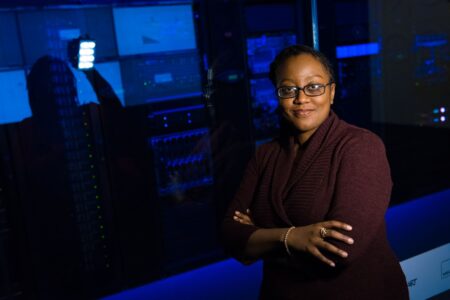



When Deanne Taylor walked out of a 2017 presentation at the University of Pennsylvania, she wasn’t inspired – she was alarmed. The Human Cell Atlas, a sweeping effort to catalog every cell in the human body, had made no plans to include children.

Children Are Not Small Adults, and the Data Proved It
Taylor had been the director of bioinformatics at the Children’s Hospital of Philadelphia since 2014, and she had watched pediatric medical research get passed over repeatedly. The prevailing assumption inside much of the biomedical community was simple and wrong: that children’s biology mirrors adult biology at a smaller scale. In reality, children’s cells express genes differently – activating, suppressing, or modulating them in ways that diverge sharply from adult patterns. Those differences are not minor. Drugs that adults metabolize without incident can trigger severe or fatal reactions in children, precisely because the underlying cellular machinery operates differently.
The 2017 presentation clarified what was missing. Taylor joined the Human Cell Atlas volunteer team almost immediately after and helped write the pediatric section of the organization’s foundational white paper. That was a start, but a white paper section doesn’t generate data.
She then spent the next two years building something with more weight. Taylor assembled a cross-hospital coalition of pediatric researchers and led a 2019 paper that made the scientific and institutional case for systematically studying children’s development. The paper was a deliberate provocation – an attempt to pull funding and attention toward a field that had been neglected for decades. “It put a flag in the ground,” Taylor said. “Why don’t we have healthy models of children’s development?”
The argument landed. In 2021, the NIH awarded $38.5 million to the Developmental Genotype-Tissue Expression Project, known as dGTEx – the first major initiative built specifically to map gene expression across healthy pediatric tissue and across all major organ systems.
Building the First Baseline: What dGTEx Actually Does
The dGTEx database is constructed from tissue samples taken from children who were otherwise healthy but died from unrelated causes, with parents providing consent for donation. That sourcing matters. The project is not studying sick children’s tissue – it is building a reference map of normal pediatric biology, which has never existed at this scale. Without a healthy baseline, researchers studying childhood disease or drug response have had no reliable foundation to measure against.
Taylor’s team handles the information architecture: curating and standardizing the data attached to each tissue donation, including family medical history and sample metadata. A separate analytical group processes the biological samples themselves. The two streams of information are then merged into a unified database – one that maps what gene expression actually looks like in children at different developmental stages and across different organ systems. The result is a resource that researchers studying development, disease, and pharmacology can draw on rather than having to build their own partial substitutes.

The dGTEx data will eventually flow into the Human Cell Atlas, which now includes a pediatric section – one Taylor helped write and continues to support. Her formal role is data curation, but colleagues describe a broader function. Sarah Teichmann, a cofounder of the Human Cell Atlas, put it directly: “Deanne took a big-picture view and said, We don’t just need to understand the pediatric kidney or the pediatric brain or the pediatric immune system. We need a holistic view of pediatric development.” Teichmann added that Taylor “embodies that interdisciplinary spirit.”
That role matters structurally because the Human Cell Atlas is not a single institution – it’s a distributed network of researchers, each pursuing independent objectives and contributing data on their own timelines. Keeping that kind of coalition pointed in a coherent direction requires someone willing to hold the full architecture in view when individual contributors are focused on their own piece. Taylor functions as that connective layer, though it’s not a title that appears on any grant application.
What makes the baseline concept so consequential is that it shifts what’s possible in pediatric drug development and disease research. Right now, dosing guidelines for children are often extrapolated from adult data and then adjusted by weight or age. That approach has produced drug failures and adverse events that better genomic data could have anticipated. A comprehensive gene expression map gives researchers something more precise to work from – not a guess scaled down from adult biology, but actual pediatric data. Similar gaps in biological data have driven recent innovations in organ preservation research, where the absence of reference models has long constrained what was clinically possible.
The Path That Led Here
Taylor describes her own career as a “random walk.” She started reading her mother’s medical textbooks at age five. By twelve, she was pulling physics books from the public library. She completed a PhD in biophysics in 2001, then shifted direction – drawn by the active Human Genome Project – to a postdoctoral position at Pfizer, where she wrote code to manage complex datasets in rare-disease research. From there she moved into reproductive medicine, working on early computational models.

She now attributes the intensity that drove those transitions to autism and ADHD, both of which went undiagnosed for most of her life. What looked like an unconventional career path was, in her telling, a series of problems that seemed genuinely worth solving – physics because it had mysteries, genomics because the data was suddenly there to work with, pediatrics because nobody else was doing it properly. The 2017 alarm that went off in a Penn auditorium was not her first. It was just the one that had a specific, fundable answer waiting on the other side. Whether the $38.5 million and the data now accumulating inside dGTEx will be enough to close a gap that took decades to acknowledge – that remains an open question with no tidy resolution in sight.